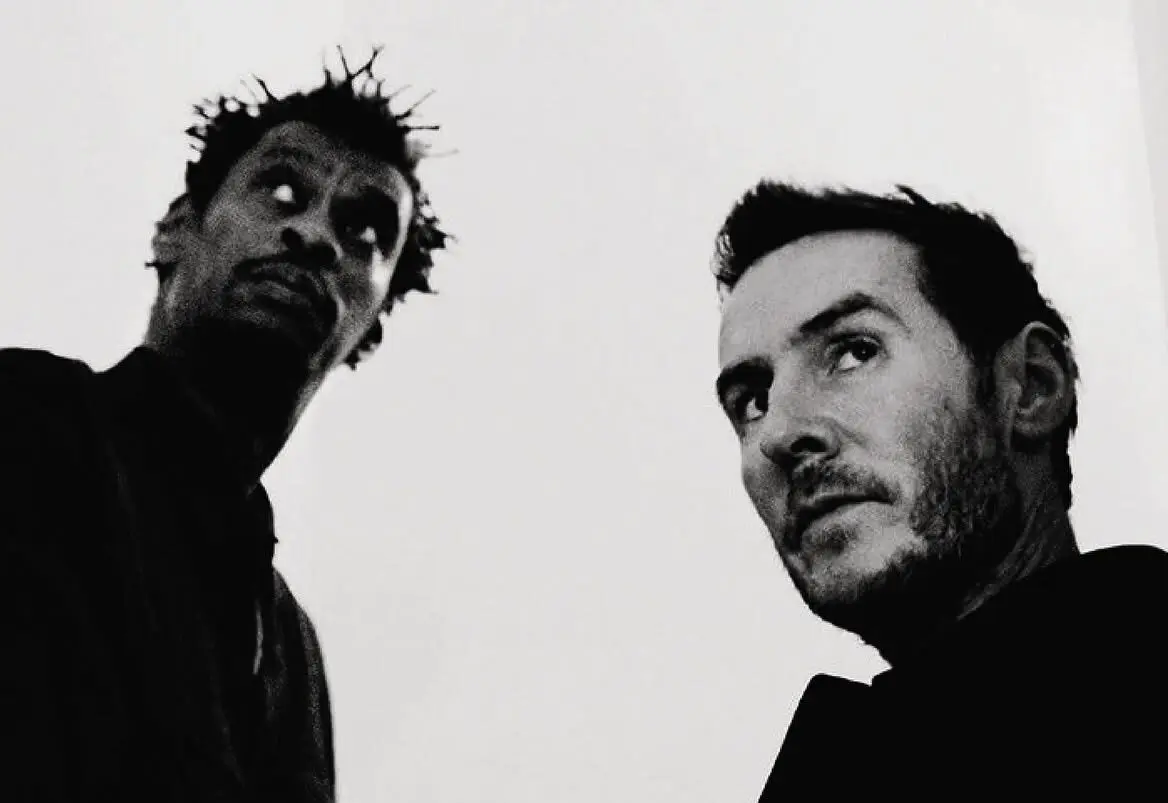
Massive Attack’s Robert Del Naja has been arrested for the second time this year in connection with a protest supporting Palestine Action, placing one of electronic music’s most politically outspoken figures once again at the centre of an increasingly contentious debate over protest, freedom of expression and Britain’s terrorism laws.
Robert Del Naja, also known as 3D, was arrested in Liverpool on Saturday, September 26, during a silent demonstration organised as part of Defend Our Juries’ Lift the Ban campaign. The protest took place near the area hosting the Labour Party Conference. Merseyside Police confirmed that a 61 year old man from Bristol was arrested on suspicion of a terrorism offence after displaying material supporting Palestine Action, which remains a proscribed organisation under UK law.
“I Oppose Genocide. I Support Palestine Action.”
During the demonstration, Robert Del Naja held a placard carrying the message:
I oppose genocide. I support Palestine Action.
Footage published by Defend Our Juries shows police approaching Robert Del Naja and informing him that Palestine Action is a proscribed organisation. Robert Del Naja disputed the basis of the offence and told officers that he did not agree with the proscription before being arrested. Defend Our Juries said the arrest took place under Section 13 of the Terrorism Act.
The arrest came immediately before a larger demonstration in Liverpool on Sunday. Merseyside Police initially reported more than 50 arrests that day involving people suspected of carrying or wearing material supporting Palestine Action.
The demonstrations form part of a wider campaign challenging the British government’s decision to proscribe the organisation.
The Second Arrest in Five Months
This was not Robert Del Naja’s first encounter with British police over the issue.
In April, Robert Del Naja joined hundreds of demonstrators at Trafalgar Square in London, where participants displayed signs carrying the same message supporting Palestine Action. The Metropolitan Police arrested 523 people, ranging in age from 18 to 87, during the demonstration. Robert Del Naja was among those arrested on suspicion of showing support for a proscribed organisation.
Before that arrest, Robert Del Naja acknowledged that participating could have consequences for his career, particularly when travelling internationally and applying for visas. He nevertheless chose to attend.
Following the London demonstration, Robert Del Naja argued publicly that the use of terrorism legislation against people participating in silent protests represented an unacceptable restriction on political expression. That position has remained consistent through the latest demonstration in Liverpool.
Why Palestine Action Is Proscribed
Palestine Action was added to the United Kingdom’s list of proscribed organisations in July 2025 under the Terrorism Act 2000.
The UK government describes Palestine Action as a group seeking to support Palestinian sovereignty through direct action intended to disrupt the sale and export of military equipment to Israel. The government says actions attributed to the organisation have involved serious property damage and crossed the legal threshold required for proscription under terrorism legislation.
The designation means that certain forms of membership and support for Palestine Action can constitute criminal offences.
The decision has also faced substantial legal challenges.
In February 2026, the High Court ruled against the government in judicial review proceedings concerning the decision to proscribe Palestine Action. However, the proscription remained in force while subsequent legal proceedings continued. The government appealed, with the Court of Appeal considering the case during 2026.
The result is an unusual legal landscape in which the decision to proscribe the organisation has been challenged successfully at one stage of the courts while the legal restrictions themselves have continued to operate during further proceedings.
Thousands of Arrests Since the Ban
The scale of policing connected to the proscription extends far beyond Robert Del Naja.
Official Home Office figures show that 2,819 arrests linked to suspected support for Palestine Action had been recorded in Great Britain by March 31, 2026, following the organisation’s proscription on July 5, 2025. At that point, 484 of those arrests had resulted in charges, while the majority of cases remained under investigation or on bail.
Further demonstrations and arrests have occurred since that statistical period ended, including the latest protests in Liverpool.
Those figures demonstrate how the Palestine Action ban has become one of the most consequential applications of British terrorism legislation to protest activity in recent years.
Supporters of the proscription point to direct actions involving serious damage to property and argue that the legal threshold under the Terrorism Act was met. Critics argue that applying terrorism legislation to protesters expressing support for the organisation creates serious consequences for freedom of expression and peaceful assembly. Those competing positions remain part of an active legal and political dispute.
Massive Attack’s Activism Extends Beyond Britain
The Liverpool arrest also belongs to a much longer history of political engagement surrounding Massive Attack.
Since emerging from Bristol in the late 1980s, Massive Attack have consistently allowed political and social issues to enter their music, visual performances and public statements. Robert Del Naja in particular has used the group’s international platform to address war, climate change, human rights and the environmental impact of the live music industry.
That activism has become especially visible around Gaza.
In July, Massive Attack displayed a Palestinian flag during a concert at The Star Theatre in Singapore. The group later said its members were detained, questioned separately and subjected to additional police procedures following the performance. Singaporean authorities said the display of the foreign flag without the necessary permission could violate local regulations. Two band members subsequently received warnings and were barred from re entering Singapore.
The episode demonstrated how the group’s political expression has begun carrying tangible consequences for its international touring activities.
When Electronic Music and Political Expression Collide
Massive Attack have never occupied a conventional position within electronic music.
From Blue Lines and Mezzanine to their later audiovisual productions, the Bristol group helped establish a language in which electronic production, dub, hip hop, visual art and political commentary could coexist.
Robert Del Naja’s activism follows the same principle. Politics is not presented as something separate from the artistic project. It has increasingly become embedded within Massive Attack’s performances and public identity.
That makes the latest arrest relevant beyond the immediate legal case.
Electronic music has a long history of political expression, from warehouse communities and queer club spaces to anti racist movements, environmental activism and benefit events. Yet the Liverpool episode sits at a particularly complicated intersection where artistic expression, protest rights and terrorism legislation collide.
Robert Del Naja has made his own position explicit by continuing to participate despite already having been arrested once and despite acknowledging potential consequences for Massive Attack’s ability to travel.
The British government maintains that Palestine Action meets the statutory threshold for proscription. Campaigners challenging the ban argue that its application is restricting legitimate political expression. The courts continue to examine the legality of the government’s decision.
For Robert Del Naja, meanwhile, the Liverpool demonstration represents continuity rather than a change of direction.
More than three decades after Massive Attack began combining music with political consciousness, the stage is no longer the only place where Robert Del Naja is choosing to make that position visible.
📷 : Cover Photo / Courtesy of Massive Attack
📷 : Additional Photo Credits / Courtesy of Massive Attack, Platonova Alina (CC License).