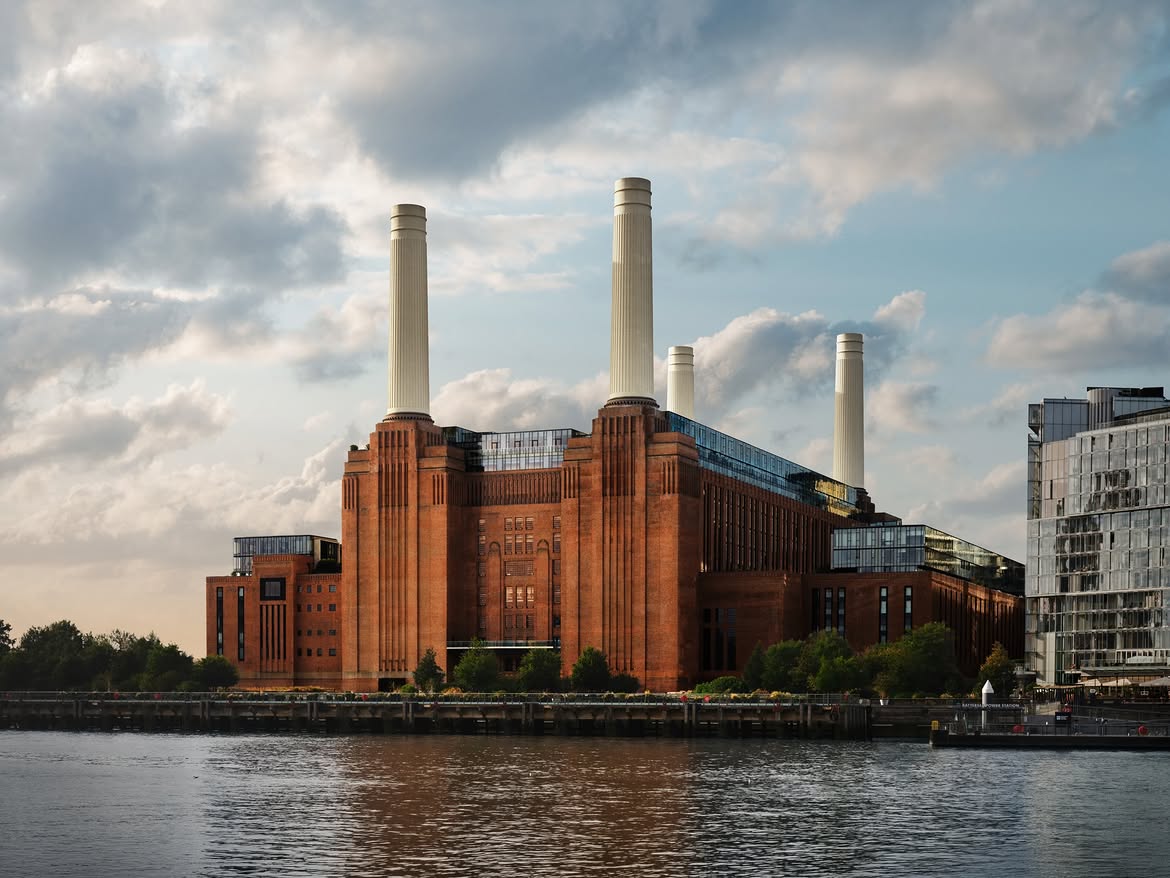
Apple is moving deeper into the physical world of live music with the opening of Apple Music Hall, a new 600 capacity venue inside London’s iconic Battersea Power Station. Designed to combine intimate concerts with sophisticated recording, broadcast and Spatial Audio technology, the venue represents a new kind of space where a single performance can simultaneously become a concert, professional recording, global livestream and multicamera production.
Rather than competing with London’s established concert venues on capacity, Apple Music Hall has been deliberately kept small. The concept places artists close to the audience while surrounding that intimacy with production infrastructure more commonly associated with considerably larger shows.
A 600 Person Venue With Arena Level Technology
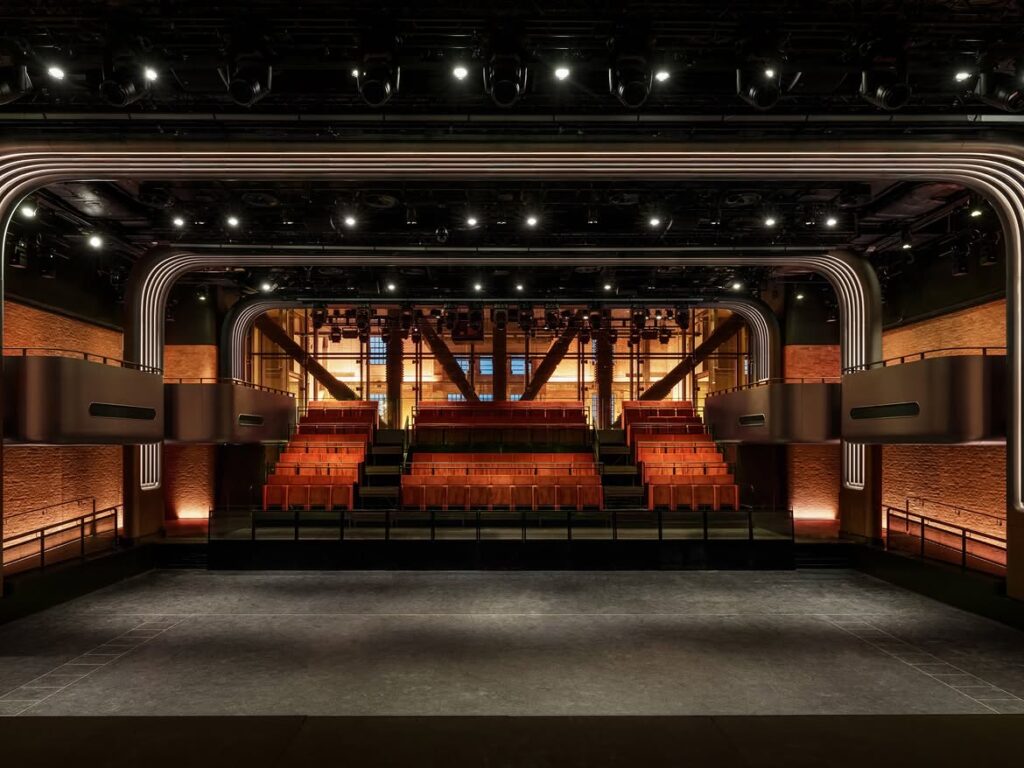
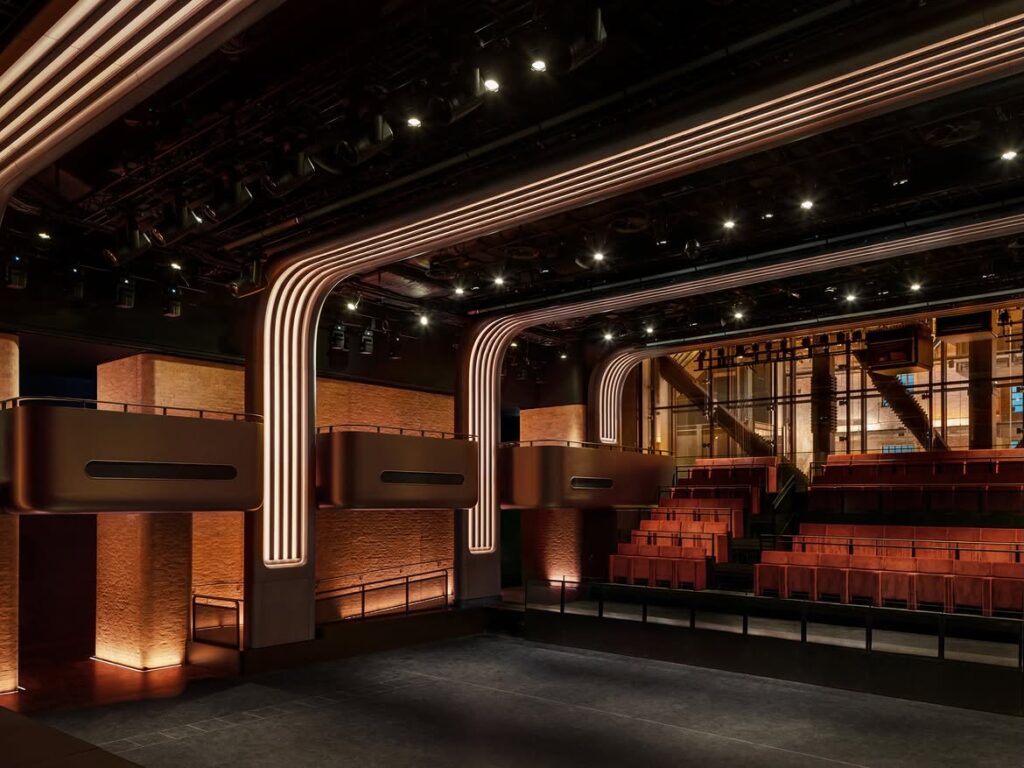
At the heart of Apple Music Hall is a flexible 38 foot wide stage, which can accommodate conventional front facing performances as well as more immersive configurations where artists perform surrounded by the audience.
Sound is equally central to the concept. A 48 speaker spatial sound system surrounds the room, allowing performances created for Spatial Audio to be experienced throughout the venue in an immersive environment.
Apple has also hardwired the venue for 16 or more cameras, all feeding into a dedicated broadcast control room. Traditional professional cameras can operate alongside iPhones, giving production teams multiple options for capturing performances.
The result is a venue where the live show is only one part of what is being created.
From Concert to Finished Recording
Behind the stage sit two professional recording and mixing studios, allowing performances to be captured as multitrack recordings and mixed in Spatial Audio either during the show or afterwards.
An artist could therefore enter Apple Music Hall for one intimate performance and leave with a finished Spatial Audio recording, a broadcast ready mix and multicamera video of the concert. Shows can also be livestreamed globally, allowing an audience of 600 inside Battersea to potentially become an audience of millions online.
That combination is what separates Apple Music Hall from a conventional small concert venue. It functions simultaneously as a performance room, recording studio, broadcast facility and digital content production environment.
For electronic artists in particular, the possibilities are intriguing. Live electronic performances have increasingly evolved into carefully designed audiovisual experiences, and a venue where sound, video and livestreaming infrastructure are integrated from the beginning could provide another format for presenting those shows beyond traditional clubs and festivals.
Why Only 600 People?
Despite Apple’s enormous global reach, the company has chosen not to build an arena sized venue.
Oliver Schusser, Apple’s vice president of Apple Music and International Content, has made clear that the company does not see Apple Music Hall as an attempt to compete directly with the existing live music industry. Instead, the relatively intimate capacity allows Apple to focus on distinctive performances and the relationship between artists and audiences.
That philosophy gives the project an interesting contradiction. Apple Music Hall is technologically ambitious but intentionally small. Its physical audience is limited, while its broadcast potential is global.
A performance can therefore retain the energy of an intimate show without being restricted to the people standing inside the room.
Inside an Icon of London
The location gives the project another layer of identity.
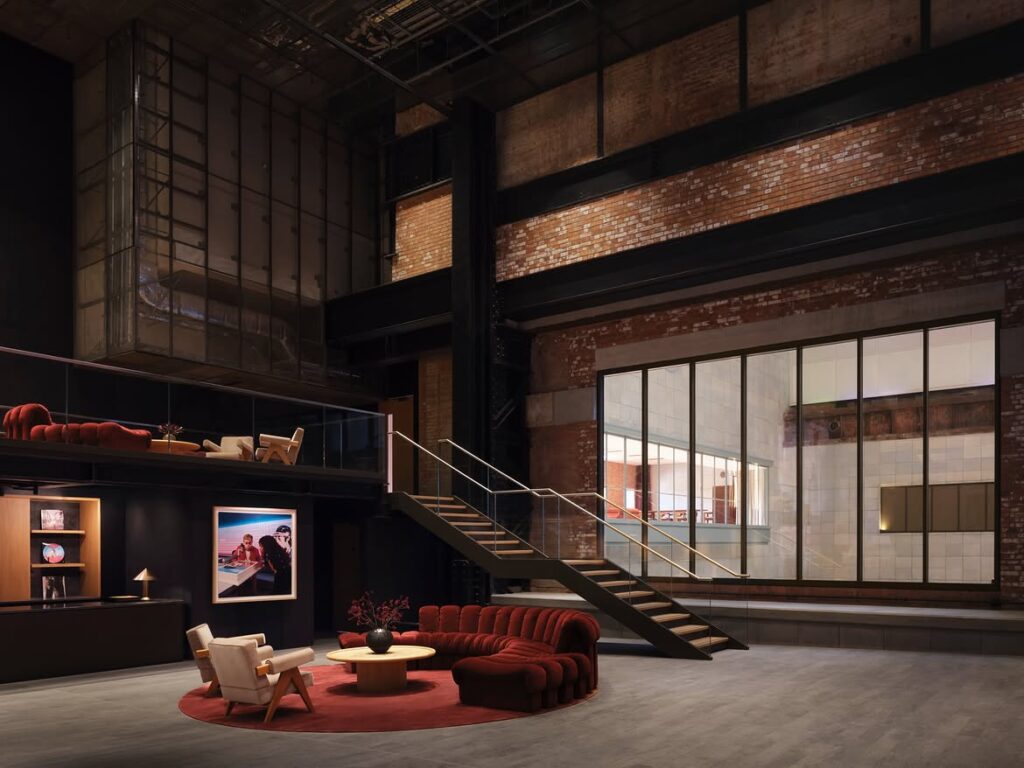
Battersea Power Station is one of London’s most recognisable industrial landmarks, sitting beside the River Thames with its four monumental chimneys dominating the surrounding skyline. Following decades of redevelopment, the former power station has become a major commercial and cultural destination, with Apple establishing its UK headquarters within the complex.
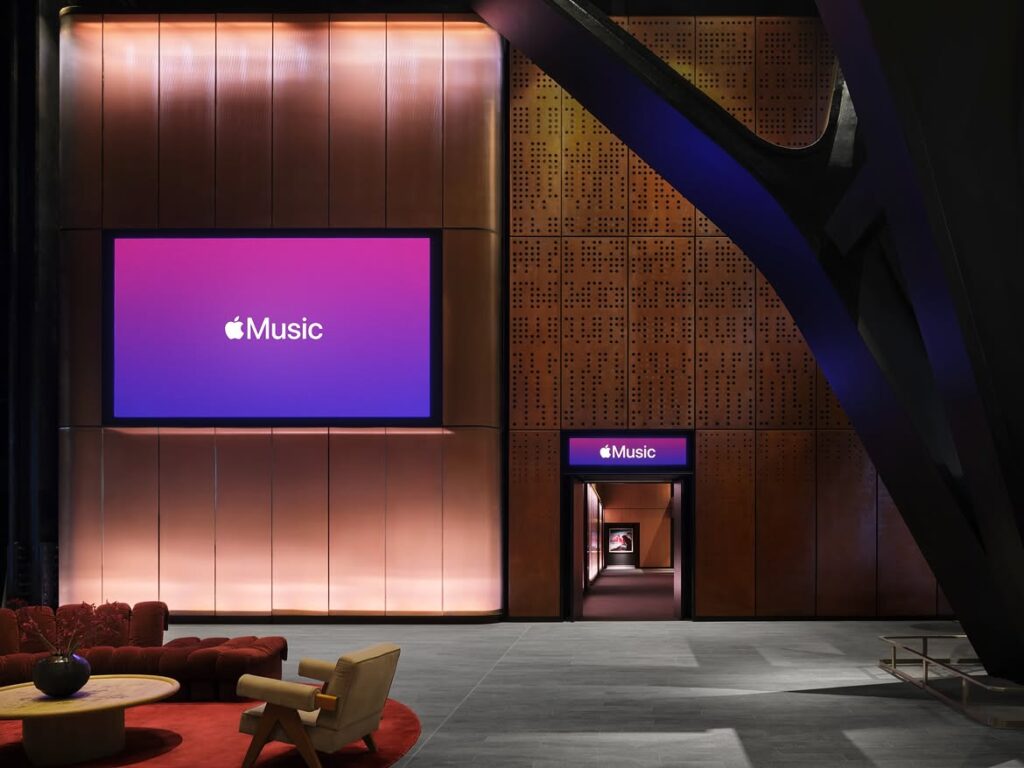
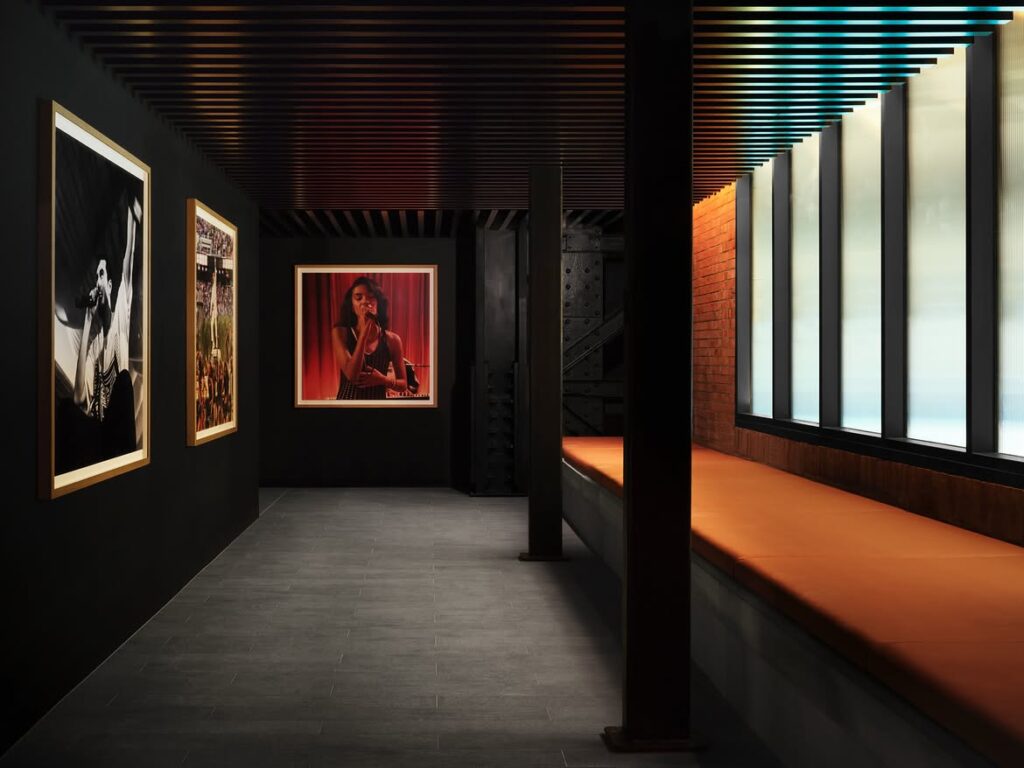
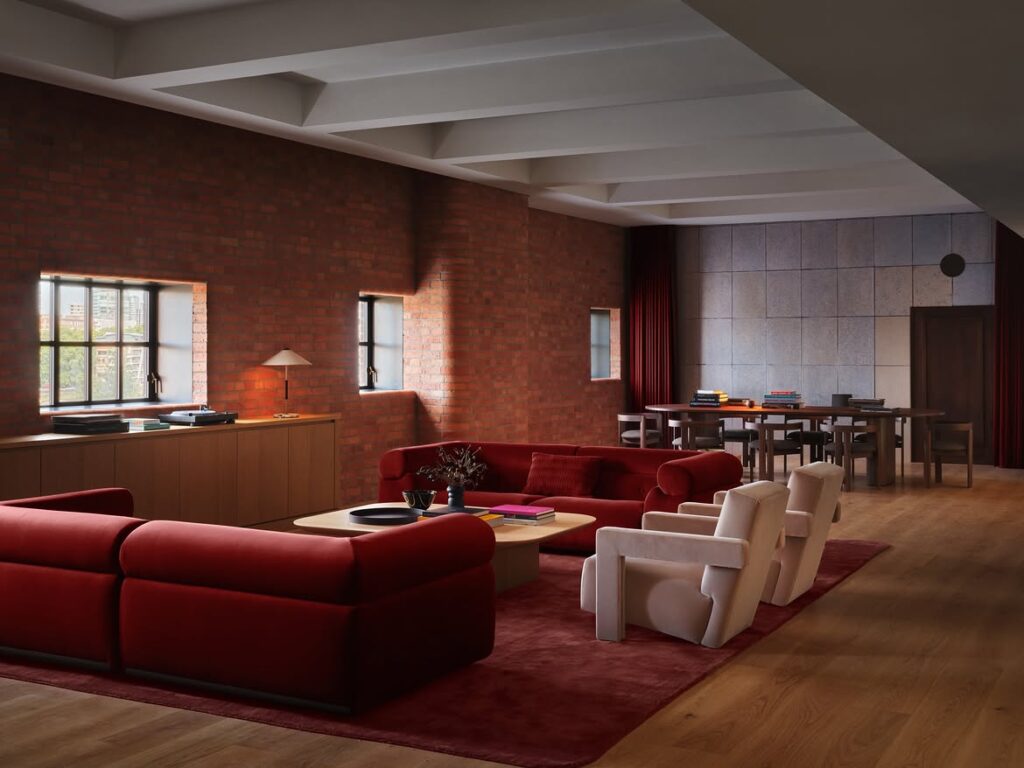
Apple Music Hall incorporates elements inspired by that industrial heritage, including brickwork, fluted arches and bronze balconies, while a large glass wall creates a visual connection with the surrounding building and the river beyond.
Rather than constructing a neutral black box for performances, Apple has allowed the architecture of Battersea to become part of the venue’s character.
Apple Music Radio Moves to Battersea
The project extends beyond the concert hall.
Apple has also opened new Apple Music Radio studios at Battersea Power Station, with the service’s London based hosts and programmes now broadcasting from the site.
This effectively creates a broader music hub around Apple’s London headquarters. Artists can perform, record, participate in interviews, create broadcast material and connect with audiences through several formats within the same ecosystem.
For Apple Music, that creates a physical counterpart to a service fundamentally built around digital distribution.
Apple’s Long Relationship With Live Music
Apple entering the venue space is less unexpected when viewed through the company’s history with music.
Its relationship with the industry stretches from the iPod and iTunes into streaming, radio, Spatial Audio and artist focused programming. Apple also has previous experience connecting digital music platforms with physical performances through the long running iTunes Music Festival, later known as the Apple Music Festival.
Apple Music Hall takes that relationship in a different direction.
Instead of temporarily taking over an existing venue, Apple now has a permanent purpose built environment where the performance, recording and global distribution infrastructure belong to the same system.
Zane Lowe, Apple Music’s global creative director and lead anchor for Apple Music 1, described the venue as another way of bringing artists and listeners closer together, with performances created in London capable of being shared internationally.
Where the Physical and Digital Meet
The most interesting aspect of Apple Music Hall may ultimately be its scale.
Six hundred people is intimate enough for an artist to see individual faces in the audience. Yet behind those 600 people sits a production system capable of transmitting the same performance around the world.
That makes Apple Music Hall less about becoming another stop on the conventional touring circuit and more about experimenting with what a modern music venue can produce.
A concert no longer needs to disappear when the lights come back on. It can become a Spatial Audio release, a livestream, a radio moment, a multicamera film and a permanent piece of an artist’s catalogue.
Inside one of London’s great monuments to the industrial age, Apple has built a room designed around a very different kind of power: music moving simultaneously through speakers, cameras, studios and screens around the world.
📷 : Cover Photo / Courtesy of Apple Music and Apple Music Hall
📷 : Additional Photo Credits / Courtesy of Apple Music and Apple Music Hall