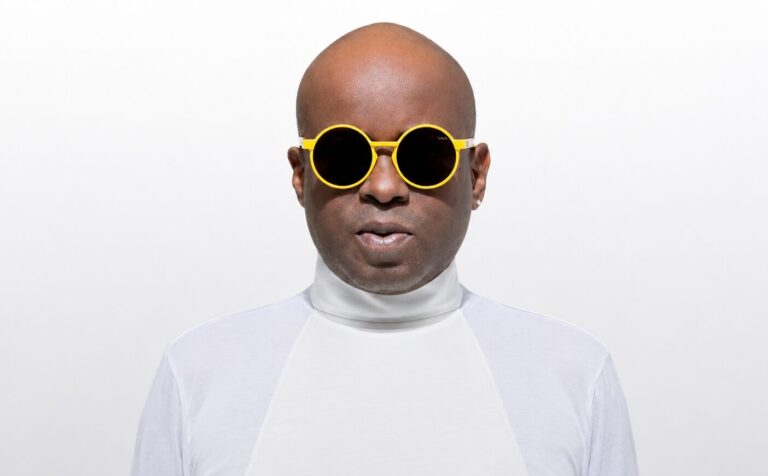
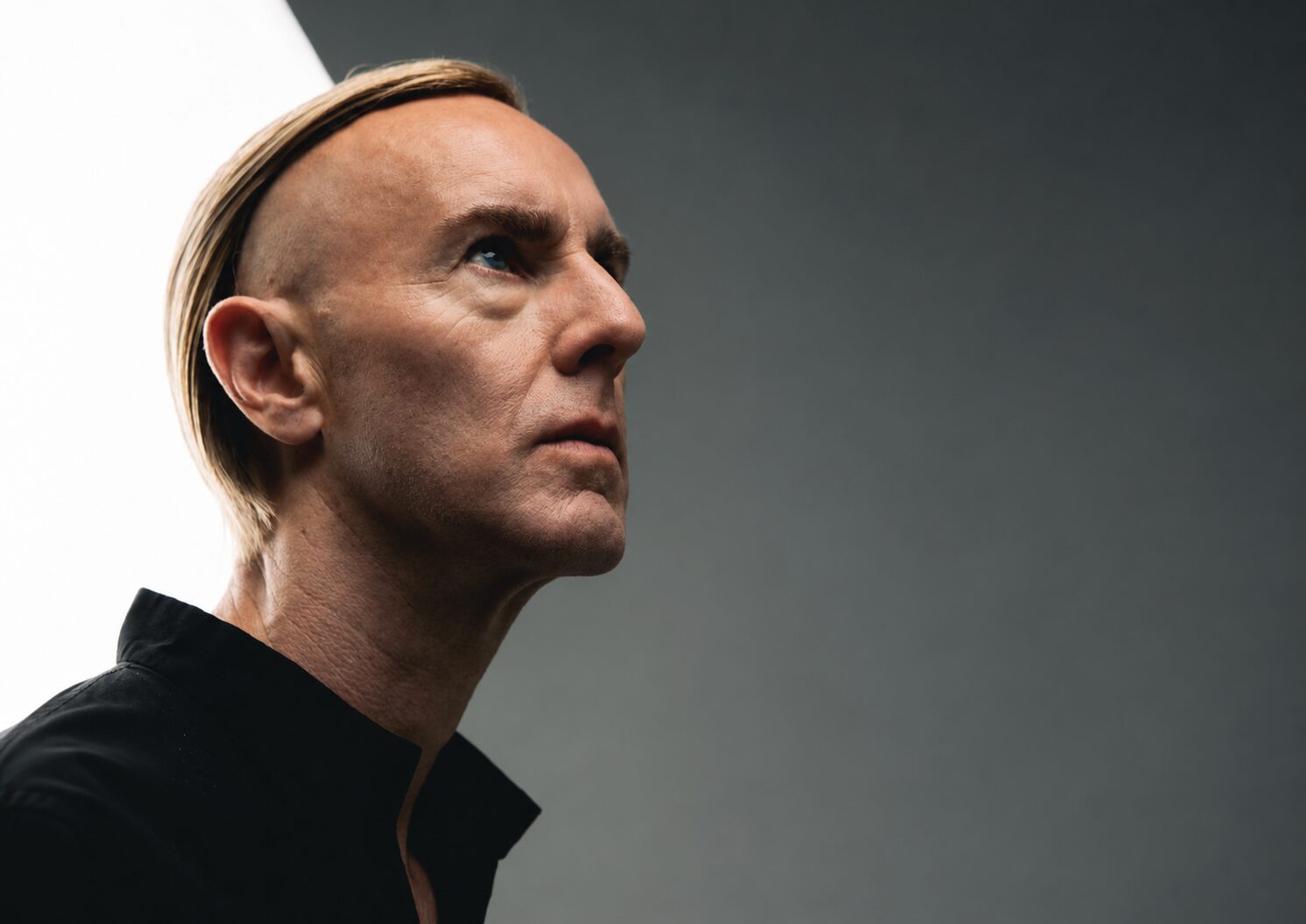
Richie Hawtin has returned to his influential Plastikman alias for a new collaboration with Prada, creating a series of soundscapes for the fashion house’s Pradasphere exhibition in Milan.
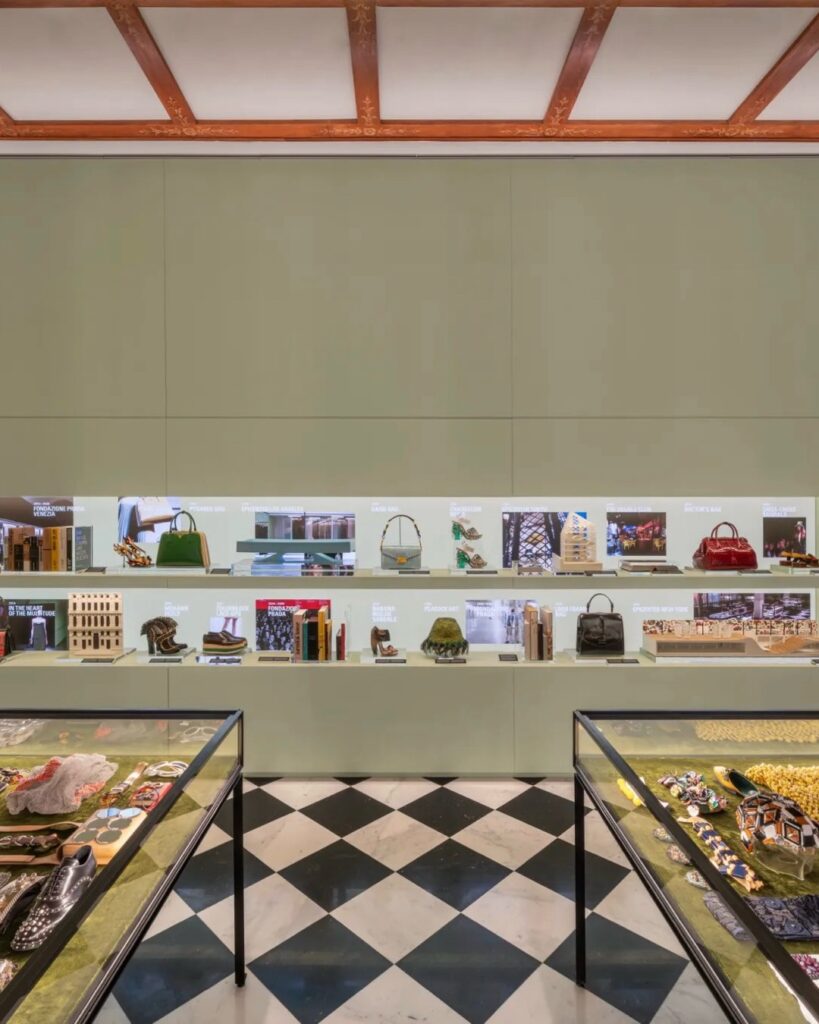
Rather than producing a single conventional soundtrack, Richie Hawtin has composed multiple pieces specifically for the exhibition at the Prada Galleria, with a different sonic environment designed for each room.
The project continues an increasingly extensive creative relationship between Richie Hawtin and Prada, one that has developed across exhibitions, runway shows and international cultural events since 2021.
For the latest Pradasphere, Plastikman becomes part of the architecture itself.
Sound Designed for Space
The concept behind the soundtrack reflects the minimalist philosophy that has defined much of Richie Hawtin’s work as Plastikman.
Instead of treating music as a background element accompanying the exhibition, Richie Hawtin has approached sound as another dimension of the physical environment.
Music is an invisible force that resonates as much with our emotions as with the architecture it inhabits.
Richie Hawtin explained that the Plastikman compositions use subtle frequencies and rhythms intended to be felt as much as heard, allowing Prada’s visual aesthetic to extend into sound as visitors move through the exhibition.
It is an approach particularly suited to Plastikman.
Since establishing the alias in the early 1990s, Richie Hawtin has used Plastikman to explore stripped back electronic music where small changes in rhythm, frequency, space and texture can become central to the listening experience.
Within a gallery environment, those characteristics can function differently from their role inside a club. Sound becomes connected to movement through physical space, changing as visitors travel between rooms and encounter different chapters of the exhibition.
Plastikman Returns to Pradasphere
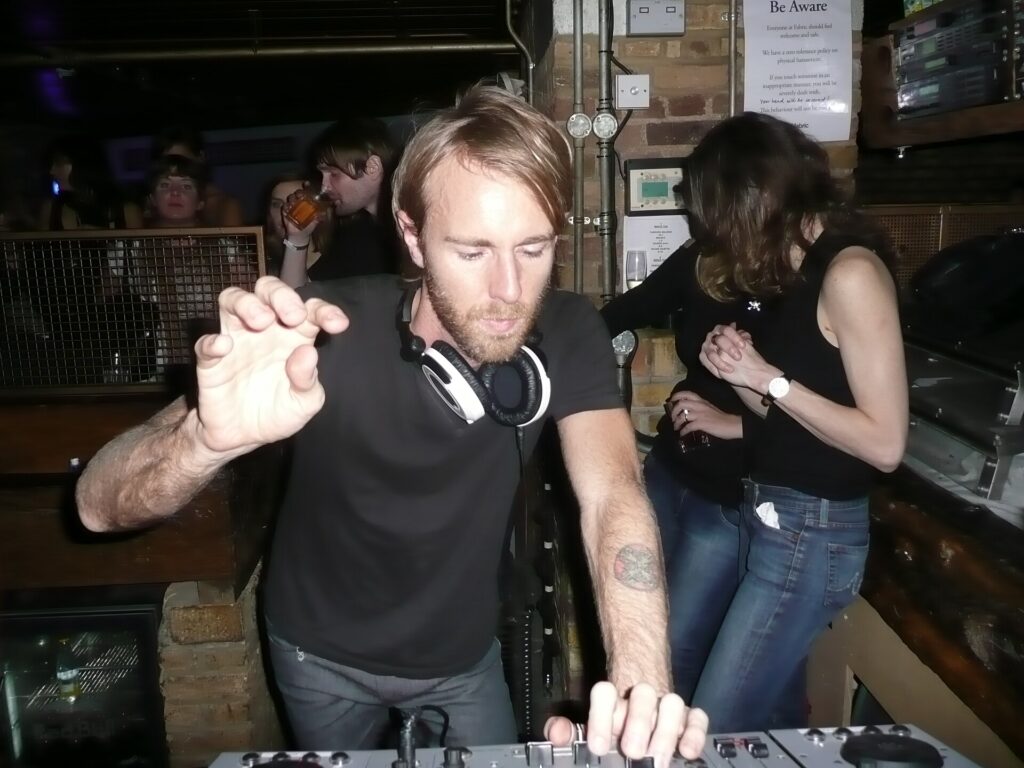
This is not the first time Plastikman has provided the sonic identity for a Pradasphere exhibition.
In 2023, Richie Hawtin created the soundtrack for Pradasphere II in Shanghai under the same alias.
Some of the material developed for that project has now been reworked for Milan, establishing a sonic connection between the two exhibitions while adapting the compositions to a different location and architectural environment.
The relationship between continuity and reinterpretation feels appropriate for a retrospective exhibition.
Rather than simply repeating the Shanghai soundtrack, the Milan project allows previous ideas to evolve alongside new material and new spaces.
An Ongoing Collaboration With Prada
Richie Hawtin’s relationship with Prada extends considerably beyond Pradasphere.
Since 2021, Richie Hawtin has scored five Prada runway shows, bringing his electronic production into environments where music plays an important role in shaping pace, atmosphere and perception.
He has also served as the creative force behind Prada Extends, the fashion house’s music and culture programme developed in collaboration with the producer.
The project debuted at Tate Modern before travelling internationally to Tokyo, Miami and Bangkok.
Across these different collaborations, Richie Hawtin’s role has moved beyond that of an artist simply providing music for a fashion event.
The relationship has instead explored how electronic music can interact with design, architecture, visual culture and physical environments.
Prada Returns to Its Milan Origins
The setting of the latest Pradasphere exhibition adds another historical dimension.
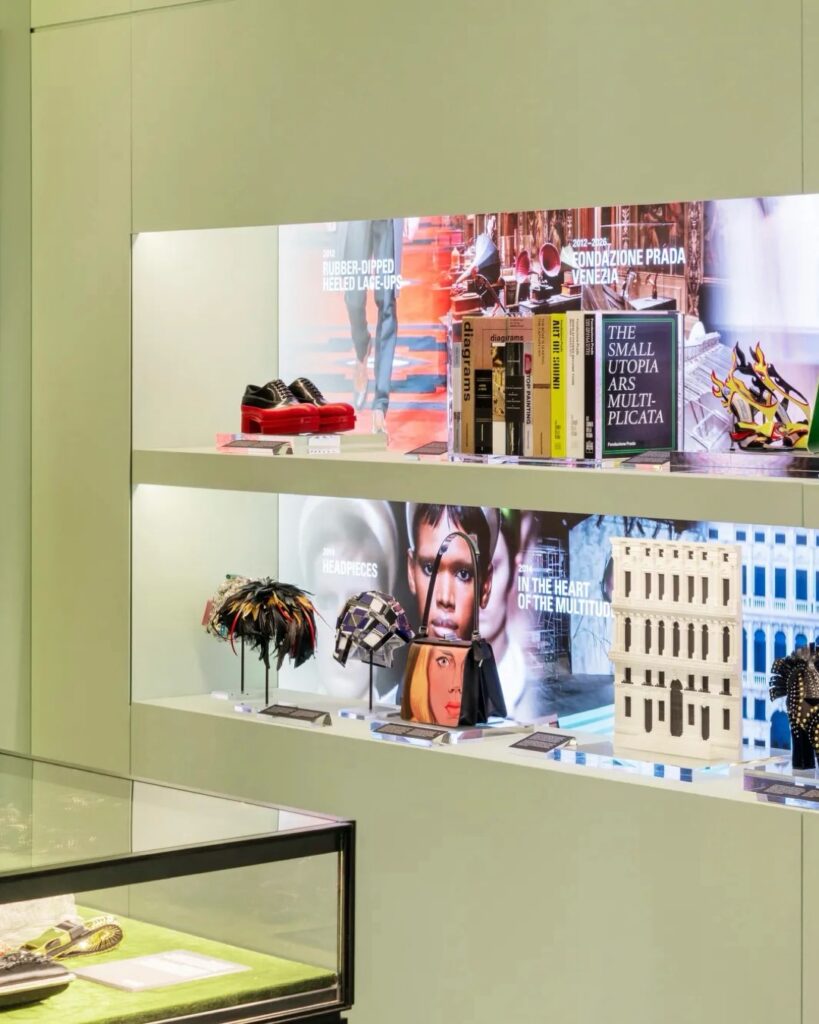
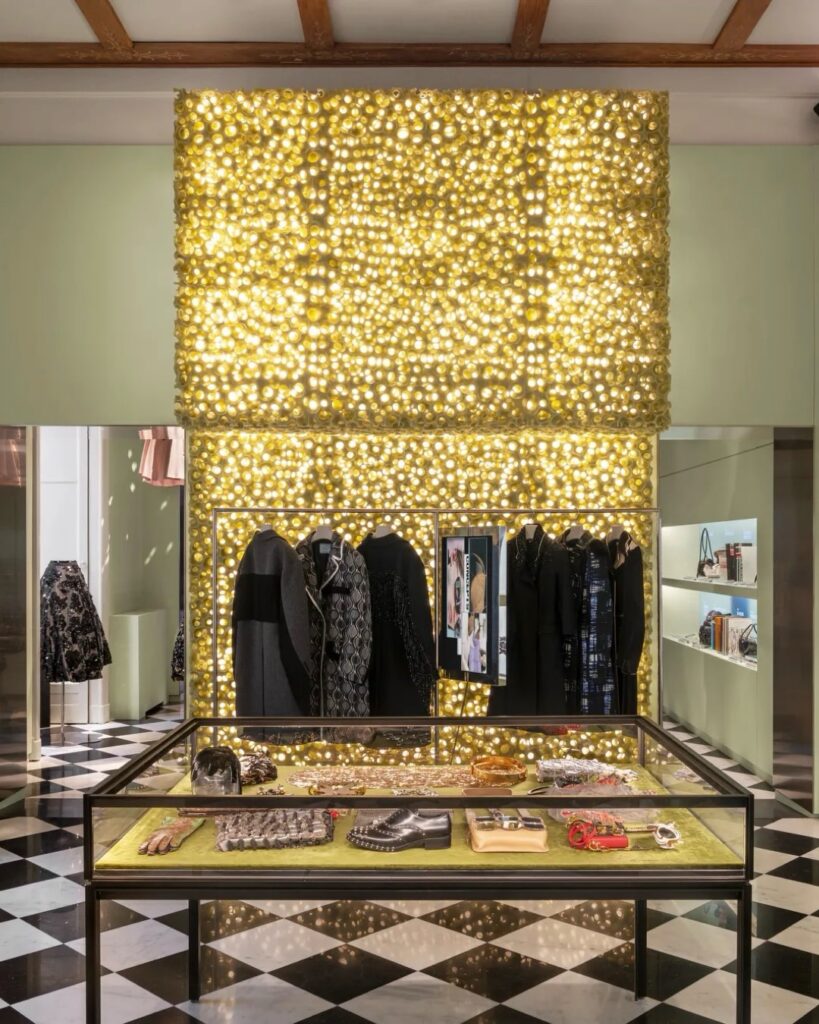
Directed by Miuccia Prada, the exhibition takes place inside Milan’s Galleria Vittorio Emanuele II, on the site where Fratelli Prada originally founded the house in 1913.
The location allows the exhibition to explore Prada’s history within the physical environment connected to its beginnings.
Against that historical backdrop, Plastikman provides a distinctly contemporary sonic layer.
The contrast is striking. More than a century of fashion history is presented through an environment shaped partly by electronic frequencies, minimalist rhythms and production techniques associated with one of techno’s most influential experimental projects.
The Enduring Language of Plastikman
Richie Hawtin’s decision to work under the Plastikman name is significant.
Across his career, Richie Hawtin has operated through several creative identities, but Plastikman has remained particularly associated with minimalism, technological experimentation and the exploration of sound at its most elemental.
The project emerged from the same broader environment that connected Detroit techno with a new generation of artists across the border in Canada.
Through Plastikman, Richie Hawtin developed a distinctive approach in which repetition became microscopic. Percussion, acid sequences and carefully controlled changes in frequency created music that could feel simultaneously mechanical and intensely physical.
That philosophy translates naturally into installation work.
In a gallery, the audience is not necessarily standing in one location waiting for a composition to unfold. Visitors move, stop, observe and continue. The music must therefore coexist with architecture and movement rather than command attention in the same way as a conventional performance.
For Pradasphere, the Plastikman identity provides the framework for that relationship.
Technology as a Creative Instrument
The Prada project also arrives during another period of technological exploration for Richie Hawtin.
Earlier in 2026, Richie Hawtin released Bullfrog, a drum machine created in collaboration with Erica Synths.
The instrument was developed partly as an educational tool, encouraging users to understand drum programming through direct interaction with electronic hardware.
While a drum machine and a fashion exhibition may appear to occupy very different worlds, both projects reflect a recurring principle throughout Richie Hawtin’s career.
Technology is not simply an end product. It is a medium through which people can interact with sound.
That philosophy has followed Richie Hawtin from the development of Plastikman through decades of performance innovation, music technology projects and multidisciplinary collaborations.
When Techno Leaves the Club
Electronic music has long existed beyond the dancefloor, but projects such as Pradasphere demonstrate how its vocabulary continues to move into new cultural environments.
Here, Richie Hawtin is not attempting to recreate a club inside a fashion exhibition.
Instead, the characteristics that have defined Plastikman are being used for another purpose. Frequency establishes atmosphere. Rhythm interacts with movement. Minimalism leaves room for architecture and objects to remain central.
The result positions sound as part of the exhibition rather than an accompaniment to it.
For Richie Hawtin, whose career has repeatedly examined the relationship between humans, machines and spaces, Pradasphere offers another environment in which those ideas can evolve.
And for Prada, the collaboration introduces an invisible layer to more than a century of design history.
Visitors may see the exhibition, but through Plastikman, they are also being invited to feel it.
📸 : Cover Photo / Courtesy of Richie Hawtin
📸 : Additional Photo Credits / Raminta Malinauskaite (CCO), Courtesy of neighbourhoodpr (NBHD)