
A handmade Moby DJ cassette from the late 1980s, original Depeche Mode studio demos and some of the earliest physical releases connected to Eminem have surfaced as part of a new Wax Poetics auction dedicated to rare tapes and records. The collection turns back the clock to an era when careers could begin with a cassette passed across a nightclub, a studio reference tape or a tiny independent vinyl pressing, long before streaming platforms made music instantly available around the world.
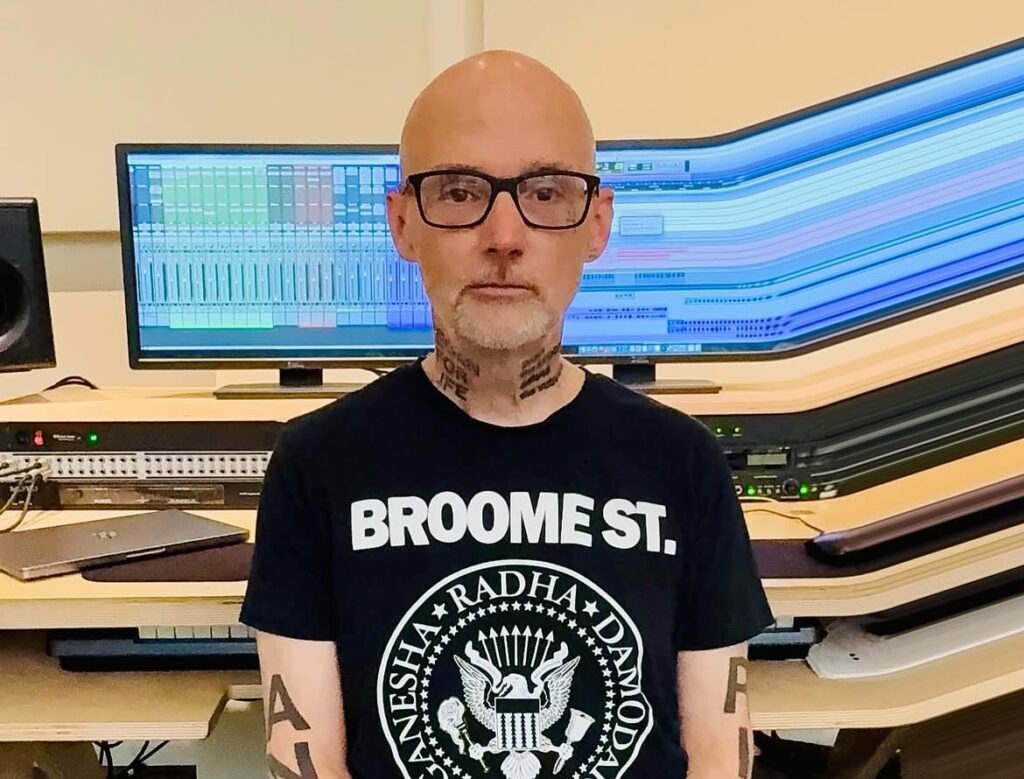
Among the most fascinating pieces is an original DJ demo cassette personally created by Moby around 1987 or 1988. More than simply an early recording, the object captures a young artist attempting to find his place inside New York nightlife years before international recognition arrived.

Before Moby Became Moby
The Moby cassette comes directly from musician and actress Dylan Hundley, who says Moby handed it to her at a party she hosted in Tribeca after arriving in New York from Connecticut. At the time, Moby was circulating homemade demos in an attempt to secure DJ opportunities around Manhattan.
I was a kid myself, so I wasn’t hiring for DJs. But I was really charmed. He was super sweet. And nobody had ever given me a cassette before,
Dylan Hundley recalls.
The physical object itself is unmistakably personal. Its J card features drawings made in blue and red ballpoint pen, including turntables and a mixer, alongside handwritten instructions concerning which side should be played. Dylan Hundley kept the cassette for almost four decades.
The musical contents provide an even more intriguing glimpse into Moby’s early instincts. One side contains a conventional sequence of tracks, while the other captures Moby mixing edits, samples and fragments spanning R&B, early house, new wave and other styles. Dylan Hundley identifies music associated with Adonis, The Specials, Syndicate Sound Labs and New Order among the sources.
Heard through the lens of Moby’s later career, the genre crossing approach feels particularly revealing. More than a decade before Play transformed Moby into an international electronic music figure, the instinct to connect apparently distant musical worlds was already present on a homemade cassette being passed around New York clubs.
A Depeche Mode Studio Tape From the “Ultra” Era
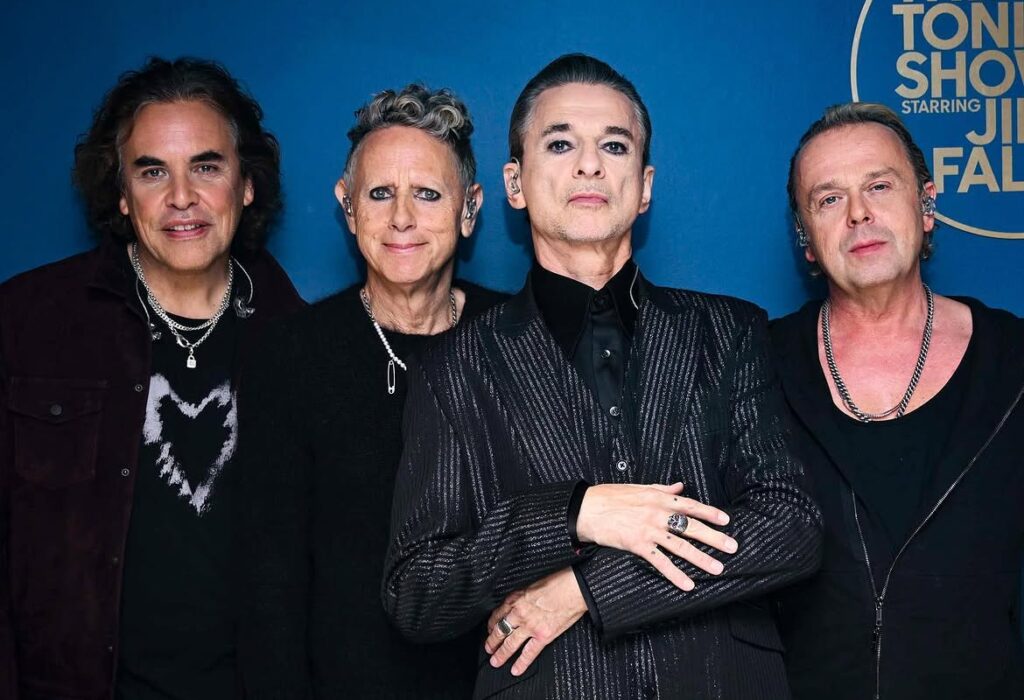
Another major electronic music artefact in the auction comes from Depeche Mode.
The Maxell MS 60 cassette is described as a working studio reference tape dating from around 1996 and is housed in an Electric Lady Studios J card. Its shell carries the typed description “Depeche Mode Original Demos.”
Four titles appear on the first side: “Useless,” “Will,” “No Good” and “Not One.” The second side is blank. “Useless” later appeared on Ultra, released in 1997, while “No Good” appears connected by title to the album single “It’s No Good.” “Will” and “Not One” do not appear on the finished album track list.
The cassette has been graded 9 Near Mint by AudioMediaGrading and identified as a circa 1996 studio reference connected to the Ultra demos. Unlike a commercially manufactured collectible, this is a working object from the creative process itself, preserving material from the period before the finished album reached listeners.

Eminem Before Global Fame
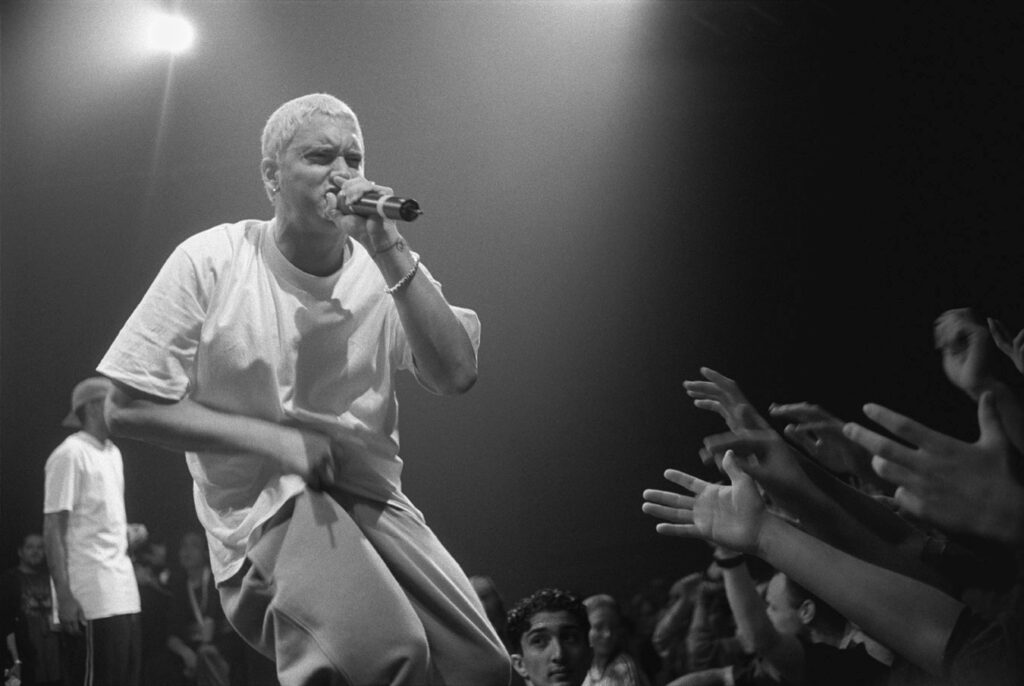
The auction also reaches into the formative years of Eminem, with several pieces documenting the period before and immediately surrounding his mainstream breakthrough.
Among them is an original 1996 pressing of Infinite, Eminem’s debut album. The copy was acquired directly from Eminem by Detroit DJ Babe and has remained with the same owner ever since. The original F.B.T. Productions pressing came from a small independent run and predates the Slim Shady persona that would soon transform Eminem into a global star.
An even earlier chapter appears through a sealed 1995 cassette single by Soul Intent, the Detroit group in which Marshall Mathers performed under the name M&M. Featuring “F#@!in’ Backstabber” and “Biterphobia,” the cassette predates Infinite and represents the group’s only commercial release.
Also included is a sealed promotional cassette created ahead of The Slim Shady LP. Mixed by Stretch Armstrong, the tape combines snippets of tracks including “My Name Is,” “Brain Damage,” “I’m Shady” and “Guilty Conscience” with short interludes. It provides a physical snapshot of the promotional machinery beginning to form around Eminem immediately before his international breakthrough.
When Music History Fit Inside a Cassette
Beyond the celebrity names, the collection highlights how dramatically the infrastructure surrounding music has changed.
A young DJ could once introduce himself through a handmade cassette. A band could circulate unfinished studio material on a Maxell tape. An emerging rapper could press a few hundred records locally and personally place them into the hands of DJs.
These objects were not originally designed as museum pieces or luxury collectibles. They were functional. They moved music between artists, studios, DJs, journalists and listeners.
That utility is precisely what makes them compelling decades later.
The handwriting on Moby’s cassette, the typed Depeche Mode studio titles and the limited Detroit pressings connected to Eminem preserve details that disappear when music becomes a digital file. They document not only the recordings themselves, but also the mechanisms through which underground music once travelled.
Physical Artefacts in a Digital Era
The auction arrives at a moment when physical music culture has taken on a renewed significance. Vinyl, cassettes, studio masters and original promotional materials increasingly function as historical documents as much as playback formats.
For electronic music in particular, such objects can reveal a side of history that digital catalogues rarely capture. Early DJ mixes, acetates, DATs and demo tapes often existed outside official discographies. Some were produced in tiny quantities, while others were created as unique working copies.
Moby’s handmade demo is a perfect example. It was not conceived as a collectible. It was a young DJ’s calling card.
Almost forty years later, that same cassette has become evidence of an artist experimenting with house, new wave, R&B and sampling before the wider world knew his name.
The Wax Poetics auction remains open until October 8, giving collectors an opportunity to bid on objects that once existed simply as tools for getting music heard.
Explore the Rare Tapes & Records auction at Wax Poetics
📷 : Cover Photo / Courtesy of Moby
📷 : Additional Photo Credits / Courtesy of Moby, courtesy of Depeche Mode, Mika-photography (CC License)