

A landmark case at the intersection of artificial intelligence, streaming and music industry fraud has reached its conclusion in the United States. Musician Michael Smith has been sentenced to 18 months in prison after orchestrating a large scale scheme that used automated bots and AI generated music to collect millions of dollars in streaming royalties.
The US Attorney’s Office for the Southern District of New York confirmed the sentence on October 6, following Michael Smith’s guilty plea earlier this year. Michael Smith was also ordered to forfeit $8,091,843.64, representing proceeds connected to a scheme that operated for several years across some of the world’s largest streaming services.
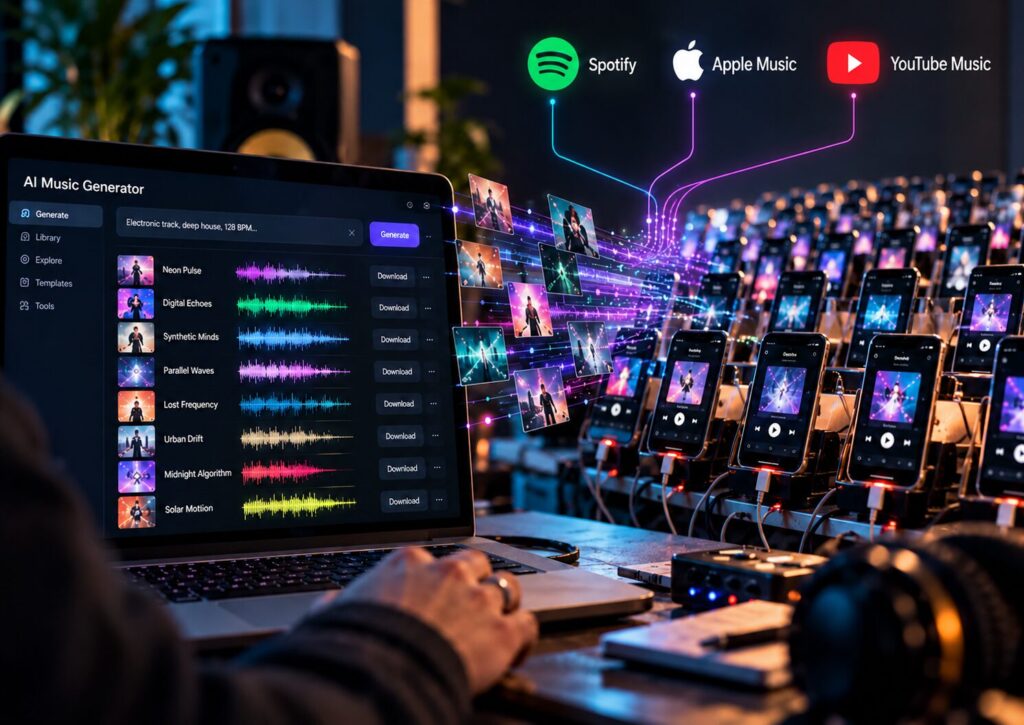
Investigators say Michael Smith generated billions of fraudulent streams across Spotify, Apple Music, Amazon Music and YouTube Music, creating an artificial listening ecosystem where bots effectively played music created to generate revenue rather than genuine audience engagement.
The case arrives at a critical moment for the music industry, as AI generated content continues to expand rapidly across digital platforms and questions surrounding streaming manipulation, copyright, authorship and royalty distribution become increasingly difficult to ignore.
Billions of Streams, Millions in Royalties
According to authorities, the operation ran between 2017 and 2024.
Michael Smith initially generated artificial streams of his own music before the operation expanded dramatically. The scheme eventually involved uploading hundreds of thousands of AI generated tracks and using networks of automated accounts to continuously stream the material.
The scale became enormous. In April 2023 alone, the tracks involved reportedly accumulated more than 80 million streams on YouTube Music.
Court documentation cited by prosecutors estimates that Michael Smith collected approximately $14 million across multiple streaming platforms during the wider operation, while more than $8 million has now been ordered forfeited.
Rather than attempting to manufacture popularity around a small number of identifiable songs, the operation relied on scale. Vast quantities of music could be distributed across streaming services while automated listeners generated the plays required to transform those uploads into royalty payments.

AI Music Meets Streaming Manipulation
The case highlights an important distinction in the increasingly complicated debate around artificial intelligence and music.
The central issue was not simply the use of AI to create music. The fraud came from combining artificially generated tracks with automated streaming accounts designed to imitate genuine listeners and manipulate royalty systems.
That combination presents a particularly serious challenge for streaming platforms. Generative technology can now produce enormous quantities of audio quickly, while automated accounts can potentially manufacture listening activity at a scale that would be impossible through traditional methods.
For independent producers and electronic artists competing for attention on the same platforms, the implications extend beyond inflated streaming numbers. Fraudulent activity can redirect money from royalty pools that are intended to compensate legitimate creators and rightsholders.
A Warning for the Streaming Economy
Following the sentencing, US Attorney Jamie McDonald described the operation as an exploitation of technology that replaced genuine consumers with automated bots and genuine creativity with fake songs.
The International Federation of the Phonographic Industry also described the result as a clear signal that streaming fraud constitutes a crime with serious consequences.
The organisation stressed that prosecution alone will not solve the problem. Detection, prevention and disruption are increasingly becoming part of the industry’s response, particularly through collaborative efforts such as the Streaming Integrity Initiative, which seeks to protect artists, rightsholders and listeners from manipulated streaming activity.
The case therefore represents more than the punishment of one individual. It exposes a vulnerability within an ecosystem where billions of plays, enormous catalogues and automated recommendation systems operate simultaneously.
Why This Matters for Electronic Music
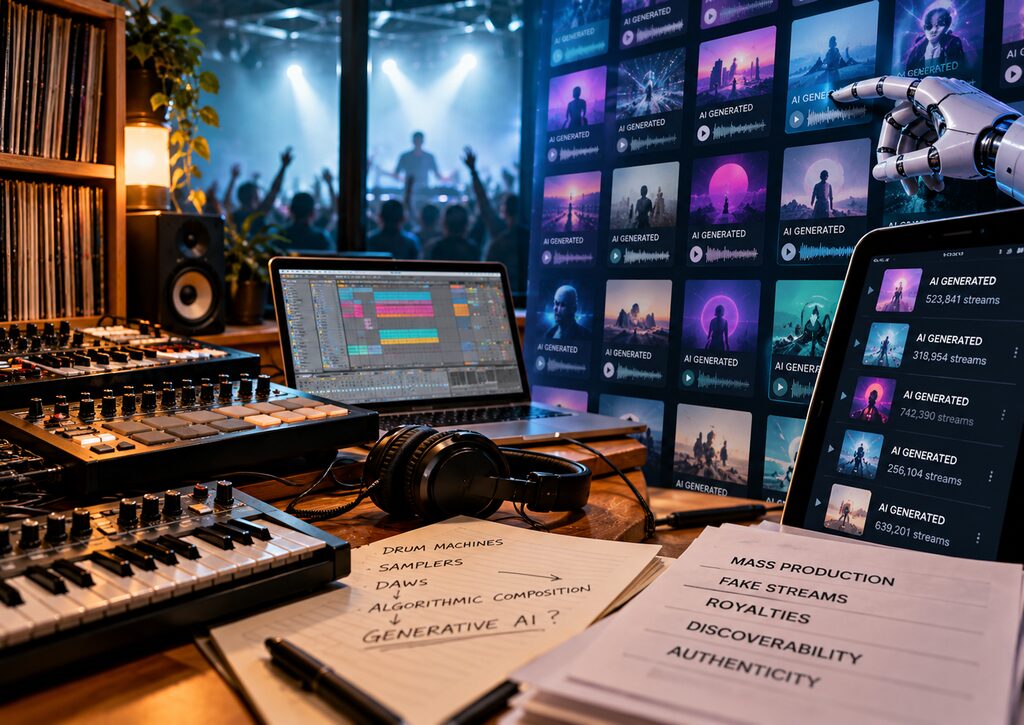
Electronic music has always maintained a close relationship with technology. From drum machines and samplers to digital audio workstations and algorithmic composition, technological change has repeatedly transformed how electronic music is created.
Generative AI represents another stage in that evolution, but the ability to produce music at extraordinary speed introduces new questions about volume, value and authenticity.
For emerging producers already navigating an intensely competitive streaming environment, hundreds of thousands of automatically generated tracks can create additional pressure on discoverability. When those tracks are combined with fraudulent streams, the problem shifts from creative competition into economic manipulation.
The concern is therefore not whether technology should participate in music creation. Electronic music history itself makes such a distinction difficult to defend. The more urgent question is how platforms distinguish legitimate experimentation with new creative tools from industrial scale systems designed primarily to extract royalties.
A Precedent for the AI Era
As generative music becomes increasingly sophisticated, cases like this could help establish clearer boundaries around how AI interacts with the commercial music ecosystem.
Streaming fraud existed long before the current AI boom. Bot networks, purchased plays and manipulated engagement have been persistent problems across digital platforms for years. What changes with generative AI is the potential scale.
Music itself can now become part of the automation loop.
Tracks can be generated, uploaded and streamed through systems requiring progressively less human involvement. Without effective safeguards, the result could be an environment where synthetic catalogues compete not only with human artists for attention, but also for the financial pools supporting their work.
The sentencing of Michael Smith sends a significant message as the music business enters that uncertain territory. AI may transform how music is created, but when automation is used to fabricate audiences and extract royalties, authorities are increasingly treating the issue not as technological experimentation, but as fraud.
📸 : Cover Image / AI-generated
📸 : Additional Images / AI-generated