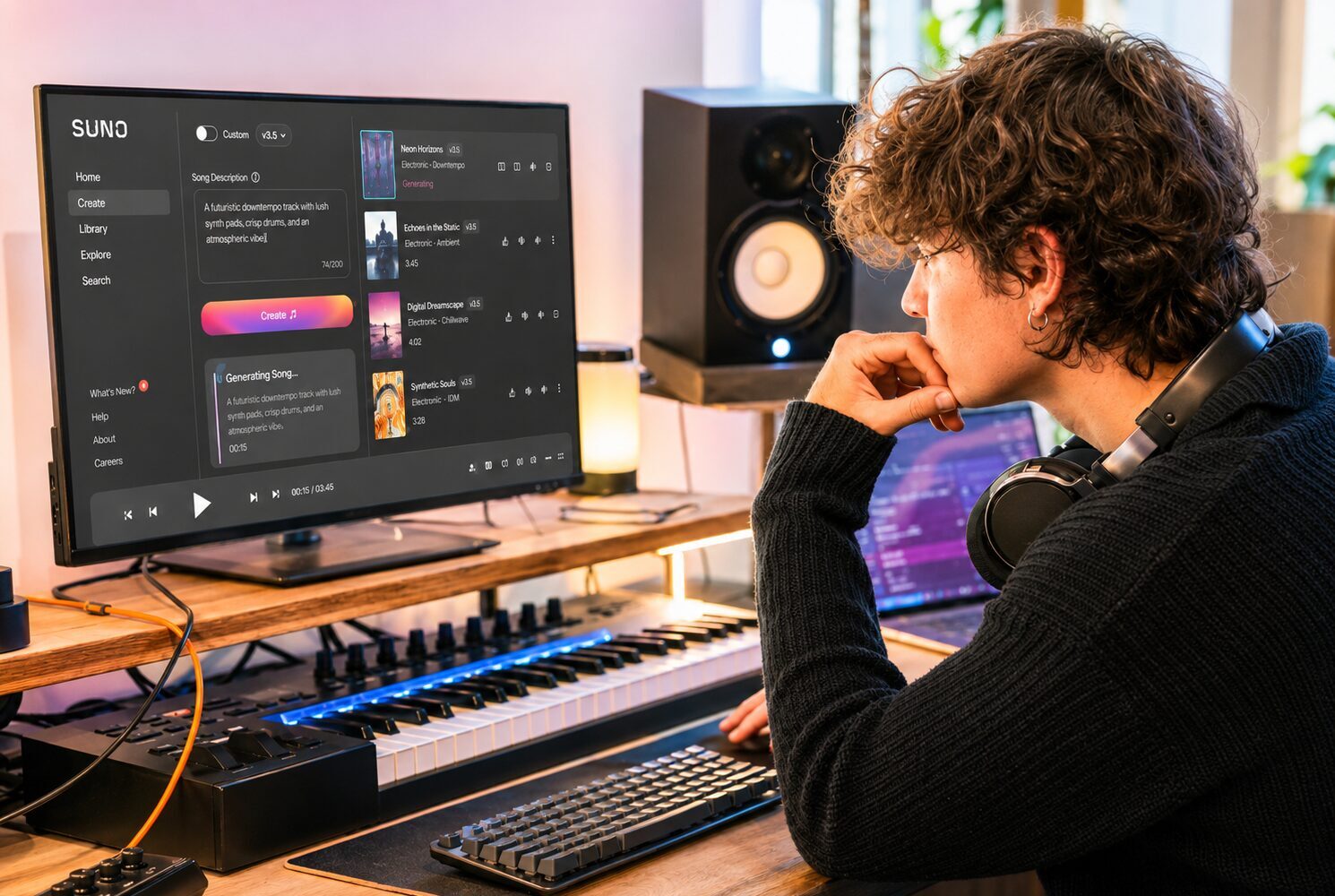
The debate around AI music has entered a new and more concrete phase.
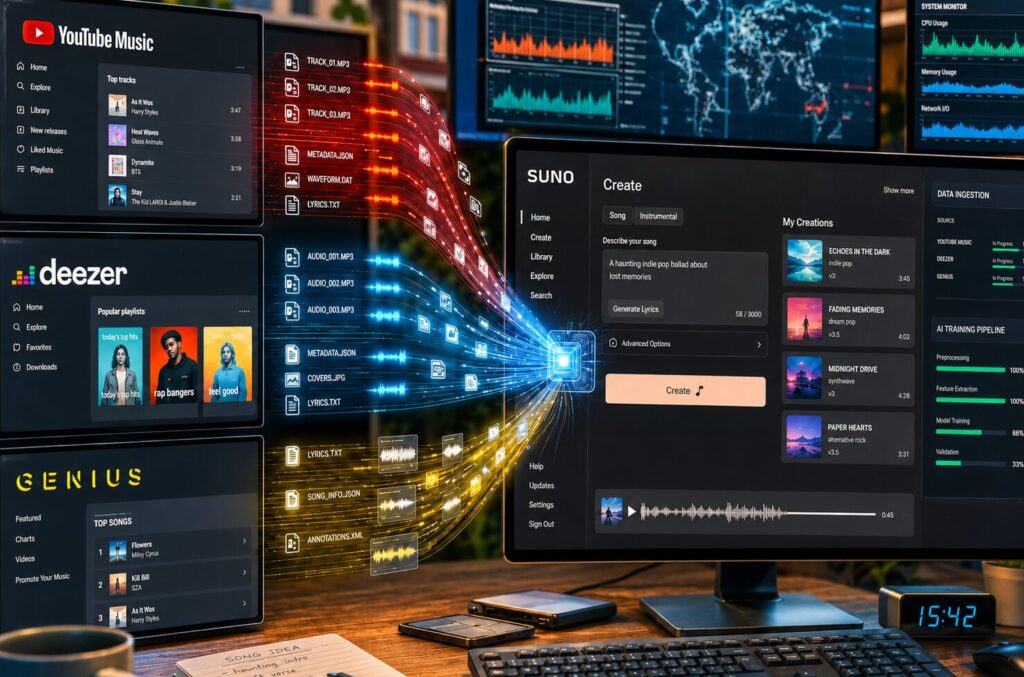
According to hacked data obtained by 404 Media, AI music generator Suno allegedly scraped millions of songs, lyrics and audio clips from platforms including YouTube Music, Deezer and Genius to train its generative music models.
The leak offers one of the clearest looks yet at the data infrastructure behind a major AI music platform and raises further questions around consent, copyright, transparency and the future relationship between human artists and machine-generated music.
What the Leak Revealed
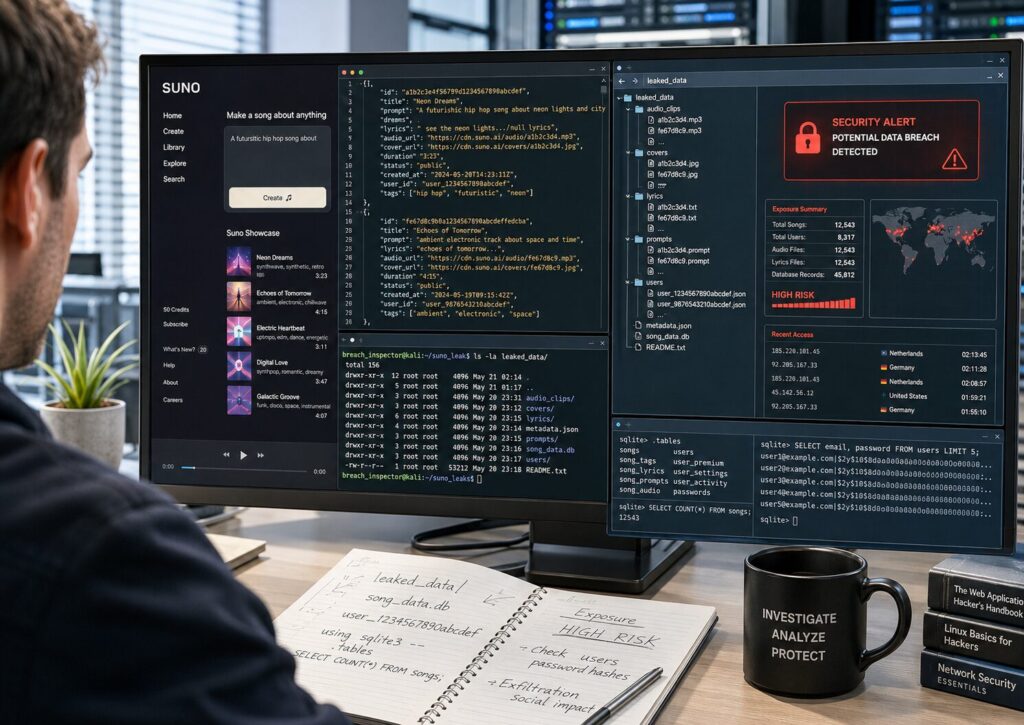
The hacked material was reportedly obtained by a hacker using the pseudonym Ellie.191, who accessed Suno-related source code and user information from 2023 and 2024.
According to the leaked data, Suno used more than two million music clips as part of its training process, with files pointing to large-scale scraping across multiple online platforms. 404 Media reported that source code referenced datasets including around 113,879 hours of YouTube Music, 17,615 hours of Genius-related data and 12,287 hours of Deezer content.
The leak also reportedly showed references to other sources, including podcasts, lyrics databases and stock or free music libraries such as Pond5, Jamendo, Freesound and the International Music Score Library Project.
Perhaps most strikingly, some code appeared to indicate that Suno was searching for a cappella versions of songs on YouTube, a detail that adds new weight to concerns around vocal generation and the reproduction of musical identity.
Scraping Tools and the Question of Access
The leaked files reportedly suggested that Suno was able to scrape songs from YouTube through Bright Data, a company that sells web-scraping tools and services. It remains unclear how Suno allegedly accessed material from other platforms named in the leak.
That detail matters because AI companies have often avoided giving precise explanations of how training datasets are collected. Suno has previously stated in legal filings that its training data includes “essentially all music files of reasonable quality” available on the open internet, while respecting paywalls and password protections.
The company has also argued that this use falls under fair use, a position strongly disputed by parts of the music industry.
Suno Responds to the Breach
Suno has acknowledged that a security breach took place in November 2025, but said the incident primarily involved outdated source code that is no longer in use.
The company has also disputed concerns around customer information, stating that no sensitive personal information was compromised and that it does not have access to users’ full credit card numbers through Stripe.
Still, the breach has become significant not only because of the security questions it raises, but because it provides rare visibility into how generative music systems may be built behind closed doors.

Legal Pressure Keeps Building
Suno is already facing major legal pressure.
The company is being sued by a coalition of major labels coordinated by the Recording Industry Association of America, including Universal Music Group and Sony Music, over allegations that copyrighted music was used to train AI models without permission.
Warner Music Group has since exited the lawsuit after reaching a settlement and licensing partnership with Suno, while also entering AI-related agreements involving Udio. Those deals have triggered further controversy, with musicians’ unions and creator groups questioning whether artists whose work helped build AI systems are being properly credited or compensated.
For many musicians, the issue is no longer theoretical. It is becoming a direct battle over who controls the value of recorded music in the AI era.
Why This Matters for Electronic Music
Electronic music sits at the centre of this debate.
Producers in house, techno, bass, experimental and club music often build highly recognisable identities through sound design, vocal processing, drum programming, synth architecture and texture. These are exactly the kinds of sonic details that AI systems can analyse, absorb and reproduce at scale.
For independent electronic artists, the risk feels especially sharp. Many producers release music through platforms such as YouTube, SoundCloud, Bandcamp, Spotify and free archive libraries as a way to reach listeners. If that visibility also exposes their work to automated scraping, the traditional relationship between exposure and opportunity becomes more complicated.
The same platforms that help artists build audiences may also become sources for models capable of generating music that competes with them.
The Bigger Problem: Transparency
This leak follows growing scrutiny around AI training datasets.
Earlier investigations, including tools such as The Atlantic’s AI Watchdog, have already allowed musicians to search whether their work appears in datasets linked to AI development.
Deep Tech Mag previously explored this growing transparency battle in “AI Watchdog Opens the Black Box of AI Music Training, Giving Artists a New Way to Track Their Work,” looking at how artists can begin tracing whether their music appears inside AI training datasets.
But the Suno leak goes further by suggesting not only that copyrighted music appeared in training data, but also where parts of that data may have come from and how it may have been collected.
That distinction is important.
Artists have long suspected that major AI music tools were trained on commercial recordings. What they have lacked is visibility: which platforms were scraped, which tracks were included, what licenses were ignored and which companies ultimately benefited.
The Suno leak does not answer every question, but it pulls part of that hidden infrastructure into public view.
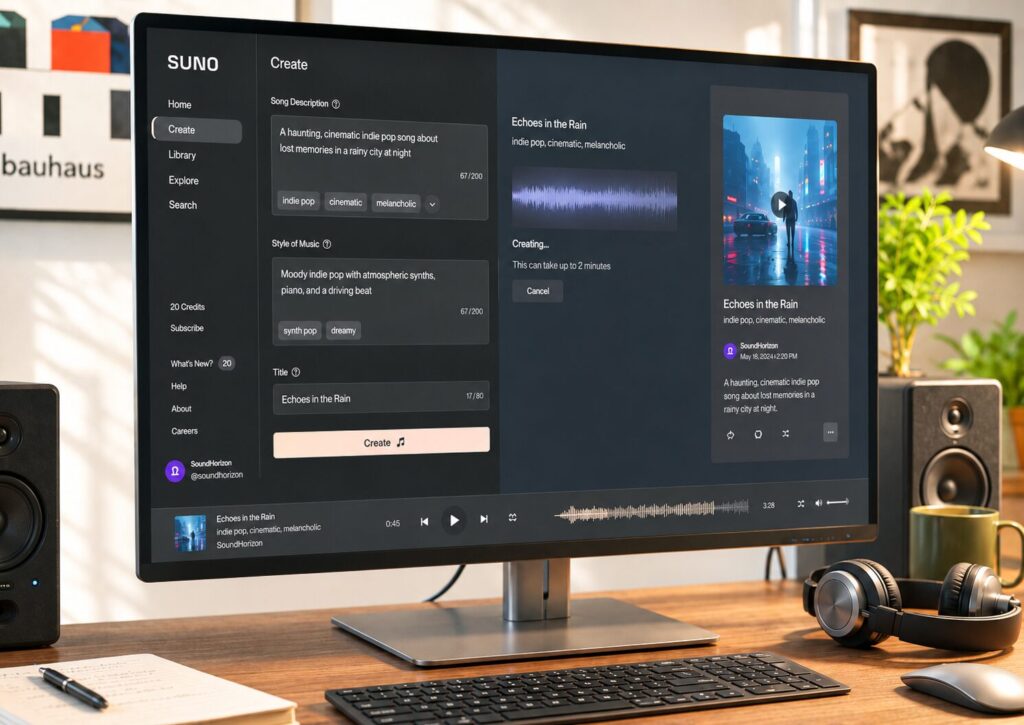
A Cultural Clash Around Making Music
The controversy is also intensified by past comments from Suno CEO Mikey Shulman, who drew criticism after saying that most people “don’t enjoy” much of the time they spend making music.
For many artists, that comment symbolised a broader disconnect between technology companies and the people whose labour, practice and creative risk make music culture possible.
Making music is often slow, frustrating and difficult. But for artists, that process is also where identity forms. The hours spent learning instruments, shaping sound, failing, refining and finding a voice are not an obstacle to creativity — they are part of the art itself.
That is why the AI music debate is not simply about files, models or lawsuits. It is about whether technology companies understand the human meaning of creative work.
The Machine Has a Memory
The industry is now split between lawsuits, licensing deals, detection tools, union pressure and an expanding market for AI-generated tracks. Some companies are moving toward permission-based models. Others continue defending broad scraping under fair use.
For artists, the central questions remain unresolved.
Who gave permission?
Who gets paid?
Who gets credited?
And who decides whether human-made music can become raw material for machines?
The answers will shape the next era of electronic music as much as any new plugin, platform or production tool.
Because if AI music has a future, the industry must first confront its past and the millions of songs already absorbed into the machine.
📷 : Cover Photo / AI-generated with ChatGPT
📷 : Additional Photo Credits / AI-generated with ChatGPT