
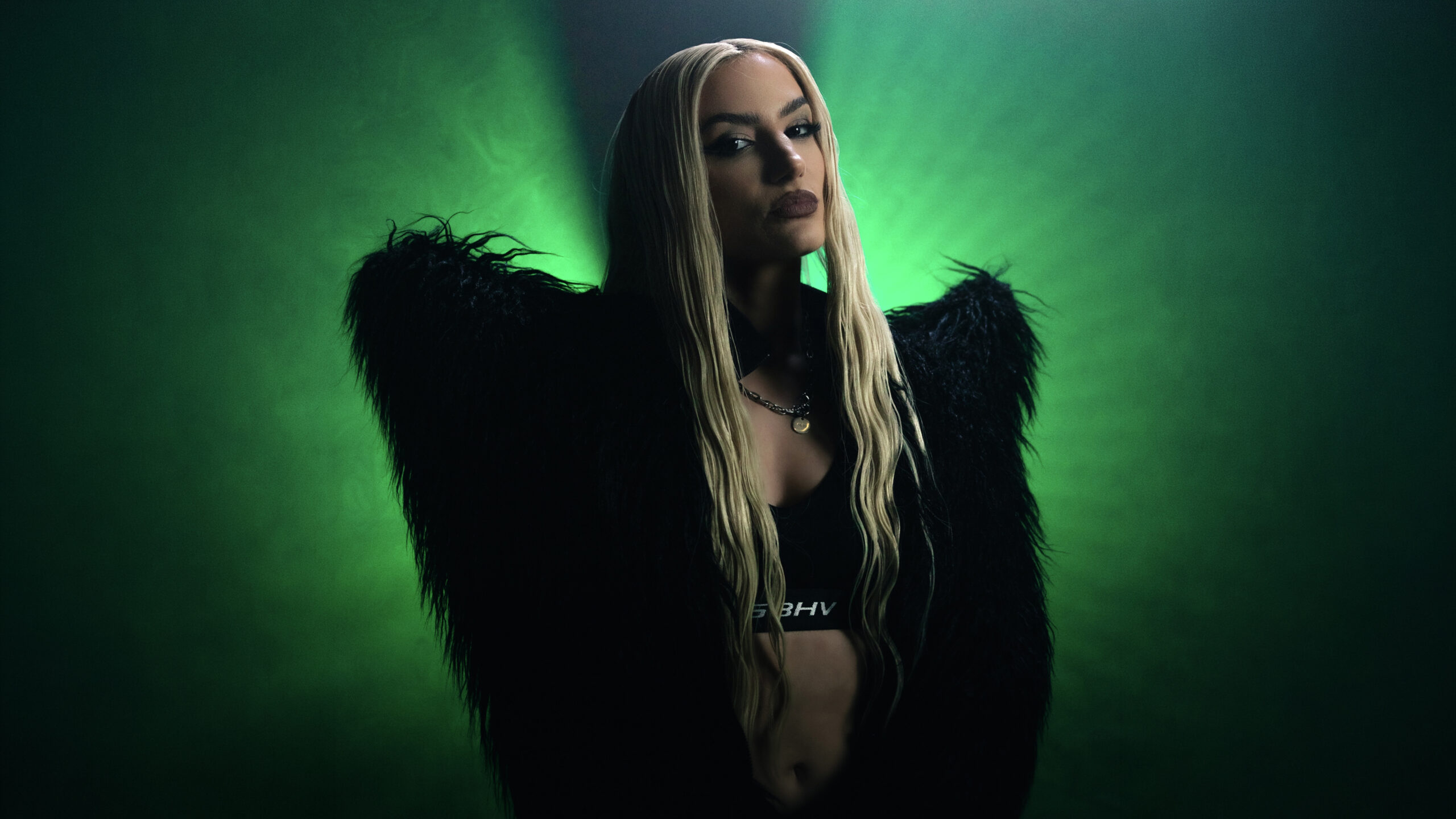
You have probably already felt one of her sets before truly listening to it. Music that breaks free from conventions, somewhere between psytrance and raw techno, where mystical energy collides with almost surgical precision. Behind this intensity stands an artist who commands attention through her presence, her control, and a form of freedom that feels impossible to fully grasp. Where does this deeply embodied force come from? This instinctive, elusive way of inhabiting sound? Looking back at Lee Ann Roberts’ journey means understanding how inner suffering became a language, and how what once belonged to chaos slowly transformed into a form of musical architecture.
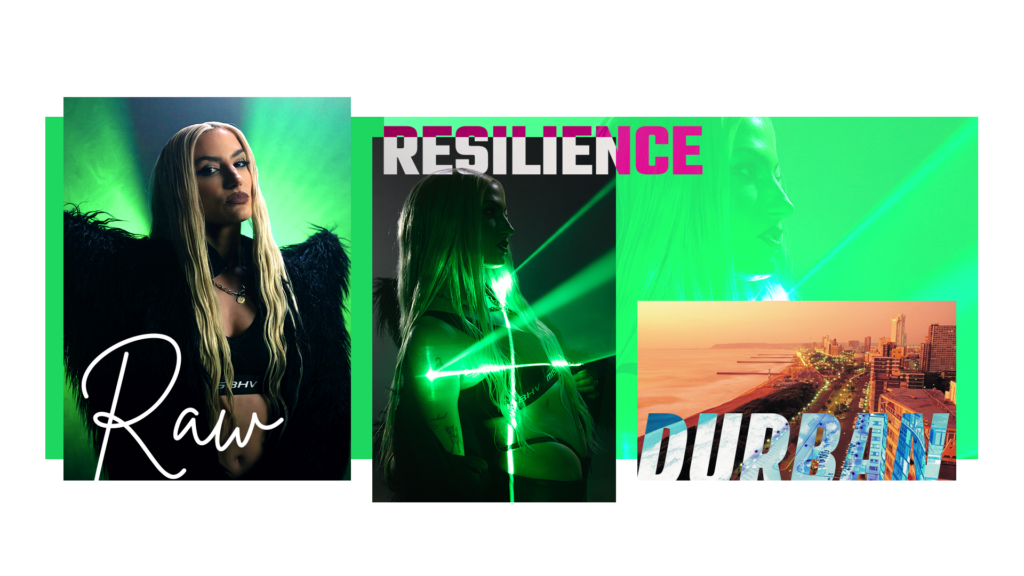
Foundations
Durban. An intimate starting point. A territory that is both physical and emotional for the artist, filled with contradictions. On one side, a form of primitive freedom, nourished by nature, wide open spaces, and a world that seemed infinite in possibilities: “That part of my childhood gave me a deep sense of feeling of being connected to something bigger, something instinctive.”
On the other, an unstable family environment that forced her to adapt almost immediately:
“My home environment was very difficult. It wasn’t stable and I had to grow up quite fast. There was a lot I had to process at a young age and for a long time, I didn’t really have the tools to understand it.”
These two sides of the same coin, this constant tension, became the foundations of an artist whose fractures, contradictions and strengths still run through her music today. This instability sparked something in the young Lee Ann, maybe anger, maybe determination. What is certain is that this feeling created a kind of lightning strike that would eventually lead her toward her art: the art of telling stories, not through words, but through sound. Faced with an environment she could not control, music became her refuge, a mental space entirely her own, a way to protect herself while making sense of what she was going through:
“You start building your own inner world as a way to cope. And for me… that world became music. Music wasn’t just something I loved, it became a way to escape, to process, and eventually to transform everything I’d been through.”
In the end, nothing disappears, nothing is created, everything transforms. It is within this movement that what would later become her artistic signature begins to emerge. A constant tension between light and darkness, softness and intensity, control and overflow. She never erased that part of herself, she transformed it into something more poetic, and above all, something tangible. Music entered her life through movement, through the body, through the energy of the dancefloor. In Durban, her first experiences took place in modest clubs, far from major stages. That is where she discovered the foundations: groove, rhythm, basslines, and the ability of a DJ to completely alter the atmosphere of a room. At the time, she was not yet speaking about a calling. Lee Ann was simply a dancefloor enthusiast taking her first steps inside Durban’s club culture:
“(…) My earliest encounters were in Durban, in the house and techno scene. Smaller clubs… more intimate spaces, nothing too polished but there was something real about it. That’s where I first felt the pull of a dancefloor, how a DJ could control energy, how a groove could completely shift your mood.”
Still, she makes it clear that electronic music had always existed somewhere in her orbit. It was never only about partying. Back then, Lee Ann already hosted a radio show and slowly started finding her place within the electronic music ecosystem. She did not yet know what future awaited her, but people around her already sensed something inevitable: “You told me you were going to do this and you’ve done it.”
After sharpening her ear in small clubs with daring programming, the real turning point arrived in Cape Town. New surroundings. New references. Here, music was experienced in nature. The experience became more immersive, more psychological. Psytrance arrived with a rhythm that felt more embodied, melodic and suspended in space, itself torn between light and darkness, between meticulous construction and the feeling of inevitable disorder, like an untamable horse at full gallop. Maybe it was coincidence, but it was through the meeting of these two wild and free energies that something ignited:
“(…)That transition from Durban’s house and techno into Cape Town’s psytrance culture was massive for me. It felt like I went from understanding music on a surface level to experiencing it on a psychological and emotional level. And beyond the music, those spaces represented freedom and belonging.”
Suddenly, everything seemed to make sense. The weight she had been carrying finally felt lighter. Maybe this was where she belonged, or at least where a part of her belonged. That rare feeling of being in the right place, at the right time, fully aligned. In Cape Town, she found herself, but she also found a place where nothing was expected from her, where nobody judged her. A possibility to exist differently, not simply by surviving, but by truly living. What she experienced there never really disappeared. You can still hear traces of it today in the way she structures her sets, stretches tension, extends buildups and maintains a hypnotic state throughout her performances. Her musical writing aims to provoke reactions,yes, but it also invites people into her world:
“When I say ‘Architect of Controlled Chaos’ it’s not just a concept… it’s very real. It’s taking everything that felt overwhelming growing up and learning how to shape it into something powerful… something intentional. And I think that’s really the core of who I am today. (…) So even though the sound has evolved, the foundation still comes from those early experiences.”
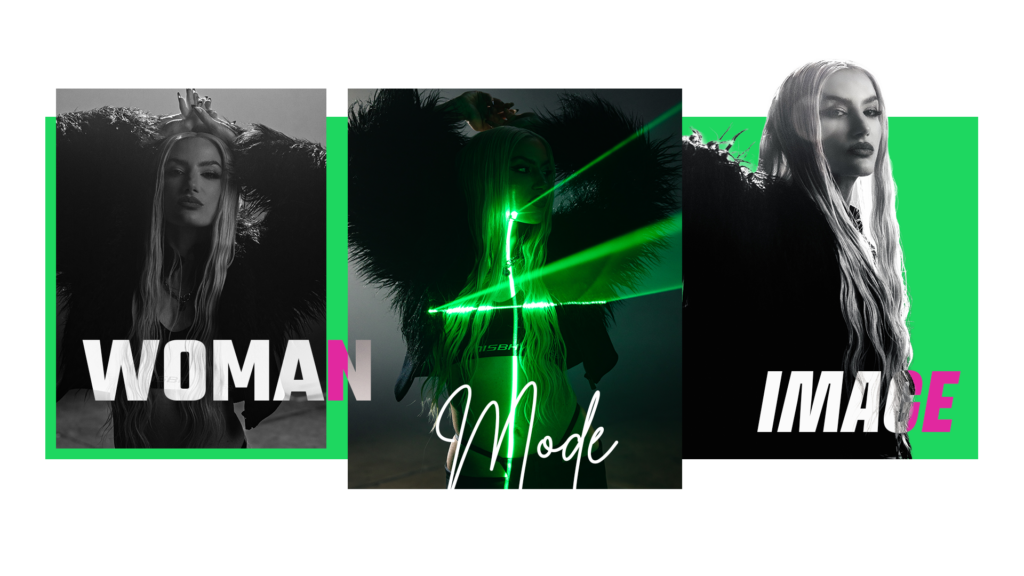
Surfaces
But while music was slowly becoming a space of freedom and reconstruction, another world was shaping her relationship to identity in a completely different way: modelling. A universe built on appearances, perception and constant exposure, one that would profoundly influence the way she later approached visibility within electronic music. If Cape Town taught her how to disappear into music, the modelling industry would teach her the exact opposite: what it means to constantly be seen.
She quickly realised that image also exists within this scene, sometimes in even more insidious ways. In a culture where authenticity is constantly celebrated, appearance still remains a filter through which artists are observed, analysed and ultimately validated. For women, that reality is only amplified. In an environment that has long been dominated by male figures, being immediately taken seriously is never guaranteed. And when you come from the modelling world, certain prejudices settle in even faster.
“There were definitely moments where I felt like I wasn’t being taken seriously straight away and that I had to prove myself more.”
The pressure she experienced did not only come from men or from the industry in a broad sense. She points toward something more systemic, embedded within the scene itself : “And interestingly, some of that pressure didn’t just come from men, it also came from within the scene itself including from a woman who was already established at the time due to my modelling background.”
Faced with this, Lee Ann initially adopted a form of instinctive withdrawal. Minimising her image, shifting the attention back toward the music. As if showing that side of herself too openly could somehow undermine the legitimacy of her work. Female DJs are constantly brought back to their appearance, whether they choose to embrace it or not. Too visible, not understated enough, too feminine, not “credible” enough: the issue has never really been the image women project, but rather the disproportionate importance the industry, and society more broadly, continues to place on women’s appearance before even listening to what they have to offer artistically. And yet, an artist can be a complete entity. A presence, an aesthetic, an aura, a style. None of these things take anything away from the music. On the contrary, when everything feels genuinely aligned, image becomes an extension of the work itself.
With time and maturity, Lee Ann stopped judging herself through that lens. Today, the image she projects has become an integral part of her artistic presence:
“I didn’t want to build something based on what I thought people expected..I wanted it to come from a real place. I think over time you realise that what actually lasts is authenticity. People connect to something that feels honest, not something that’s overly constructed. So instead of trying to fit into a specific image, I focused on building my own identity, something that feels true to both the music and who I am.”
This evolution in her relationship to image is also reflected in the projects she chooses to embrace today. When Armani Exchange approached her through Amnesia Ibiza after several standout performances at Pyramid, the collaboration felt completely natural. The project also symbolised the possibility of fully embracing these two worlds that are both deeply part of who she is as an artist :“I was really happy to be able to bring those two worlds together. Fashion has always been part of my life, so being able to connect it with music in a way that felt authentic to me was amazing.”
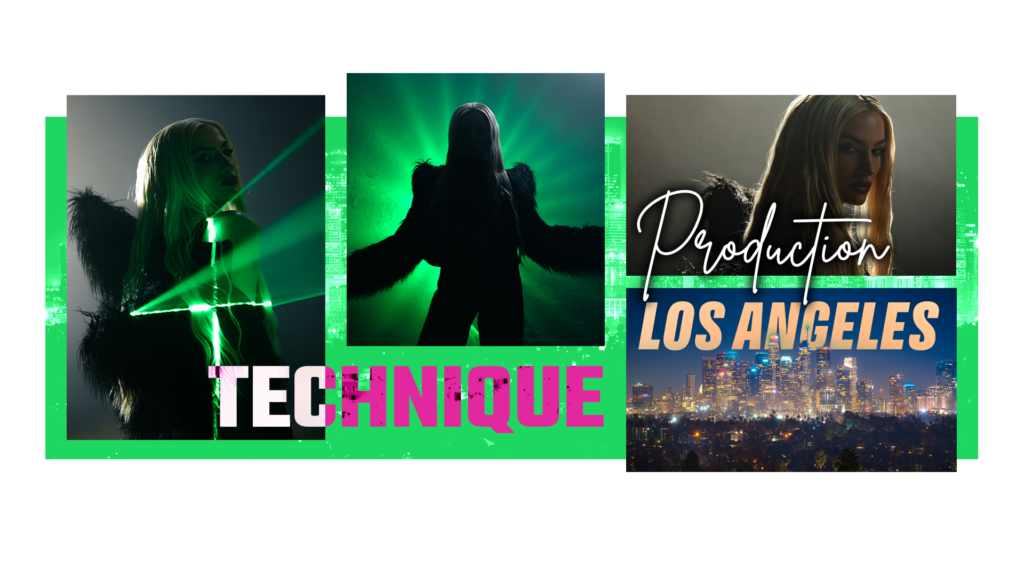
Walls of Sound
Before becoming a recognisable name on international techno stages, Lee Ann Roberts went through an important phase of discovery and learning: Los Angeles. Officially, she moved there for modelling after signing with Wilhelmina. But Lee Ann already understood the limits of the modelling industry, and between castings she never lost sight of her first love: music. In Houston, she reconnected with Jake Childs, a producer friend with whom she started working on her first tracks. That was the turning point. For the first time, she no longer wanted only to feel or play music, she wanted to understand how it was built. How emotion could become sound material. How a track could create tension within both bodies and minds : “(…) we ended up making two tracks, The Subliminal and Sensational Lies which I also did the vocals on. That process really opened everything up for me. That’s when it clicked that I didn’t just want to play music…. I wanted to create it as well.”
From there, everything accelerated. Lee Ann borrowed a setup, brought it back to Los Angeles, and threw herself completely into music. Her days changed rhythm. Castings slowly faded into the background, replaced by endless hours of practice, production and technical learning. She also joined a production school to give structure to this new direction she already felt was irreversible. And indeed, Production completely transformed the way she listened to music :
“When you’re just listening or DJing, you experience the track as a whole. But once you start producing, you realise how many layers, decisions and small elements are actually behind that feeling.”
Little by little, her relationship to sound became architectural. Every element gained a precise function. Technique mattered, but as she explains, it could never come at the expense of emotion: “At the same time, I had to learn to switch that off a bit and still stay in the moment on the dancefloor. Because at the end of the day, it’s still about feeling the music, not overthinking it.”
Los Angeles also gave her a new space for experimentation. First sets in Venice Beach, downtown warehouse parties, the side room at Avalon Hollywood. Places still far from the massive stages she would later conquer, but essential in shaping the DJ she would become. More than anything, this period marks the moment when Lee Ann gradually stopped searching for her place and started building her own world.
“At the beginning, you’re experimenting a lot, trying different sounds, different directions and figuring out what feels right. And then at some point, you start listening back and thinking, ok… this actually sounds like me.”
Lee Ann already knew she had a story to tell. Now, she finally knew how to tell it.
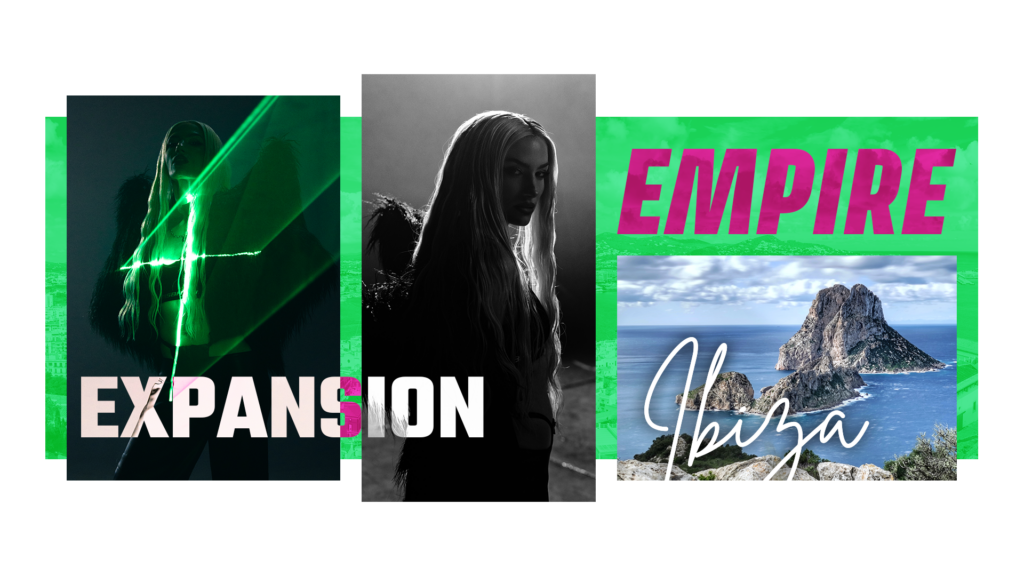
Expanding the Blueprint
Then, through relentless work, the clubs grew bigger, the tours followed one another, and the mythical stages she once fantasised about slowly became reality: “At the beginning I was just focused on learning, playing and finding my sound. But then there was a point where I could feel the momentum changing… bigger opportunities… more recognition and people starting to really connect with what I was doing.”
But there is one thing that constantly returns in the way she speaks: connection. The bond she creates with the crowd, with the space she performs in, and certainly that sense of humility every artist should preserve in order to keep aiming higher:
“Each set taught me more about the music, about myself and especially about how to read a crowd. Seeing people’s reactions, feeling their energy, the way they connect to certain moments in a set that taught me so much. And the love you get back from that… it’s hard to explain but it really stays with you.”
Among all the scenes she has experienced, Spain holds a special place in her heart. A crowd she describes as capable of transforming her sets completely: “It’s not just about the music, it’s the connection. People are fully present, fully giving and that creates something really unique on the dancefloor.”
That intensity also reached another level in Ibiza, when she joined Pyramid at Amnesia before playing the club’s iconic closing party last year. A special moment for her, a feeling of accomplishment, but above all, the perfect dancefloor:
“The energy in the room was incredible…I ended up playing longer too and the room was still pretty packed…For me it felt like everything came together: the music, the crowd, the vibe. You could really feel the connection on the dancefloor and that’s what made it so memorable. It’s definitely one of those experiences that stays with you.”
This way of approaching music as a shared experience, where she tells her story through the crowd as much as through the sound itself, also explains the way she builds her artistic work. Behind the intensity of her sets, Lee Ann is ultimately trying to say something. Music capable of telling her story while creating a physical reaction at the same time, a delicate balance she now seems to have mastered : “I’m definitely building from my story and emotion. Everything I’m working on at the moment feels much more connected to me… my experiences, my roots, my narrative.”
Her vision of DJing can also be found in NowNow Records, the label she is developing to support artists through a broader vision, one she wants to keep free from categories and limitations. A space where artists can express themselves and tell their stories through hybridity and experimentation.
“For me, NowNow Records is more than just a label, it’s a platform. Long term, I want it to be a space where artists can really express themselves freely without feeling like they have to fit into a certain box or trend.”
Everything in her journey seems to lead back to this uncompromising sense of freedom that has always radiated from her and that she eventually learned to channel through music. A freedom conquered progressively, sometimes painfully, but one that now runs through every dimension of her project: the music, the image, the artistic direction, the label. Ultimately, a complete 360-degree vision.
When she imagines the future, Lee Ann speaks about new territories to explore, but above all, she speaks with the ambition that has always defined her:
“I see myself expanding into different areas building the label further, working on new projects, maybe even developing artists or creating something beyond just music, including fashion. And in my own way, building an empire around that.”
An empire she is building and will continue to build in complete alignment with herself, with the determination of a lioness. And as one of her friends once told her: “You told me you were going to do this and you’ve done it.”
Finally, one last message to the young girl who sometimes had to grow up too fast, who went through chaos long before she could even understand it, but who now sees her vision, courage and resilience taking shape through a body of work that reflects her entirely:
“You’re exactly where you need to be. To keep dreaming big because nothing is impossible. And to trust in her strength that her persistence and resilience are going to pay off even when it doesn’t feel like it. Everything she’s feeling and experiencing in those moments…it’s all leading somewhere.”
📷 : Cover Photo Credits / Courtesy of Lee Ann Roberts
📷 : Additional Photo Credits / Courtesy of Lee Ann Roberts