
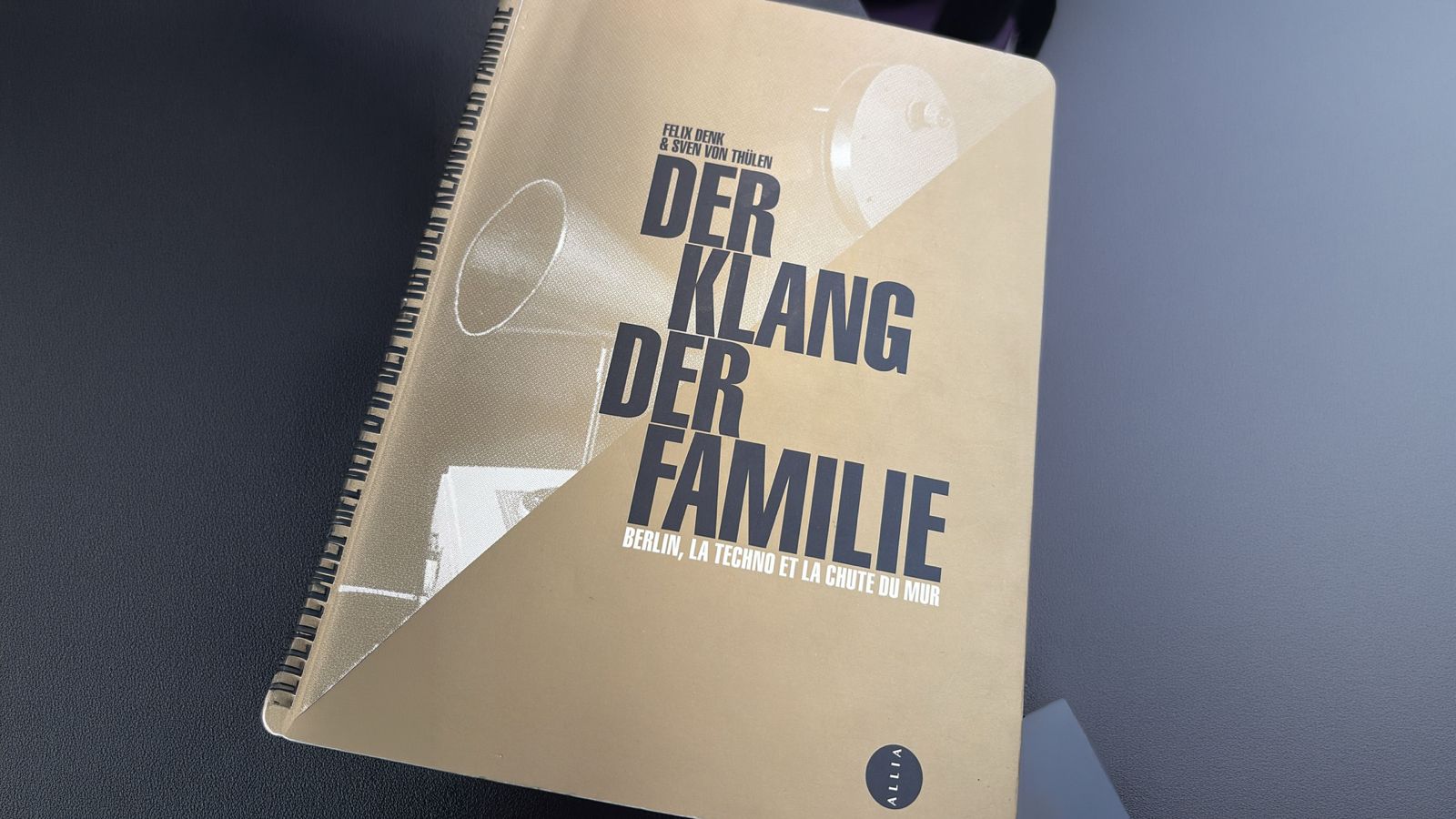
The Story Told Differently
I have read many books about the history of techno. Some were rather dull, others fascinating yet difficult to follow. Others still were far too romanticised, giving the impression that certain things had been forgotten, whether intentionally or not. And after a while, one quickly goes around the same genealogy: Chicago, Detroit, Berlin, Ibiza. Like a journalist endlessly searching for a new angle on a subject that has already been covered a thousand times, it becomes difficult to bring a fresh perspective to historical events we believe we know perfectly well. Even though there is still, to this day, an ongoing debate about the exact geography of this music’s birth.
Because telling the story of techno has never been a neutral exercise. History is political, music is political too, and techno perhaps even more so because it stands precisely at the intersection of the two. Every narrative carries its own mythology: the revenge of Detroit’s Black working class, Berlin’s newfound freedom after the fall of the Wall, Ibiza’s hedonism, or the radical spirit of British free parties. But how can this story be told without dictating it? Without imposing upon it a tone, an ideology or a moral framework?
That, in my opinion, is precisely where the brilliance of Der Klang der Familie lies. The authors almost completely disappear. No stylistic flourishes, no omniscient narration, no grand theory. Only voices. DJs, promoters, bouncers, enthusiasts, journalists, people who carried speakers, fixed leaking pipes or simply danced until sunrise.
The book never claims to possess the truth about techno. It embraces the idea that History is contradictory, shaped by imperfect memories, absurd anecdotes, singular life paths and pure chance. And perhaps that is exactly why it feels more truthful here than anywhere else.
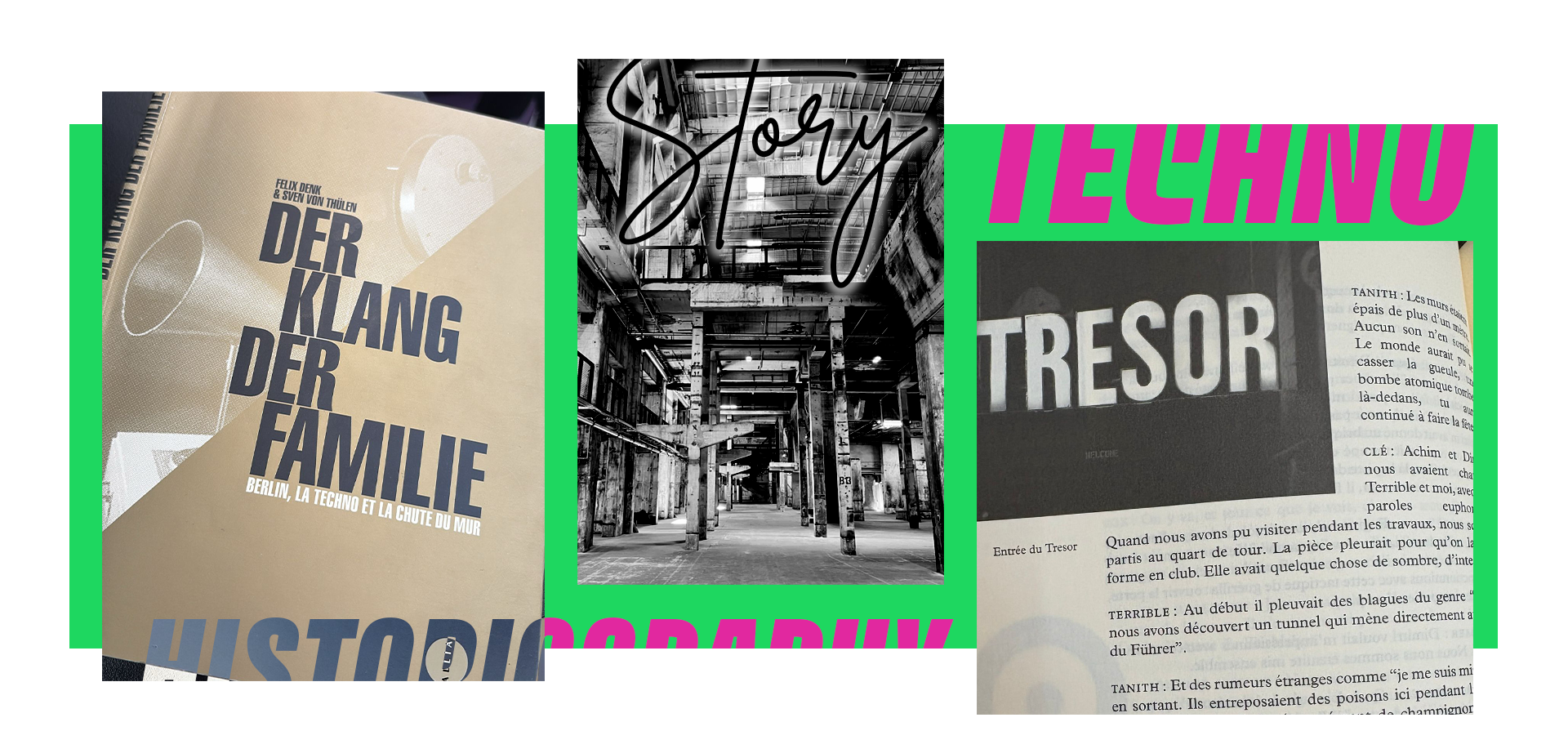
The Importance of Individual Trajectories Within a Larger History
The authors disappear entirely. No literary flourishes, no stylistic tricks, no embellishments. Just the essentials: sources. Whether in academia or journalism, one principle is drilled into us above all others: sources. Choosing them carefully, deciding how much space to give them, questioning why one voice should be considered more legitimate than another.This book is nothing but that. Artists, label owners, enthusiasts, booking agents. More than three hundred pages of testimonies, captivating stories infused with humour and anecdotes you would never find in traditional history books.Speaking about Tresor, one testimony explains:
“Regina ended up taking on the role of project manager (…)”
Dimitri Hegemann, who had not yet become the influential figure he is today, adds:
“(…) even though, just like me, she had no idea how building permits or things like that actually worked. We operated with this guerrilla tactic: open the door, switch on the lights, and that’s it.”
The oral form of this book does not make it any less serious. Quite the opposite: it is a goldmine.
Reading it, I came to understand the importance of individual trajectories within the vastness of History. Life is made of coincidences, encounters, butterfly effects, self-interest and chance meetings around street corners. I realised this even more vividly while writing my article on the Second Summer of Love. I kept asking myself: what if that small group of DJ friends had not gone on holiday to Ibiza that year? Would rave culture have been different? It is impossible to know. But that is precisely what makes books like Der Klang der Familie so fascinating. They remind us that history is not built solely by great men, grand ideologies or official institutions. It is also shaped by friendships, by accidents, by impulsive decisions, by people who simply happened to be in the right place at the right moment. Or perhaps in the wrong place at exactly the right time. History often appears inevitable once it has happened.This book reminds us that it never is.
The Wall of the Misunderstood
What if Germany had never been divided? What if there had been no East and West, no physical and symbolic frontier around which entire worlds could develop like bunkers against division? Would techno have been the same? And what if political despair had never seeped into Berlin’s streets? Would there have been so many artists feeding the punk counterculture with their melancholy and anger? And without the punks, who would have inherited this taste for strangeness? Who would have become the “misunderstood”?
“When I arrived in Berlin in 1986, the mood was: ‘It’s all over.’ Punk had long since become a meaningless excuse for slacking off, a real brigade of boozehounds (…) Everyone was an artist, often far too brilliant to be recognised. For them, music was less something to dance to than something to suffer through, a soundtrack for feeling misunderstood,” recalls German DJ and producer Tanith.
Many testimonies converge around the same themes: economic hardship, cold winters, the uncertainties of reunification, the search for identity, but also a profound sense of loneliness. Several stories evoke lives marked by depression or suicide, while others describe the vital need to meet people who shared the same experiences.
In a city under reconstruction, the techno scene became a space of mutual recognition, bringing together individuals who were often marginalised, misunderstood, or simply searching for a sense of belonging. In an interview with Tribuchet Magazine, Felix Denk, co-author of Der Klang der Familie, emphasised the importance of passing this story on to generations who did not experience it firsthand:
“It’s definitely crucial for Berlin. It’s a magnet for young people from all over the world today. Berlin is a city that hasn’t any noteworthy industry. It lives from its ideas. That’s the main resource. The whole time is a fine example that wonderful things can happen when young people get some space to explore something new – without economic pressure.”
This reflection still resonates today, even beyond Berlin itself. Techno is almost a religion, one that unites more than it divides. It also tells the universal story of a generation searching for spaces of expression in a world that remains violent in its own way. Beyond trends and fashions, it speaks to aspirations that remain profoundly human.
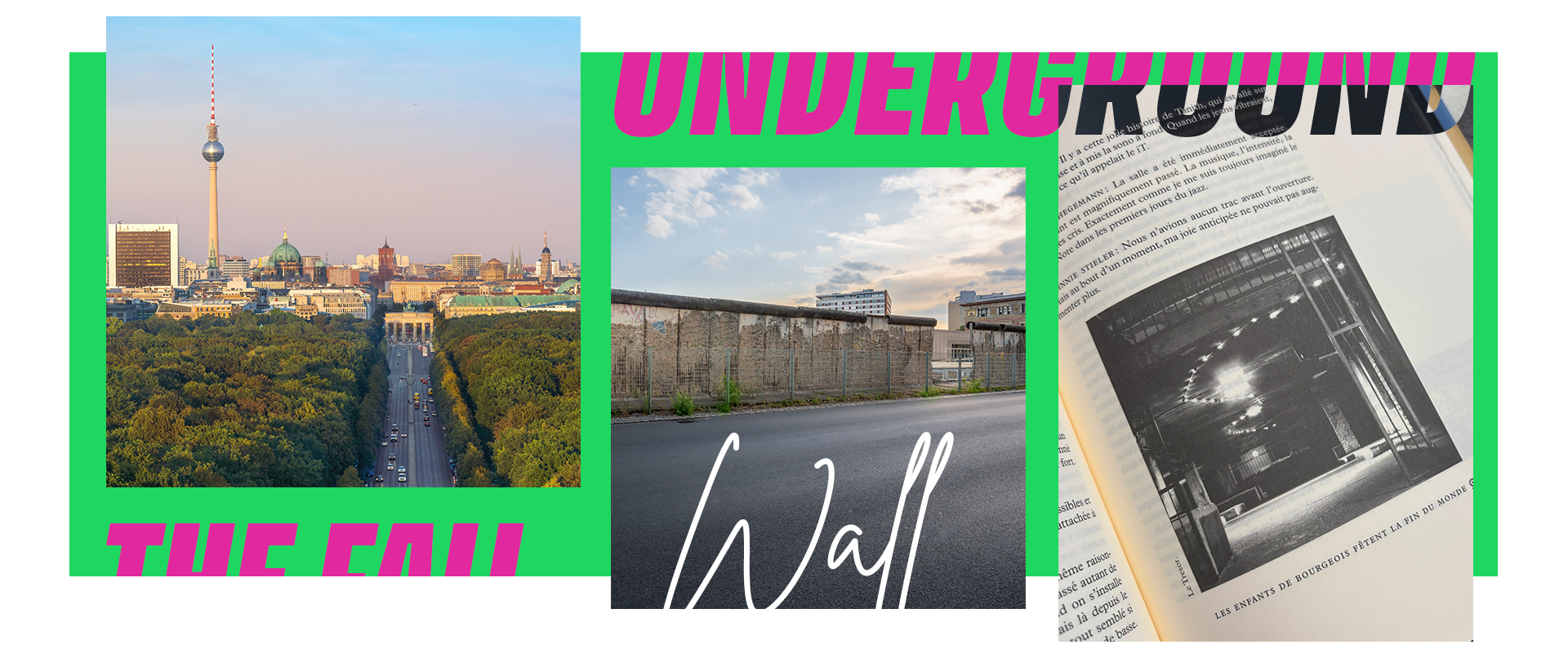
But perhaps the most interesting idea is this one: the music of the misunderstood.
Of course younger generations understand the history of this music. Yet it is rare for a book to capture such a wealth of emotions. Interwoven testimonies answer one another without the need for narration. One cannot help but identify with these characters who are, in fact, real people, whether they feel distant from us or remarkably close across the timeline of history. The soundtrack of the misunderstood is the story of jazz, of rock, of techno. It is the story of countercultures.
Even before the fall of the Wall, Berlin was already shaped by two different imaginaries. In the West, part of the alternative scene seemed to have lost its momentum.
In the East, by contrast, electronic music circulated like a distant promise. Many first discovered it through Western radio stations broadcasting the earliest acid house sounds arriving from Chicago and Manchester.
“I first heard about acid house through a West German radio station,” recalls DJ Jauche.
Long before people crossed borders, the music had already begun to cross the Wall.
The Same Fall
“When I arrived in Berlin, old West Berlin was coming to an end,” recalls Terrible.
The legendary clubs were still there, but the excitement that had defined previous years seemed to have faded away. In the East, by contrast, an entire generation suddenly discovered the existence of a cultural world it had only glimpsed through Western radio stations. Music was an escape, not yet a political project.
“You had to make sure you didn’t get bored,” explains Johnnie Stieler. “Spending your time getting wasted and chasing girls doesn’t hold up in the long run. That’s where music came in.”
For this generation, techno was not yet a culture. It was first and foremost a gathering point, a way of giving shape to accumulated energy, to melancholy, loneliness and desire. The first venues that emerged bore little resemblance to the clubs now associated with Berlin. At Ufo, considered one of the birthplaces of the scene, the turntables were set up in extremely precarious conditions. Whenever it rained, water seeped into the basement.
“We ended up with power strips floating around in the muck,” remembers Der Würfler.
And yet, strangely enough, this very struggle was part of the appeal.
“It was electrifying, terrifying,” says Jonzon. “It had nothing to do with going to a nightclub. […] Everything was in the making.”
Reading these testimonies, it becomes clear that not everyone from East Germany celebrated the disappearance of the GDR. On the contrary, several recall their attachment to the country and their desire to reform it rather than see it vanish altogether. And amid these sometimes contradictory trajectories, one idea emerges as a consensus: the idea of a future yet to be invented. Born in a city haunted by its own history, Berlin techno possessed the power to rebuild. It carried within it the singular optimism of the early 1990s, an optimism that is almost difficult to imagine today. Robert Hood, one of the major figures of the Detroit scene, captures this feeling perfectly:
“I had the impression that Berliners wanted to get rid of their past while we wanted to get rid of our past-in-a-racist-world. A better future, that’s what held us together.”
This quote highlights one of the most interesting aspects of Der Klang der Familie: its ability to make the stories of young East Germans resonate with those of Detroit’s African American artists. Their shared aspirations, and even their common desire to break away from a suffocating legacy in order to imagine an entirely different society.
There will probably always be this great debate about the origins of techno: is it European, or is it Black music?
The book never settles the question.
By allowing these two worlds to speak to one another through the voices of those who lived them, Der Klang der Familieshifts the debate away from origins and towards resonances. It shows that young people separated by thousands of miles can share the same desires: to free themselves from an unbearable past, to invent new spaces of freedom, and to believe, if only for a moment, in the possibility of another future.
The book tells the unexpected story of minorities, margins and individual trajectories that, without always knowing one another, somehow recognise themselves in each other.
Back to Tresor
How could I not talk about this club and its somewhat improbable birth? Inside its walls, the children of the bourgeoisie celebrated the end of the world. The fall of the Wall arrived hand in hand with a music that sounded as if it came from the future, when in reality it was perhaps the purest expression of its own era. I keep thinking about Sven Väth’s words from a previous article:
“There was a strong sense that something new was emerging — something raw, functional, and very direct. (…) Reunification was not just a political event— it was a profound mental opening. Borders disappeared, not only geographically, but in people’s minds.” Sven Väth
Looking back, the people involved in the movement had no idea of the history they were writing or of the borders they were about to erase, notably through this club which, at first glance, had nothing to offer, or perhaps everything to offer: Tresor.
Today, Tresor occupies such a singular place in the history of electronic music that we sometimes forget how accidental its existence really was. Der Klang der Familie tells the story of a place whose importance nobody could yet grasp. The contrast is almost amusing when one considers the cultural weight it carries today.
Many books about techno search for pioneers and founding dates. Here, however, the focus is on the most improbable details: the smells, the walls, the bizarre itineraries. Everything that seems insignificant in retrospect and yet contributed to making the club one of the ultimate symbols of the underground, precisely because it was built upon an almost inaccessible myth. Back then, gaining access to Tresor was a rite of passage. One witness remembers:
“If you didn’t know that the sign was a small fluorescent stick placed in front of the entrance door, and that you then had to crawl through a hole in the fence, you could drive up and down Köpenicker Straße forever.”
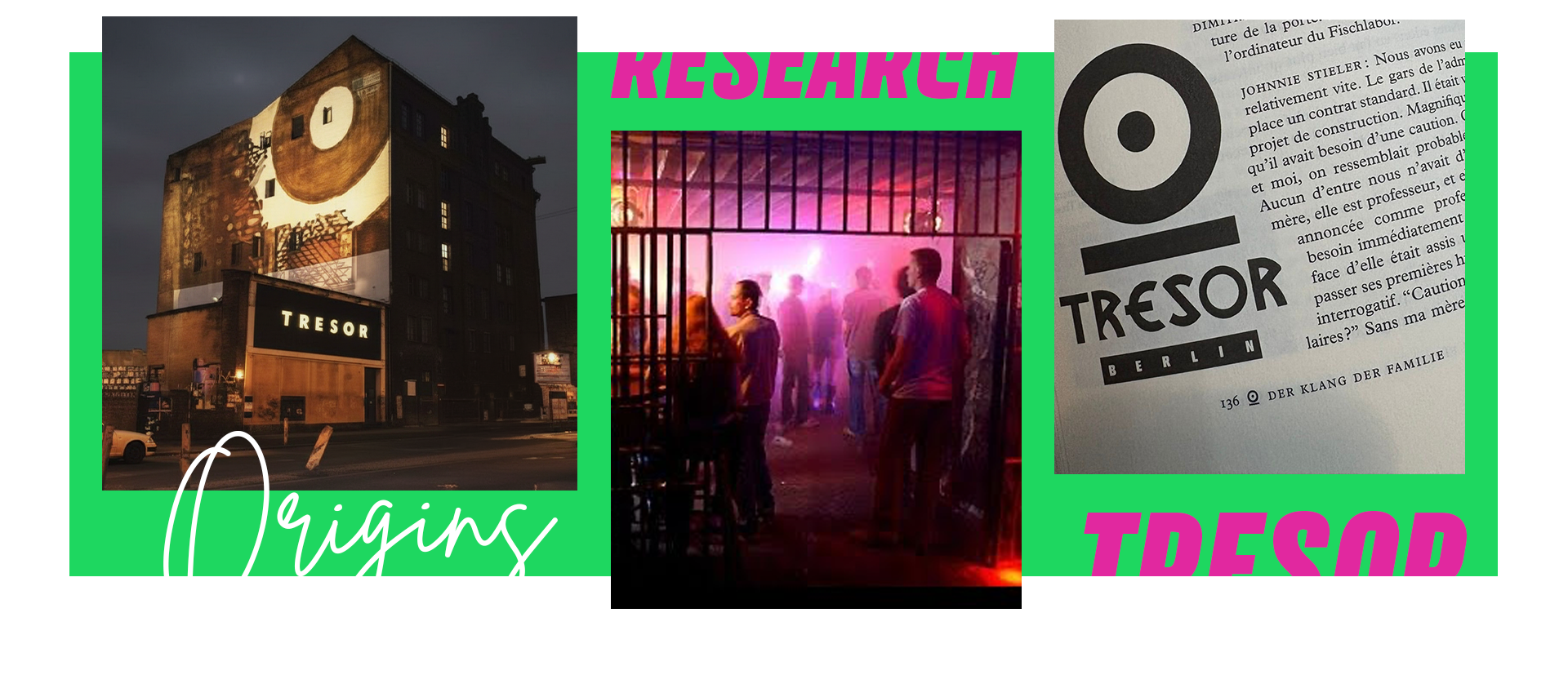
That anecdote says a great deal about Berlin in the early 1990s. Nothing was signposted. Nothing was institutionalised. The club was hidden in a forgotten space among abandoned lots and industrial ruins. Berlin DJ Alexandra Droener even describes it as a “completely derelict dump” and speaks of a “zero hour feeling.”
That expression appears frequently when people talk about Berlin after the fall of the Wall. It describes a genuine material and symbolic void in which suddenly everything seemed possible. This is about as far from an entrepreneurial success story as one can imagine, and that’s precisely what makes the book so enjoyable to read. At its core, it is simply the story of a group of friends who found a basement and thought: let’s clean it up and put some music in it.
Dimitri Hegemann remembers:
“It must feel the same when you discover an Aztec treasure. None of us uttered a single word. We wandered around silently with our lighters.”
Rok tells a similarly absurd story:
“We got there and all I could see was a hole. We were standing there with our halogen lamps and he told me: ‘This is it.’ Then he asked me what we should call the club. I said Tresor simply because that’s what it looked like.”
As for the logo, Johnnie used the bolts from the vault door itself. He designed it on the Fischlabor computer, and just like that, it was done. Everyone remembers a very particular smell too. The smell of concrete. And for good reason: the place was surrounded by walls that were 1.48 metres thick. The myth smelled of mold.
A Historiographical Victory
This book tells the story of how a group of people occupied an abandoned place, improvised sound systems, crawled through holes in fences and tried, quite simply, to invent another way of living.It also tells the story of the first Love Parade, financial struggles, internal quarrels, failed nights, resistance from the authorities, vinyl exchanges and the sometimes absurd dreams of a generation with nothing to lose. It tells the story of the beginnings of advertising and the transformation of an industry that would never stop expanding. The book does not seek to turn its witnesses into heroes or to pretend that everything was written in advance. It refuses the smooth, linear narrative.
And when you close these pages, you come away understanding something: how music takes shape in ordinary lives, how it travels across cities, borders and generations, and above all, how History is sometimes made without those living through it even realising it.
📷 : Cover Photo Credits : Shana Bize
📷 : Additional Photo Credits : Shana Bize, Envato Elements