
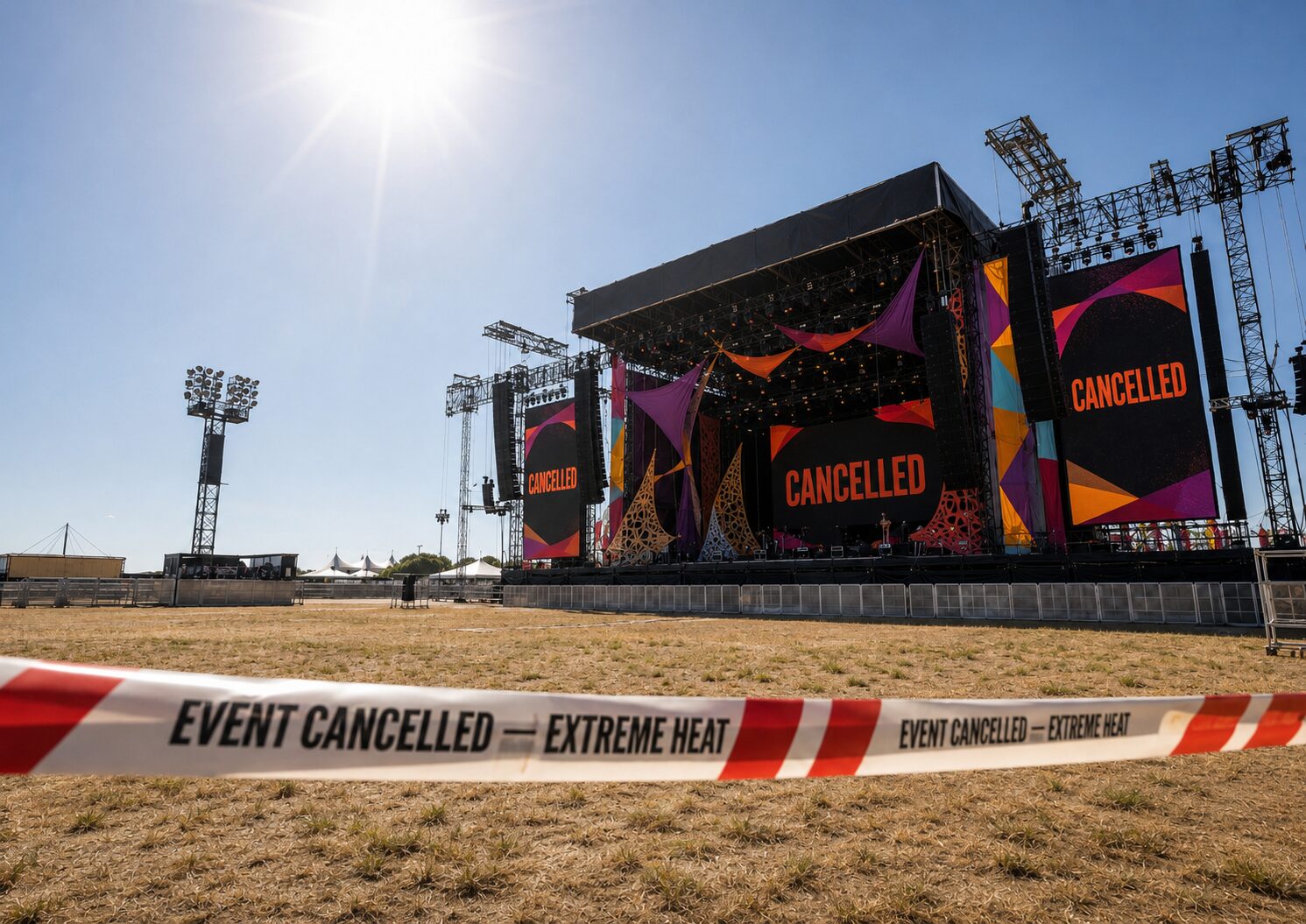
Europe’s summer festival season has been hit by a new kind of pressure: extreme heat.
As temperatures surged across France and the Netherlands, several major music and cultural events were cancelled, postponed or altered following official heat alerts and concerns over pressure on healthcare services. Among the most affected were Defqon.1 in Biddinghuizen, Solidays in Paris and Nous’klaer Festival in Rotterdam.
The cancellations mark a painful moment for fans, artists and organisers, but also point toward a larger reality now facing the live music industry: climate conditions are becoming an unavoidable part of festival planning.
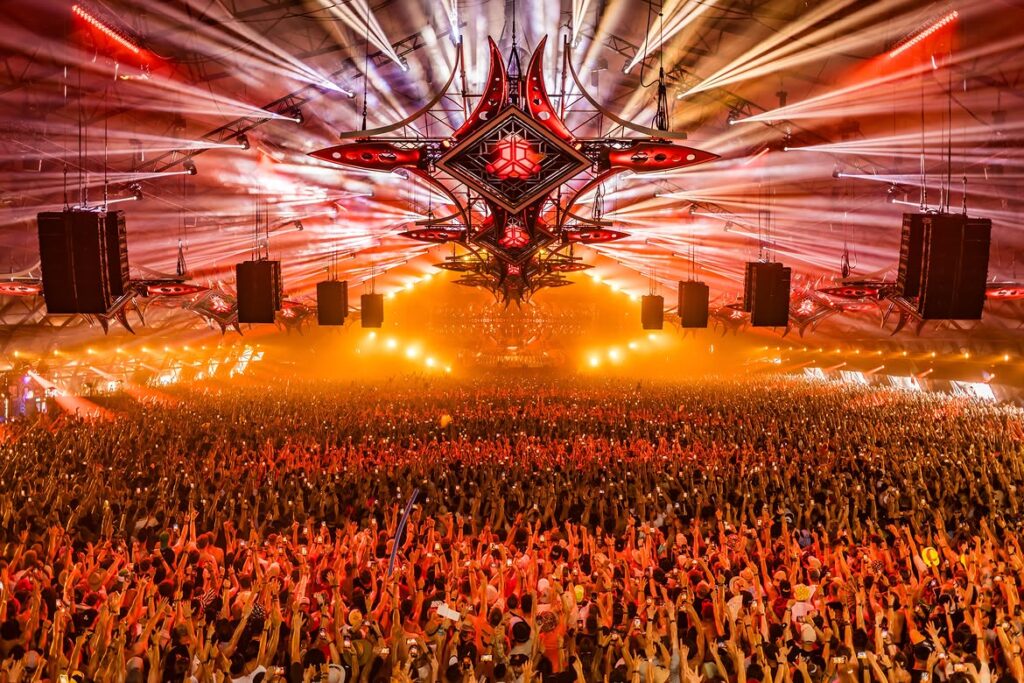
Defqon.1 Called Off After Festival Had Already Begun
In the Netherlands, Defqon.1 was forced to cancel the remainder of its 2026 edition after opening on June 25 at the Walibi Holland Grounds in Biddinghuizen.
The hard dance festival, one of the world’s most important gatherings for hardstyle, hardcore and harder electronic music, was called off early on June 26 following official safety concerns linked to the heatwave.
“We are absolutely devastated by this development,” organisers wrote in a statement. “This is a blow on every level. Not only by our visitors but also by the artists, crew, creatives, and everyone else who has worked tirelessly over the past year to bring this edition to life.”
While musical programming was cancelled, organisers kept the camping grounds and parts of the festival site open with essential facilities available, allowing attendees time to organise their journeys home safely rather than forcing an immediate evacuation.
For Defqon.1’s global community, the cancellation interrupted more than a lineup. It paused one of hard dance culture’s most important annual rituals.
Solidays Cancellation Puts Solidarité Sida Under Pressure
In France, Solidays was also cancelled following official heat alerts.
The festival was due to take place from June 26 to June 28 at the Hippodrome de Longchamp in Paris. Organised by Solidarité Sida, the non-profit organisation dedicated to the fight against AIDS, Solidays is not only a music festival — it is also one of the organisation’s most important sources of funding.
According to Solidarité Sida, the festival generates around 70% of the organisation’s annual income, meaning the cancellation carries major consequences beyond the live music sector.
“While this decision by the administrative authorities is costly and affects us, it is necessary in the face of the heatwave, due to the pressure on healthcare workers and the hospital system. We understand and accept this,” the organisation wrote.
The statement added that the cancellation places the future of Solidarité Sida and its programmes across 21 countries in a difficult position, turning a weather-related safety decision into a broader humanitarian and financial emergency.
Rotterdam’s Nous’klaer Festival Loses Permit One Day Before Opening
The heatwave also forced the cancellation of Nous’klaer Festival in Rotterdam just one day before it was scheduled to take place.
Organisers announced on Instagram that the municipality had withdrawn the festival’s permit due to pressure on healthcare services and the risk of further strain caused by the heat.
“Due to the ongoing pressure on healthcare services, and the potential for further pressure tomorrow due to the heat, all events of our permit scale have been cancelled in Rotterdam,” the festival wrote.
Run by the Nous’klaer Audio label, the one-day festival launched last year and was due to host artists including Dresden, GiGi FM and Spekki Webu for its 2026 edition.
Rather than abandon the weekend entirely, organisers moved quickly to host smaller indoor events at local venues export and Sonoor, featuring artists including Azu Tiwaline, Efdemin and Stevie Cox. The team also launched a GoFundMe campaign to cover unexpected costs, surpassing its €20,000 target.
For a small independent festival, the cancellation highlighted how quickly climate disruption can become a financial threat.
Wider Disruption Across France and the Netherlands
The impact extended beyond electronic music festivals.
In France, Paris Pride 2026 has reportedly been moved to September, while other public gatherings, street events and sporting fixtures have been postponed, restricted or placed under additional safety measures.
Authorities in both France and the Netherlands have had to balance cultural activity against public health risks, particularly as extreme heat places added strain on emergency services, hospitals, transport systems and crowd safety infrastructure.
For organisers, the decisions are devastating. For authorities, they reflect a growing public safety dilemma.
Paris Pride Was Postponed, But the City Still Carried the Spirit
In Paris, the official Paris Pride March 2026 was postponed after police ordered organisers to call off the event due to the extreme heatwave and the pressure already placed on hospitals and emergency services. The march, which usually brings tens and often hundreds of thousands of people into the streets, is now expected to return in September.
But while the official procession did not go ahead, Paris did not fall silent. Pride energy continued across the city through smaller cultural gatherings, queer club nights, DJ sets and after-pride events that had already been woven into the broader Pride Fortnight programme. From cabaret performances and drag shows to techno, house and pop-led afters at venues across the capital, the city still found ways to celebrate visibility, community and resistance. just on a different scale.
The moment revealed an important tension at the heart of modern urban culture: public safety had to come first, but the spirit of Pride proved harder to cancel. Even without the official march, Paris still showed up, through music, nightlife, community spaces and the simple refusal to let visibility disappear entirely.
A New Reality for Festival Culture
Outdoor festivals have always planned for weather. Rain, wind and storms have long been part of risk management.
But extreme heat creates a different challenge.
High temperatures affect hydration, crowd density, medical response, camping conditions, staff welfare, artist performance schedules and emergency service availability. For electronic music events, where audiences often dance for hours in open-air settings, those risks become even more complex.
The cancellations of Defqon.1, Solidays and Nous’klaer Festival show that heatwaves are no longer abstract climate concerns. They are now operational realities capable of stopping major events at the last minute.
When the Climate Stops the Music
The emotional impact of these cancellations is clear. Fans lose long-awaited experiences. Artists lose performances. Crews lose work. Independent organisations face financial uncertainty. Charities lose critical income.
But the wider message may be even more important.
As Europe’s summers become more unpredictable, festival culture will need to adapt with stronger cooling infrastructure, flexible scheduling, expanded medical capacity, improved refund policies and closer coordination with local authorities.
The dancefloor remains one of Europe’s most powerful cultural spaces.
But this summer, the heat became impossible to ignore. And for some festivals, it was enough to stop the music.
📷 : Cover Photo / AI-generated artwork created with ChatGPT
📷 : Additional Photo Credits / Courtesy of Defqon.1 Festival