
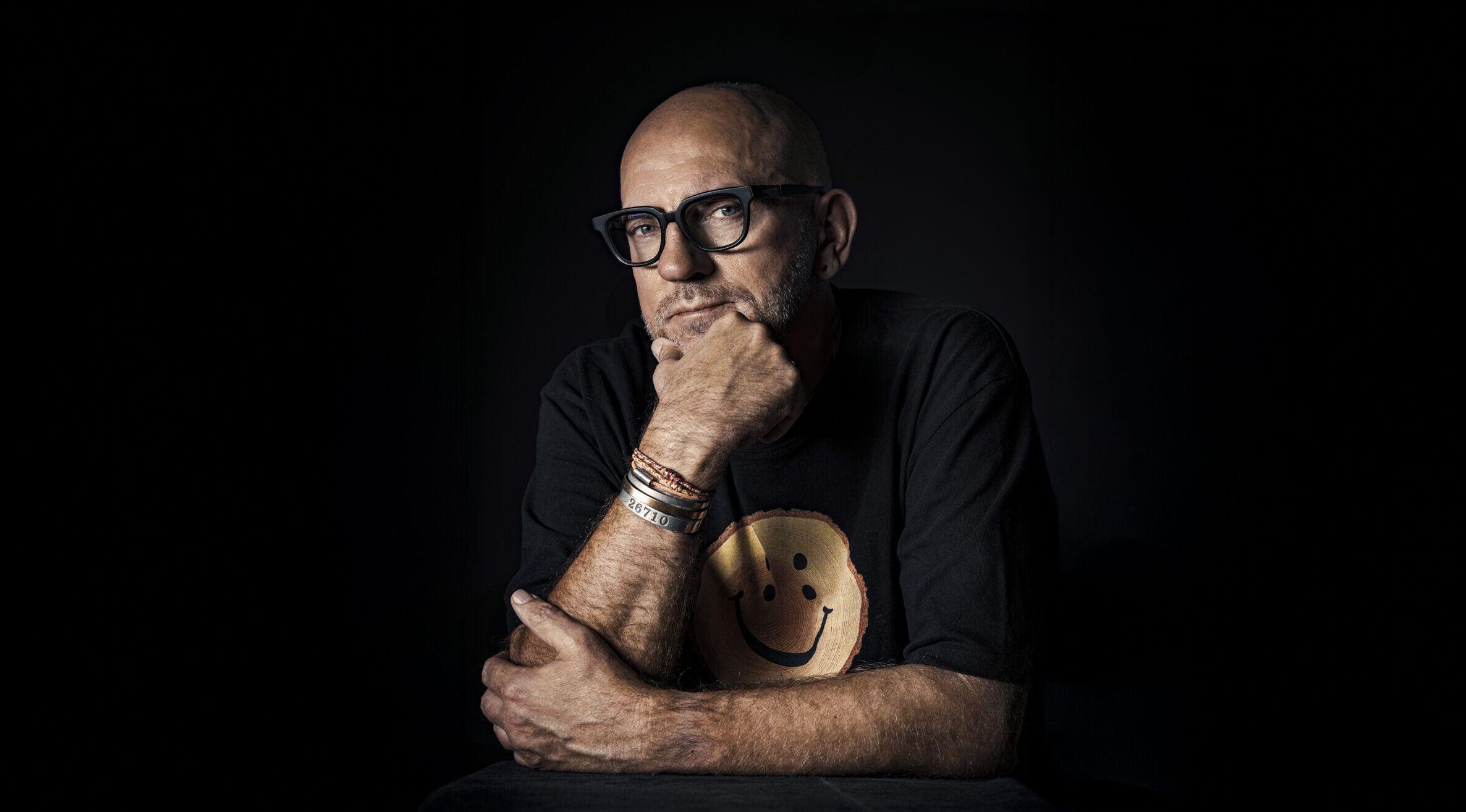
In a scene now addicted to speed, fast drops, fast fame, faster releases, Sven Väth has always moved in the opposite direction. His craft is patience, his currency is trust, and his real legacy is his ability to make music feel pure again. We had the chance to talk to Sven, from Frankfurt’s fast life to Cocoon’s ritual, then calmer skies with Inner Horizon, step into a spacetime rift: 4 decades behind the decks.
The promise of dawn
If there’s a single image that captures Sven Väth’s signature, it’s this one: time dissolving, control loosening, the night refusing to end on cue. A promise he made to the crowd a long time ago: the promise of time, of patience. For Sven Väth, when dawn breaks and the crowd is still hanging on to his spellbinding rhythms, that’s when he draws out his very best, at the crossroads of night and day, in that moment suspended in time, elusive. The music continues not to impress, but to carry.
“At times, I played music for up to 20 hours.” Not as endurance for the sake of spectacle, but as a method, staying long enough for a room to slip into something collective. “In those moments, DJing stopped being a performance and became a collective state.”
What his long sets in Ibiza sparked in him was freedom. And it’s inside that space, unbound and uncompromised, that his true nature comes into focus. Before finding him behind the decks, let’s rewind the record and travel back in time.
Passion built with Patience
What’s particularly striking is the serenity with which he speaks about who he is, as if it had always been there. When he talks about his roots, Sven Väth seems deeply attached to his childhood, which he describes with rare transparency. He starts with an intimate geography, one that matters: “I was born in Offenbach am Main and grew up in Obertshausen — at the time a true small town, almost village-like in character.”
Maybe it’s here in our odyssey back in time that we can find clues to understand such an artist: that ability to observe, to wait, to listen, in a place where childhood is made outdoors, naturally: “Much of life happened outdoors.” When asked where his creative spirit comes from, and what guided him throughout his career, he speaks about nature:
“Nature was always close, and the forest played an important role in my childhood.”
The forest was always central. For him, it was a place of learning.“I spent a lot of time there, alone or with my brothers.” And what he found there wasn’t spectacular, but it was foundational: “It was a place of silence, imagination, and reflection.” It’s there, he says, that invisible lines were drawn, lines we’ll later hear in the way he builds a night: “I believe many of my inner landscapes were formed there.”

When we asked what his everyday life looked like, he speaks of a simple childhood: “I grew up in modest but loving circumstances, with strong family bonds.” Sharing a room with his brothers, he mentions a lack of space, of course, but above all, “there was closeness, imagination, and a strong sense of togetherness.” Values he has carried into his music: a form of patience built through connection and attention to others, shaped by family life. And he sums up that early blueprint in a single sentence: “That combination of limitation and freedom shaped me deeply.”
When asked how music entered his life, he insists on one point: it was never an abstraction. It was always lived and embodied.
“I was exposed to vinyl very early on. My parents regularly came home with seven-inch singles — records were simply part of everyday life. Music was physical, tangible, present from the beginning.”
Long before clubs, he learned that sound could be held, chosen, lived with. And when he speaks about the first records he bought for himself, it feels like an epiphany moment :
“The first albums I was truly proud of buying myself were Computerwelt by Kraftwerk and Penthouse and Pavement by Heaven 17.” Two albums, two compasses. “Computerwelt represented the future, technology, and a very precise, distinctly German vision of what was ahead. Penthouse and Pavement carried an urban elegance — political, modern, and cool. Both albums shaped my understanding of electronic music not only sonically, but also aesthetically and conceptually. That was the moment when music truly became identity for me.”
In other words, it was always there, carried by his parents’ passion and profession :
“Music was already deeply embedded in our family life, my parents were passionate dancers and later opened a small discotheque, so music was never something abstract — it was physical, social, alive, and part of everyday life.”
The artistic path was already taking shape: even then, he knew music truly mattered, and he doesn’t describe it as a desire for success. He describes it as a necessity. “Very early on, I sensed that music was more than entertainment.” That small “more” became a true direction: “It became a refuge, a form of expression, and an inner compass.” The stage, the long arc, the experience, this organic energy turned inward isn’t surprising at all. It’s simply who he is:
“That feeling — that music can open inner spaces — has stayed with me ever since.”
And later, it’s in a club that he will hold the duration, let the night breathe, and open, on a larger scale, those “inner spaces” he first encountered among the trees.
Frankfurt: back to the Future
Let’s continue our journey through time and space. If this pioneering artist’s childhood taught him patience and sensitivity, Frankfurt taught him what to do with it. In the early 80s, the city was in full swing, a true crossroads of ideas, innovation, and renewal. Sven immediately sensed that something radical was happening in music, that it was the dawn of a grassroots revolution. And in fact, it was. What’s happened in countercultures was the reflection of what happened in German society : “ (…) You could feel that existing structures were beginning to dissolve.” It was a feeling grounded in reality. Some structures really did fall away a few years later, and then, almost before anyone could fully process it, the Berlin Wall came down. But we’re not there yet. The music was already acting like a seismograph, a mirror of the people, picking up the coming shift before it became visible.
Mixing EBM, new wave, and the very first records coming out of Chicago, he knew he was witnessing something, without realizing that, in reality, he was also building it. It was a turning point in the way music could act “in people’s mind” :
“There was a strong sense that something new was emerging — something raw, functional, and very direct.”
At Dorian Gray, the mythical club tucked inside Frankfurt’s airport, the first Chicago records, he says, sounded different because they weren’t trying to charm anyone. “They weren’t polished or designed to impress. They were repetitive, hypnotic, reduced to their essence — and they worked directly on the body.”
And it’s in the collision of worlds that you can truly grasp how fertile that era was for electronic music: “When you combined that with new wave and EBM, it created a tension that felt futuristic.”
Feeling the future through the past also means sensing how time is lived inside a room: “It was clear that this music wasn’t just about style or trends. It was about a new way of experiencing rhythm, time, and collective movement. Beneath that, there was the sense of old frameworks giving way.(…)”

In that context, Frankfurt was an ideal experimental playground for the young artist he was. When asked whether the city in the 80s was fertile ground for experimentation, a place where countercultures could thrive, he answers without hesitation:
“Very much so. Frankfurt was a unique environment at that time. Shaped by the airport, by transit, and by constant movement, it was inherently international. Sounds, people, and ideas were always passing through, which created openness and curiosity. (…) There wasn’t a rigid scene yet — and that was its strength. Different subcultures overlapped: music, fashion, art, nightlife. You could experiment without immediately being categorized. It was a place where countercultures could grow quietly — and then suddenly become very powerful.”
And it’s in that very effervescence, almost paradoxically, that he learns how to hold a space through the night. He says Dorian Gray quite simply taught him the craft, what he owed to the night:
“Those nights taught me patience, intuition, and responsibility. At Dorian Gray, I became the main DJ during my second engagement, which was a defining step for me. Playing in the large club space meant longer sets, deeper journeys, and a much stronger relationship with the room. You couldn’t rely on quick effects — you had to build trust over hours.”
That constraint becomes a form of freedom. Because holding a room for a long time forces you to listen, anticipate, and test. “That environment allowed me to experiment more and more with music. (…) This is where I learned how tension grows slowly, how contrasts create meaning, and how different musical worlds can form a coherent flow.” And above all, he understands that a DJ isn’t merely an operator, but a narrator. “Those nights shaped my understanding of DJing as storytelling rather than performance.”
The Tempo Shift
Then the Wall falls. It’s 1989, the year of reunification, everything is structuring itself and breaking apart at the same time: “Reunification was not just a political event — it was a profound mental opening. Borders disappeared, not only geographically, but in people’s minds.”
That same year, Sven Väth experiences a second wave of massive success with OFF, with a second album, Ask Yourself, pushing him further into the international spotlight, after the iconic track “Electrica Salsa (Baba Baba)” in 1986 and OFF’s first album, Organisation For Fun, in 1988. Almost without expecting it, everything accelerates, and his career takes on another dimension, as if it had already been unfolding ahead of him. In that moment, Sven Väth embodies something larger than a style: an idea of modernity. A modernity that’s awaited, desired, because an entire era can feel the wind shifting, and freedom, political, mental, cultural, becoming porous. It crosses borders, it moves through bodies, it travels through the arts. Electronic music becomes a symbol, a way of living time differently:
“A crucial turning point came when I realized that I was no longer just reacting, but actively shaping things — as a DJ, as a producer, and later as someone creating spaces.”
And suddenly, everything feels possible: “The success of OFF was overwhelming and opened many doors. Suddenly, everything seemed possible — geographically and professionally. At the same time, success on that level comes with expectations — from the outside, but also from within.”
But what success gives, it also takes away: “Time. Energy. Simplicity. I had to learn balance — between devotion and self-care.” It’s within that ambivalence that Sven Väth begins to understand that speed is not always synonymous with freedom, and that, to protect what he’s truly searching for, sometimes you have to start building your own spaces:
“I realized relatively early that success in a pop context creates structures that don’t always align with inner freedom. That realization was important. It led me to think very consciously about my next steps — and about what I truly wanted to do in the long term.”
Against the clock: Omen
We’re now in the early 90s, in a Germany freed from its chains and ready to sweep everything along in its wake. This is where Sven Väth, only 24 years old, makes an entire population dance in a club that would soon become a legend: Omen. Right after the second Summer of Love wave in ’88-’89, when acid house spread its influence outside the UK, you can imagine rave culture spilling into a club like this one, its walls trapping the heat of packed bodies, driven by acid-house tracks like Tone by Emmanuel Top, or Energy Flash by Joey Beltram.
From the moment it opens, the club embodies the very essence of rave culture: a libertarian spirit, a symbiosis between the crowd and the DJ, an unforgettable energy. Sven speaks of it as a release, a continuation after musical creation, a creation of space:
“Omen was a liberation for me. It was the place where everything came together: new music, new energy, new ways of celebrating. Acid house wasn’t just a sound, it was an attitude. Omen became a space for experimentation, for ecstasy, for community — a place where risk was allowed.”
At the very least, Omen was indeed a sign, but a good omen. Through what it embodied, it announced what would come next for Sven. And as good fortune rarely comes alone, in 1991 he co-founded the labels Eye Q and Harthouse with Matthias Hoffmann and Heinz Roth :
“With Eye Q and Harthouse, the idea was to give this energy a structure beyond the club. Both labels represented different facets of the same vision: artistic freedom, experimentation, and trust in new ideas. Eye Q was more expansive and atmospheric, while Harthouse was rawer, more direct, often futuristic. Together, club and labels formed an ecosystem in which music could develop without having to conform to market logic. For me, this was a clear commitment to independence — and to the belief that music needs spaces in order to grow freely”
This freedom, shaped by a framework he had chosen, allowed him to establish himself as a pioneer whose reputation no longer needed proving. Guided by the only thing that truly mattered, music, Sven left an indelible mark on time and space. But after some remarkable years, the Omen cycle came to an end. In 1998, Sven Väth said he could feel the closing coming: the venue was under pressure, the lease wouldn’t hold much longer. So he made the cut for renewal, one door closing to clear mental space, and another opening onto a new adventure: Cocoon.
A New Loop: Cocoon
We get back to Ibiza where our story begins. Amnesia was perfect for his vision of the long arc of time. Some even say they lose themselves there, in the twists and turns of dawn, but Sven seemed to find himself there perfectly. On the island of all possibilities, time and space are no longer straight lines, they form a loop.
“Cocoon was far more than a party series. It was a state of mind, a ritual, a temporary home. What made Amnesia special was the combination of space, time, and openness.”
Amnesia is two rooms that don’t tell the same story, two speeds that nevertheless end up meeting. At Cocoon, “Amnesia consisted of two very different spaces: the Main Room and the Terrace — and the interaction between these two rooms was essential.” The Main Room: “direct, uncompromising, physical. Techno in its purest form.” The Terrace: “modern, minimal, playful, psychedelic. These two musical worlds didn’t compete; they complemented each other beautifully.”
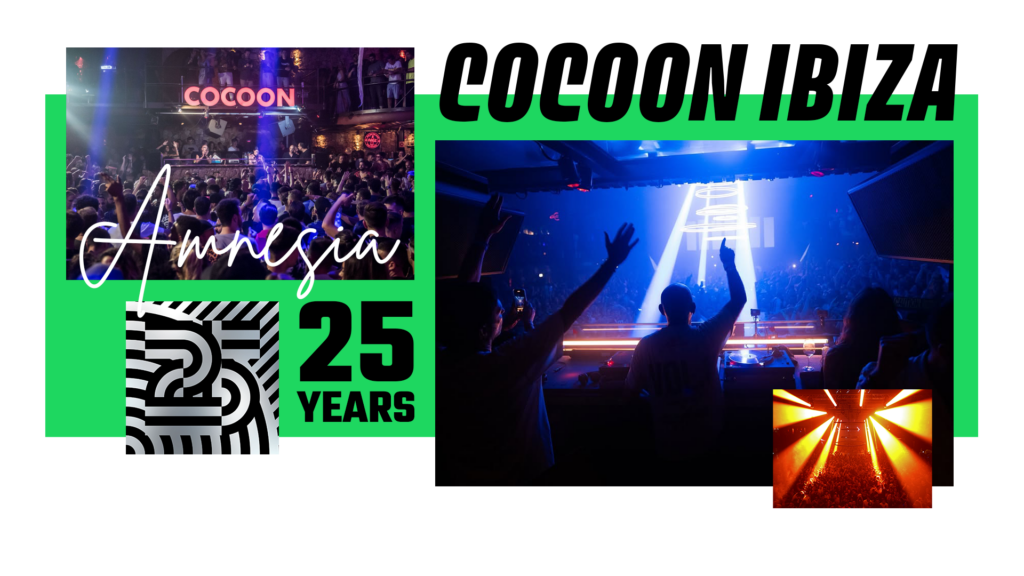
And at dawn, when time becomes relative, when the light comes in and the music continues, a moment between night and day, between ecstasy and exhaustion, where time lost its meaning. Cocoon delivered its very best. “(…) those moments, DJing stopped being a performance and became a collective state.” And maybe that’s why it marked its time. “it wasn’t about control or spectacle, but about real, unfiltered experience. (…) Over many years, I invited artists to Ibiza and gave them a platform — among them Ricardo Villalobos, Richie Hawtin, Marco Carola, Luciano, Chris Liebing and Loco Dice”
And those moments between night and day weren’t a stroke of luck. They repeated for 18 years at Amnesia, from 1999 to 2017, like a perfectly tuned time loop. Then came the need to breathe, to take a break, to step away from the weekly ritual and let the dust settle. But Cocoon never truly vanished. The residency ended, not the spirit. It stayed alive through special events, occasional returns, and yearly anniversary celebrations, all the way to the 25 year mark, while the story also kept spinning on vinyl through Cocoon Recordings, a way of pressing time into wax when the dancefloor itself can’t be archived.
“Inner Horizon”: Take a breath
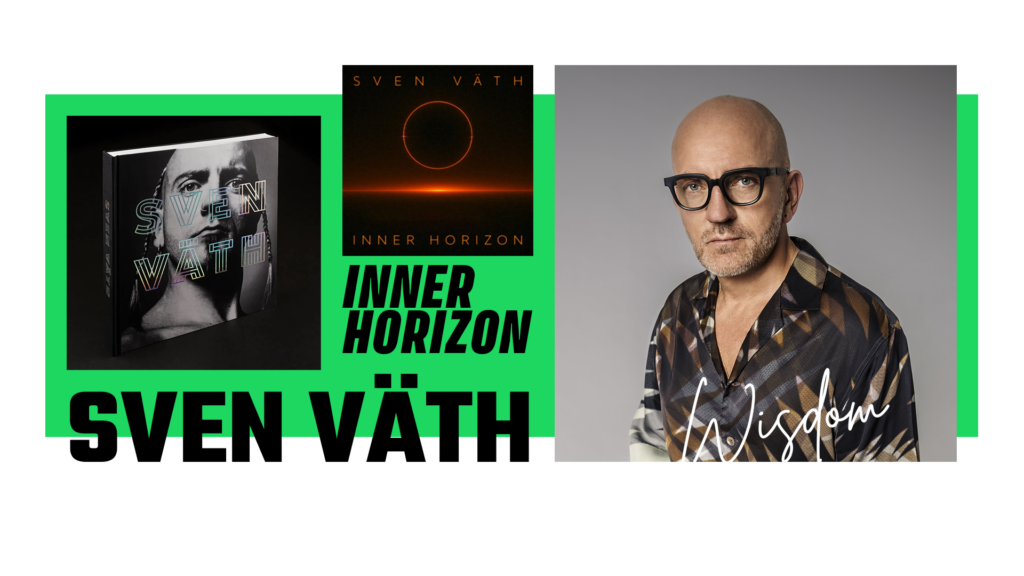
After 18 years of Cocoon residency at Amnesia, the longest the white island has ever seen, you might think everything has been said, and almost everything has been accomplished. But the project “Inner Horizon”, a listening playlist far from today’s conformity, is a reminder for all of us: let’s learn how to listen. For Sven, it was an inner necessity, as if after years of listening to the crowd he had to learn silence. “I felt a growing need to listen inward. Not as a retreat, but as a balance.”
Inner Horizon is, in fact, a journey into “ambient”, a style he knows very well. “I’ve been deeply connected to ambient music since the early 1980s. Artists like Brian Eno and Harold Budd had a profound influence on how I understand music — not just as rhythm, but as space, texture, and emotional architecture.” The project isn’t the opposite of the club, it simply brings something else, it lets us breathe, or rather catch our breath, in an industry still mirroring our society, where nothing slows down, where everything is consumed and swallowed without even realizing it. “Inner Horizon is not a statement against the club — it’s its mirror on another level.”
A metaphysical, almost synesthetic project, a counterpoint to what we are living through. “Our time feels extremely compressed. Everything is instant, everything demands attention. (…) Inner Horizon is a conscious counter-design to that.”
The project is more than a listening playlist, it’s an invitation to anchor yourself in the moment, to live the present, without speeding up in search of ephemeral dopamine, but instead in a prolonged kind of pleasure. “It opens a space where nothing needs to happen. No drop, no climax. Just presence. Ambient music, by its nature, allows time to stretch. It invites listening without expectation, without destination. It’s about listening not as consumption, but as experience. For me personally, it was a very healing process.”
No target audience and no strategy. “I made this music first for myself. Without a target group, without a predefined context, without an agenda.” The project resonates deeply with his way of listening. “Records often lie around for weeks, are played repeatedly, put aside, and rediscovered later. I don’t listen with the intention of ‘using’ music — I listen to understand what it does to me.” Maybe that’s the true radicality of this project: to remind us that time is not only what we fill, but what we inhabit.
What remains: time and space
We often say, words are silver, writing is gold. After decades spent watching the scene evolve from the inside, feeling its shifts, shaping its peaks, witnessing its reinventions, Sven Väth turns to a different medium, a book, to hold time still. In 4 Decades Behind the Decks, he retraces an entire era as a living archive: a wonderful history of time told through images, nights, and traces. The book feels like a tribute to the night, proof that what happened on those floors wasn’t just entertainment, but culture in motion.
This book is surely a work of wisdom, a chance to look back in order to see more clearly what lies ahead. This wisdom, this strength, he attributes to fatherhood. “I now have a young son — my third child. This gives me new strength, vision, and a deep sense of magic for what’s ahead.”
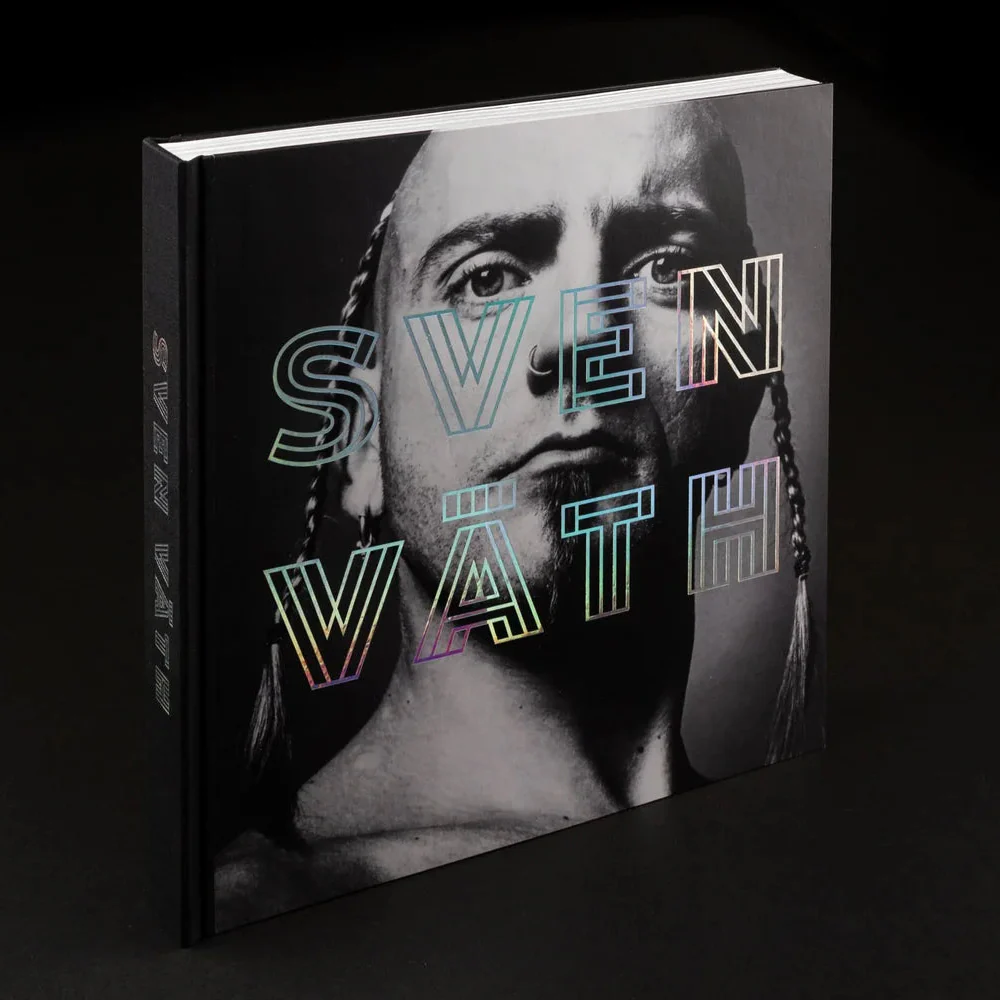
(Sven’s book is available on Cocoon’s website).
Finally, It was always about tempo. About the years in Frankfurt when everything moved too fast, the nights that taught him discipline as much as desire. About Ibiza, where Cocoon became a ritual, stretching time for eighteen seasons. And later, about slowing down again, choosing depth over noise, opening a new chapter with Inner Horizon, as a recalibration, a reminder that evolution doesn’t always mean acceleration. And maybe that’s why, when asked to travel back in time and speak to the Sven in his thirties, he tells himself :
“You don’t have to choose between success and conviction. Take your time. In the end, it’s not about speed or volume — but about truth.”
Learn more on Sven Väth, Cocoon, and discover Inner Horizon on Apple Music.
📷 : Cover Photo Credits / Courtesy of Sven Väth & Daniel Woeller / Woellerphotography
📷 : Additional Photo Credits / Courtesy of Sven Väth, Daniel Woeller / Woellerphotography, Envato Element CC License, Phrank & Amnesia Ibiza.
💚: Special thanks to Sven & Maurizio.