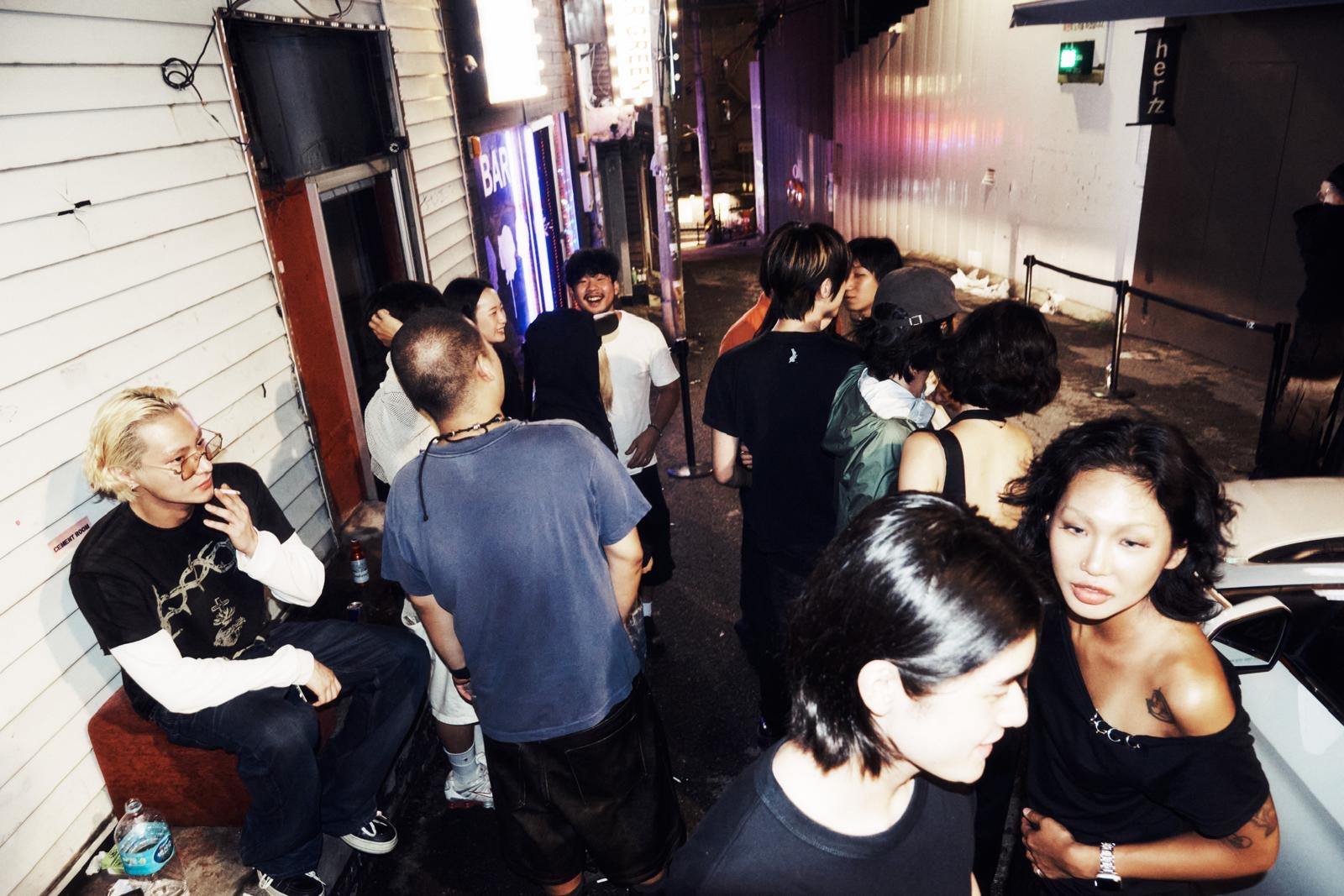
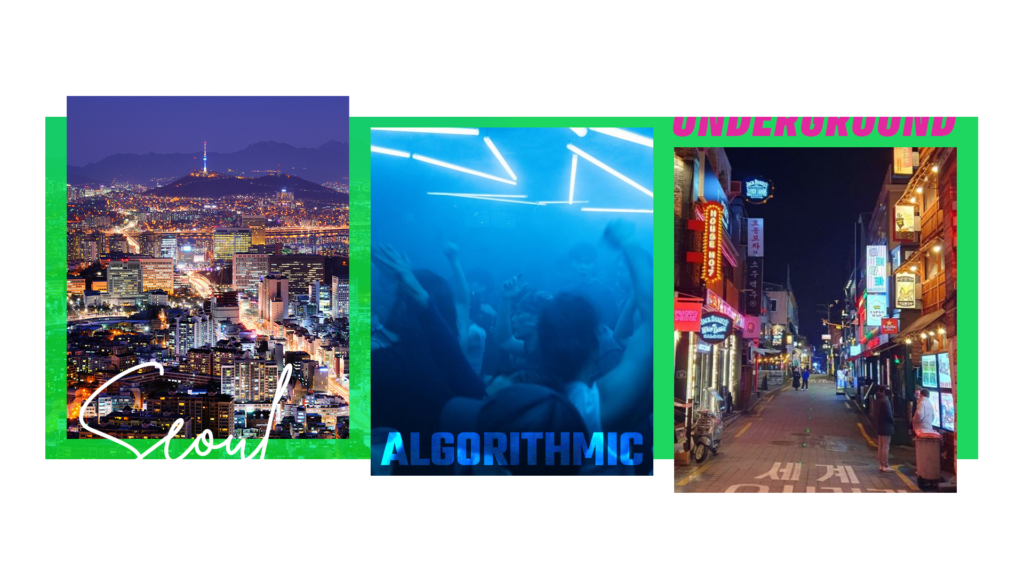
Electronic music in Seoul has always existed in a delicate balance between intimacy and expansion. Rooted in tightly knit communities and spatially defined experiences, its culture grew through proximity. Yet as digital infrastructures have come to dominate music discovery, Seoul’s underground finds itself increasingly entangled in algorithmic logic.
Since relocating to Seoul, a city that parallely feels both rooted in underground ritual and digitized through virality, that tension has become impossible to ignore. Seoul’s nightlife, long a mosaic of low-lit basements, intimate polygenre rooms, and rising enclaves of house and techno, is affirming itself again after the pandemic-era contraction. The reopening of the iconic SOAP club after seven dormant years feels like a reminder that the room still exerts its own authority. In Seoul now, from Itaewon’s subterranean pulse to Hongdae’s cross-genre hubs, electronic culture asserts its own logic, resisting easy translation into quantifiable data points. To understand how that authority survives inside algorithmic architectures, I spoke with some of the figures shaping Seoul’s present underground culture. What emerges instead is a portrait of negotiation of artists and curators learning to move through code without dissolving into it.
From Subculture to System
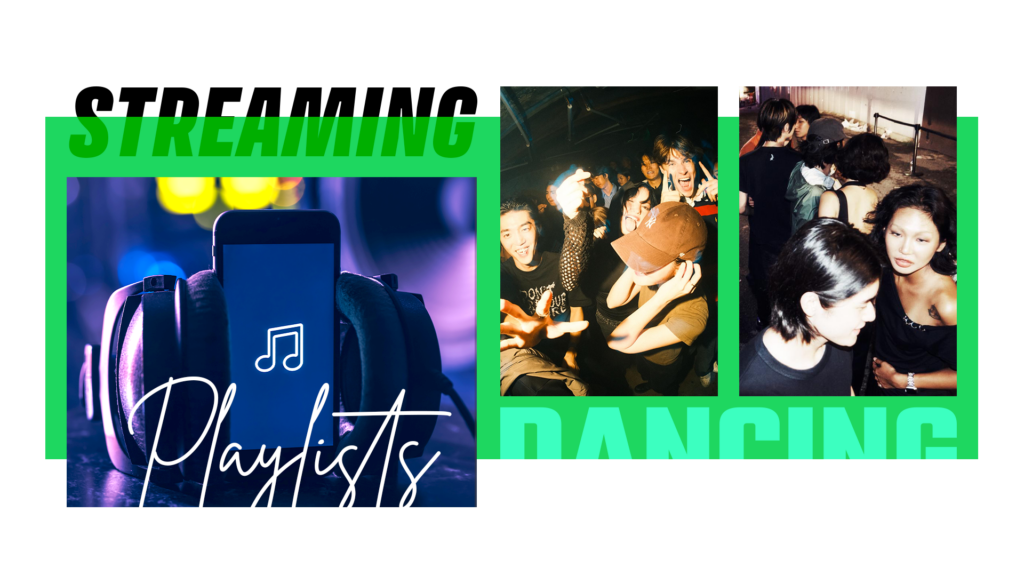
Electronic music was born as a collision of curiosity and subculture. Its early growth was spatial and temporal, mediated by physical proximity and sonic exchange. Yet the twentieth century gave way to another logic, one that dissolved geography into packets and replaced communal rites with recommendation systems.By 2024, electronic music tags on TikTok exceeded 13.4 billion views, with estimated annual growth rates above 30%. On Spotify, electronic music represents roughly 18–20% of global streams, yet fewer than 5% of tracks receive significant algorithmic playlist exposure, indicating a high concentration of visibility among a small percentage of releases. These growth rates dwarf almost every other genre on the app: a signal that the global appetite for electronic sound is immense, but also that its primary engine of discoverability has shifted from bodies in rooms to algorithms on screens.
Discovery migrated from club basements to algorithmic feeds. Herein lies the paradox: a culture forged in obscurity now circulates through infrastructures optimized for speed, repetition, and retention. Over 70% of listeners now find music through playlists, autoplay, or short-form video rather than direct search. On TikTok, tracks used in videos shorter than 15 seconds show the highest completion and replay rates, directly influencing which sounds are promoted. Across streaming platforms, songs that retain listeners past the first 10 seconds are significantly more likely to be recommended at scale. This has led to structural changes in production. Industry analyses show that the average time to introduce a core hook in electronic tracks has decreased by approximately 15–25% over the past decade. Track lengths have also shortened, with many releases now falling below the 3-minute mark, compared to longer club-oriented formats historically exceeding 6–8 minutes.
The result is a system where visibility, distribution, and even compositional structure are increasingly shaped by measurable engagement metrics rather than solely by club-based circulation. Algorithms do not simply distribute electronic music; they subtly contour its shape. The first seconds of a track carry disproportionate weight. Hooks migrate forward. Drops tighten. Structure absorbs the logic of the platform that will host it.This tension, between the dancefloor and the feed, animates the questions at the heart of this piece.
Algorithms as Cultural Gatekeepers
To understand the present, we must recognize how the digital age transformed music’s circulatory system. In the early 2000s, the rise of digital music stores decoupled songs from albums and liberated them from physical formats. This seemingly innocuous shift brought with it a new logic: tracks as standalone units optimized for consumption. Observers have argued that this decoupling opened the gates to what some critics call “sludge”, endless playlists of tracks designed to be backgroundable, generic, and interchangeable, often prioritized by streaming algorithms over artistic depth.
What was once avant-garde and niche has become reliant on the same visibility engines that serve pop hits and meme audio. Algorithms have become not neutral pathways, but active selectors, shaping not only what we hear, but how music is produced. This structural transformation is not just about accessibility; it is about agency: who gets discovered, who gets paid, and who remains on the margins.
The consequence is both aesthetic and economic. Short-form video platforms reward immediacy: stimuli that hook within milliseconds. This has led to new forms: tracks engineered to slash attention costs, intros composed with algorithmic logic, drops designed for snippet emulation, rhythms optimized for loopability. In genres like hyperpop, for example, this dynamic is explicit: short, repetitive, and relentlessly catchy tracks emerge not just as cultural artifacts but platform artifacts. For a culture that historically prized duration over immediacy, that built nightlong sets on tension and release, this is no small shift. It forces a question that cannot be answered purely in technical terms: Does algorithmic prominence shape the music, or does the music shape algorithmic prominence?
The Dancefloor vs. The Feed: Artist Testimonies from Seoul and Beyond
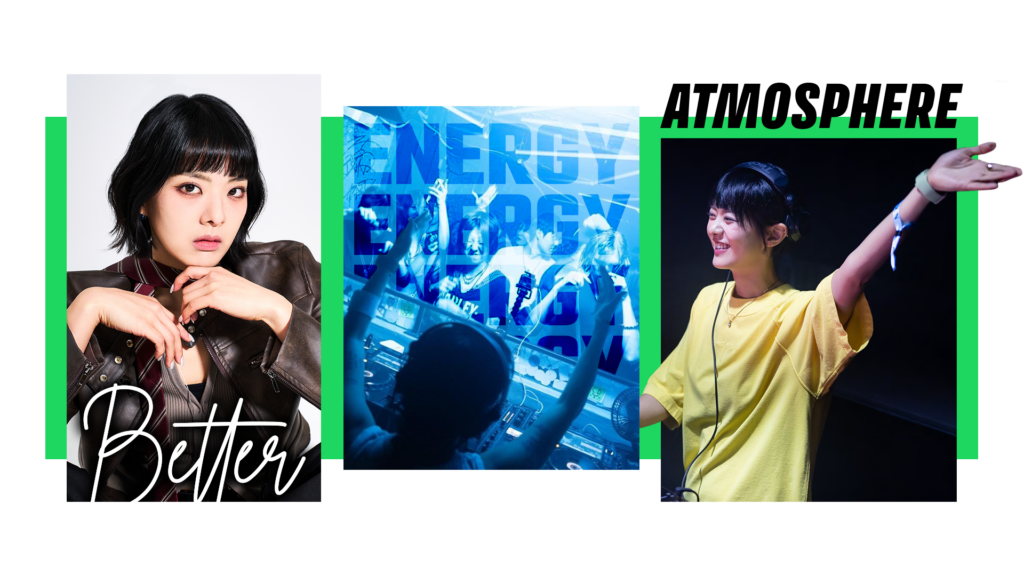
To explore this question with nuance, I spoke with artists who reveal how this new digital ecology shapes their work. BETTER. a Seoul-based DJ and producer with core presence within Seoul’s house continuum, insists that creativity must precede optimization.
“I can’t pretend the algorithm doesn’t exist,” she says, but quickly distinguishes awareness from capitulation. “When I’m producing, I don’t sit down thinking about what will work on TikTok or what will trigger a playlist algorithm.”
Instead, her creative compass remains oriented toward energy, atmosphere, and emotional statement before format. Her approach underscores a critical creative imperative: the club, not the feed, remains the real testing ground. In her world, audience experience is embodied, not metricized. Her reflections also highlight the emotional strain of coexistence with platforms. The rhythm of social media demands constant output, while the rhythm of creativity requires silence and space. For her, conflating creation with promotion risks transforming expression into content, a distinction that feels existential rather than stylistic.
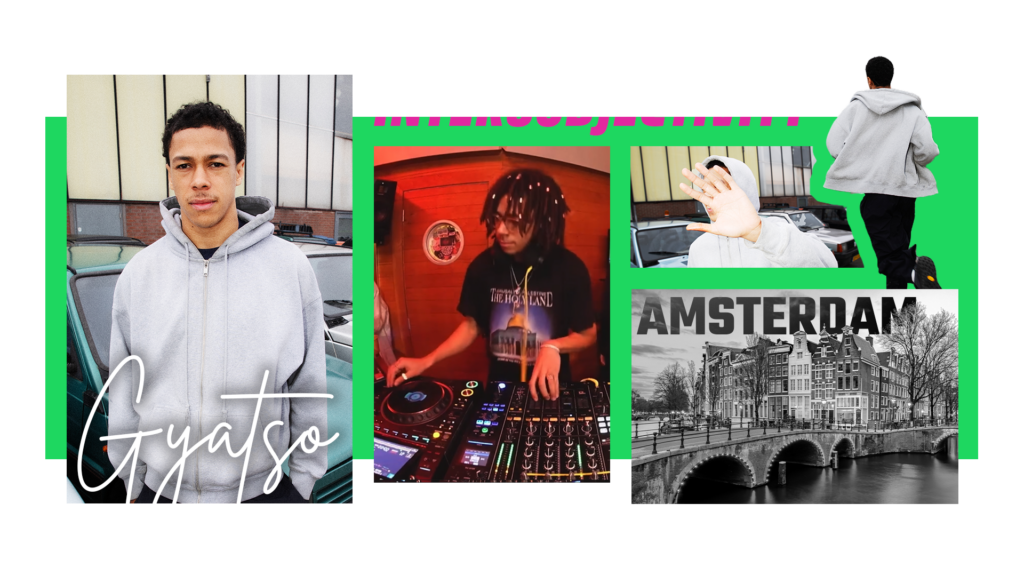
GYATSO approaches the same terrain from a different vector. Born in Amsterdam and now operating between European and Asian circuits, he moves within a transnational economy of bookings, streams, and social presence. I met him during his Asia tour when he stopped in Seoul for his gig at club Bolero. He explains how he refuses to let the algorithm dictate creative choices, even if he acknowledges its subconscious influence.
“It would be naive to say it doesn’t influence me” he admits, referring to algorithmic culture. Yet when the conversation turns to craft, his language shifts. “When I’m making music, I think about what I would want to hear in the club.”
His work is guided by intuition and crowd resonance more than platform performance. For GYATSO, the dancefloor is an ecology of intersubjectivity: it is where energy, groove, and momentum are negotiated through bodies, not screens. He frames the role of visibility not as a defining artistic criterion but as a pragmatic reality. Exposure has value, but it should not eclipse the primary logic of music-making. His perspective illustrates how artists are not passive data subjects; many actively choose their priorities, whether that leads to mainstream reach or sustained underground presence. And still, the pressure hums. “Sometimes it feels like you have to be a content creator before you can just be a DJ.”
For 2Spade, whose ascent within Seoul’s bass and experimental circuits being signed to SM Town’s SCREAM Records, marks him as one of the city’s most compelling younger voices, the algorithm was never an external shock. It was the water he learned to swim in. And so, his testimony articulates the interior conflict most clearly.
“It affects me all the time,” he says. “If I think too much about what might go viral, I lose myself.”, he explains.
While recognising that algorithms have shaped his career, he feels increasingly determined to assert his own creative priorities. The recalibration is audible in his recent sets, where rougher textures resurface and structures stretch unpredictably. The dancefloor becomes a diagnostic tool. “You can feel if it’s real.” For 2Spade, the tension between the dancefloor and the feed is is dialectical. He works to balance visibility with depth, rhythm with reflection, and finds value in blurring boundaries rather than strictly obeying them.
Institutions in the Algorithmic Age
The pressures of visibility are not confined to artists but shape institutional logic as well. Few voices carry more weight in this conversation than Wongeun Cho. As the director of Hertz and Paper, Cho stewards two of Seoul’s most rigorously curated underground spaces. Hertz has become synonymous with depth programming. Paper, more intimate yet equally deliberate, operates as a crucible for nuanced experimentation. Together, they have positioned Seoul firmly on the global map of serious club culture.
Cho’s vantage point extends beyond individual tracks to the ecology of nights.
“It is clear that algorithms are forming a new kind of mainstream. In the past, broadcasters or labels shaped trends. Today recommendation systems and platforms often play that role. However, I do not see this purely as something to resist.”
Clubs were spaces that proposed taste. Now audiences often arrive having experienced specific sounds through playlists and algorithms. This broader understanding of genre codes and musical progression results in expectations on the dancefloor. A crowd that is attracted faster by an audience that is widely known online. “Hosting international artists brings a crowd that comes for a confirmation they already know.” In contrast, local artists often operate within the accumulated context of the space and nurture the relationship with the audience, the history of the scene and the specific mood of the night deepen the depth and unity of the dancefloor.
“Of course we look at numbers,” he says. In the current economy, ignoring metrics would be irresponsible. He acknowledges the influence of likes, follows, and streams as indicators of potential turnout, yet insists these metrics are reference points, never substitutes for real-world evaluation. “Numbers can indicate potential turnout. They don’t guarantee someone is a good DJ or know how to hold the flow of a night.” Flow, that fragile arc from opening warmth to peak intensity to morning dissolution, cannot be reverse-engineered from analytics. Cho has witnessed artists with minimal digital footprint command Hertz’s cavernous room through restraint and timing. He has also seen the inverse. For him, the club remains a space where unpredictable dynamics eclipse algorithmic predictability.
“Algorithms analyze individual preferences, but a dancefloor moves through collective energy. The key is balance. We should understand how music is spread online, but in offline spaces we must continue to allow experimentation and risk-taking. A club should be a place where new sensations are tested”.
UMI, from Seoul Community Radio (SCR), situates this tension within broader cultural rhythms. She frames the curator not as a mouthpiece for algorithmic tastes, but as a taste proposer: “Algorithms analyze what already worked,” she says. “Curators can propose what hasn’t been validated yet.” And so they invite listeners to imagine possibilities beyond what data predicts. Curation, at its most vital, introduces risk. It foregrounds sounds that may not yet possess measurable traction. “Global visibility expends opportunities. At the same time, there is a risk that certain sounds become adjusted to fit global standards.” Expansion and flattening happen simultaneously. Underground artists are aware of this tension, and perhaps the curators’ role is to help make that journey visible to more people. “Community creates relationships- which is at the core of SCR. Rather than a single viral moment, repeated exposure and sustained connection can help artists grow.
Although she can’t deny how distribution structures influence compression:
“Moods are established more quickly with a wider range of genres and edit tracks being played within a single set. Within that, artists are developing different strategies to maintain the sharpness of their own identity.”
The phrase lingers because it captures what every other voice circles in different terms. Authenticity remains beyond capture. It is where electronic music continues to locate its authority.
“If platforms have an increasingly narrow taste, then curators must intentionally expand it. Not as a grand act of resistance, but as a minimum responsibility for keeping the ecosystem healthy.”
Her perspective is a reminder that curated platforms, live radio, and community support systems still play vital roles in expanding ecosystems rather than merely optimizing them.
The Room Still Decides
Allen Rhi has spent the last decade building precisely the kind of ecosystem where those tensions play out in real time. As the founder of UNDERCITY, one of Seoul’s most respected underground promoters, he operates in the narrow corridor between artistic instinct and logistical reality. His events have brought some of the most discerning names in contemporary electronic music to Korean dance floors. When discussing how artists are selected, Rhi’s criteria appear almost deliberately resistant to the metrics that now dominate the broader music industry. Streams and follower counts, he explains, rarely function as indicators of artistic relevance within the underground. Instead, they serve a far more pragmatic role.
“Sound comes first. Always,” he says. “I listen to recent sets. I look at direction, tension, control of the room. That matters more than numbers.”
In Korea’s club economy, enormous streaming figures often signal something entirely different from cultural resonance: they frequently translate into artists who are financially out of reach or logistically impossible to book. Metrics, in other words, describe feasibility more than taste. Where the algorithm might measure engagement, Rhi is interested in the quality of presence. He describes a subtle shift in audience behavior that anyone standing behind a DJ booth will recognize immediately. A “response” to music now carries multiple meanings. “It depends on what you call a response,” he reflects. “Dancing hard in front of the booth, or filming for Instagram?” For him, the most compelling artists today tend to exist in a delicate equilibrium. The distinction is not about popularity; it is about intention. “Presence on the dancefloor matters more than presence on the feed,” he says. “But ideally people come because they want to be there, not just because they’ve seen it online.” That balance places clubs themselves in a complicated position. If algorithms now guide initial discovery, what remains the responsibility of physical venues? Rhi answers without hesitation. Clubs, he insists, still function as cultural filters.
“Taste-making is still our role,” he says. Yet the authority of that role has changed. Audiences arrive informed, already shaped by digital listening habits, playlists, and algorithmic pathways. Programming can no longer assume a blank slate. “If you ignore audience-led trends completely,” he notes, “you become irrelevant. People know what they like now.”
The art of programming lies somewhere between resistance and responsiveness: leading the room while remaining attentive to its energy.
For Rhi, the final verdict on any of these questions ultimately returns to the same place it always has. He references the famous motto of the German festival Time Warp: The truth is on the dancefloor. The phrase resonates precisely because it acknowledges the limits of control. Promoters can design lineups, shape narratives, anticipate flows. Algorithms can generate expectations long before a night begins. But once the music starts, those projections dissolve into the unpredictable chemistry of a room.
“You can curate. You can predict,” Rhi says. “But once the night starts, the room decides. Algorithmic exposure is often the first touchpoint,” Rhi reflects. “But visibility is entry. Experience is what sustains culture.”
The Dance Still Belongs to the People
At stake in this cultural negotiation is nothing less than the ontology of underground music itself. Are underground scenes possible today? The answer, from Seoul to online airwaves, appears to be yes, but not without fragility. Seoul’s underground, woven through venues from low-ceilinged basements to expansive rooftops, persists not because it is untouched by digitization, but because it refuses translation into pure data. It insists on presence, on shared time, on embodied listening. Algorithms may determine discoverability, but they do not determine value. These are unquantifiable, ineffable, and definitely human.In that sense, the question “Who owns the algorithm?” dissolves into a larger question: Who owns the music?
But ownership of infrastructure is not ownership of meaning. What becomes clear is not a battle between underground and digital, but a reassertion of hierarchy. The algorithm may determine routes of discovery, but as long as artists and curators of this caliber continue to privilege depth over velocity, narrative over novelty, the center of gravity remains where electronic music first located it: not in the feed, but in the air between bodies. Artists, curators, DJs, and dancers will forever own the experience.
📷 : Cover Photo Credits / Seoul Club Community
📷 : Additional Photo Credits / Courtesy of 2Spade, Gyatso, Better, Umi, Hertz, Paper, SCR Radio