
While looking for sources to write this article, I realized something pretty frustrating: there isn’t much out there about Schranz. No real genealogy, few narratives, almost nothing that explains what it actually is in substance. All I really know is this: the term seems to have emerged around Chris Liebing, and from that word, at some blurry point, Schranz was born. Which is odd, because the sound obviously existed before it was named. A style doesn’t suddenly appear the moment someone sticks a label on it. So why that word? What did it originally refer to? And what does it refer to today ?
A QUEST FOR: SCHRANZ SCHRANZ SCHRANZ
I stumble upon a Soundbridge definition: “emerged in Germany during the late 1990s and early 2000s. It stands out for its hard, repetitive, fast sound, often between 140 and 160 BPM.” And I’m like… okay, but tell me something I don’t know. That’s basically the same as saying water is wet. Too many questions remain unanswered, so I end up exactly where I didn’t want to go, because I know I could lose hours there: a Reddit thread. “How can I identify Schranz?” / “What is Schranz? Who are the key artists?” And right away, I understand I’m not going to get a clean, encyclopedic definition. I’m going to get something better, or worse: a collection of sensations, jokes, mental images, and contradictory certainties. And that is, in fact, exactly where my subject sits.
“Does it even matter? Just play what you like.”
“You’ll know it when you hear it.”
And then, finally, a scientific statement:
“If it sounds like ‘SCHRANZ SCHRANZ SCHRANZ,’ then it’s Schranz.” Thank God, we’re saved.
After that, it turns into metaphors: a galloping horse made of distorted percussion. A wall of saturated cymbals. The feeling of doing the dishes with bricks. Music that makes you want to dance and scream at the same time. And as I scroll, I realize a second thing: there really is a myth around Schranz. An etymology passed along like a private joke. Endless debates about what it “really” was: a full subgenre in its own right? An old name for hard techno? Not techno at all? A German aesthetic from the 2000s?
In other words, it feels like I’m on a quest for the Holy Grail: everyone knows exactly what we’re talking about, nobody truly knows what it is, and yet the myth holds. Nobody says the same thing, but everyone seems certain they can recognize Schranz by ear, me included. I remember someone once asked me what it was, and I answered: “It’s like background noise on a melody that you don’t find in other styles,” without actually knowing the story behind it.
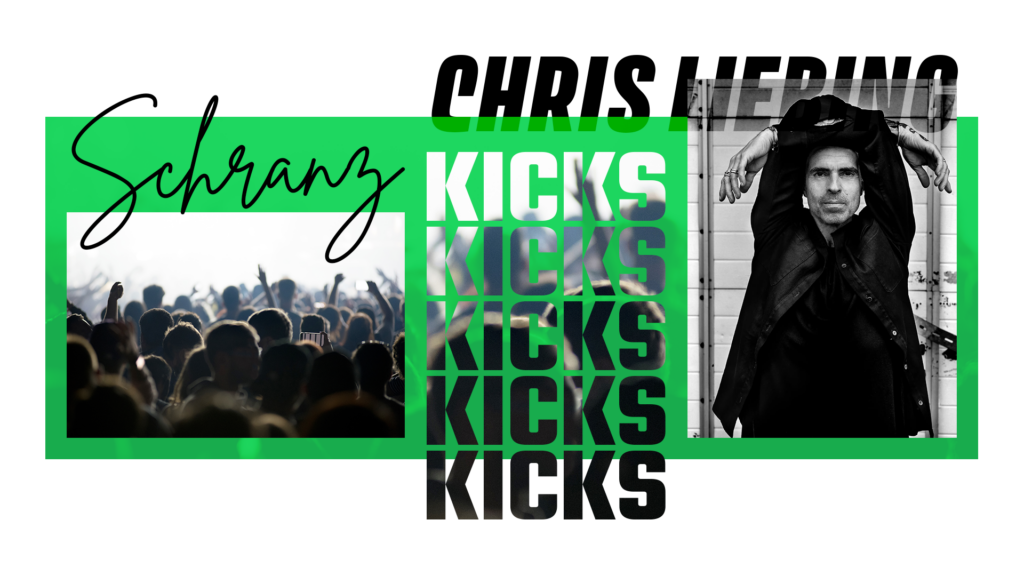
The german Schranz : proudly ugly
Then, right in the middle of my Reddit rabbit hole, I stumble on a YouTube video in German with no subtitles, because of course it would be too easy. It’s presented as an excerpt connected to Zeitgeist Stammheim, and Chris Liebing finally tells the long awaited story.
“From 1997 to 1999, I was in Cologne,” he begins. At the time, he hosted a show every Friday on Evosonic, one of the first Europe wide radio stations entirely dedicated to electronic music, from 5 to 9 p.m. He would come up from Frankfurt,“I’d make the trip, I’d struggle my way up there,” and he would play what he loved. “I can only play what I personally like.” He insists it wasn’t a one style show. He would start slowly, and he covered lots of different areas.
Then, at some point, he would reach sounds that were more saturated, more abrasive, not necessarily faster, just more overdriven. “Okay, now it’s shredding.” It scrapes. It distorts. It saturates. That’s where the word is born.
Sometimes a friend would come along, Toe, who, he says, worked at a record shop in Frankfurt. One day, from the background, Toe yells:
“that schranzt.” Liebing answers immediately, “yes, exactly, that schranzt.” Then he adds a line that says everything.“We had no idea what it meant, but it fit perfectly with what was playing right then.” We can’t define it, but we know when it’s there.
Most importantly, he clarifies what the word wasn’t. “It was never about the track’s speed,” nor whether it was hard or hardcore. Sometimes, he says, it was even very slow stuff, just dragging along and grumbling on its own, but it carried that specific grain.
That grain, he names clearly. “That dirty side.” He admits, “I always thought I sounded too clean,” and he says he always loved how the English, and sometimes certain Americans, managed to sound so dirty. He also confirms how spontaneous and uncalculated it all was. “If I’d known back then it would take off like this, I would’ve come up with another word, something nicer.”
Then he explains how it all slipped out of his hands and turned into a real phenomenon, how it became a generational flag. “So, were you at a techno party?” “I’m not going to a techno party, I was at a schranz party.” “Over there, it schranzt” quickly became an identity, a full fledged genre. “We schranz.” A reminder not to forget where this movement comes from, something far more radical, aesthetically dirty, and far from what was commercially accepted in electronic music circles at the time.
That’s the most solid starting point I’ve found. Schranz was born as a way of saying it scrapes, it saturates, it’s dirty, not as a subgenre with an official BPM range. And if people still argue today about what it really is, maybe it’s because from the very beginning, the word never tried to define, it tried to describe. And What about now ? I go back to my Reddit thread: “The old schranz is Arkus P, Robert Natus, Viper XXL, Leo Laker, Sven Wittekind, DJ Rush, Chris Liebing (Stigmata)… I don’t have the slightest idea what it is now. ‘Hard techno’ that’s basically hardstyle, isn’t it?”
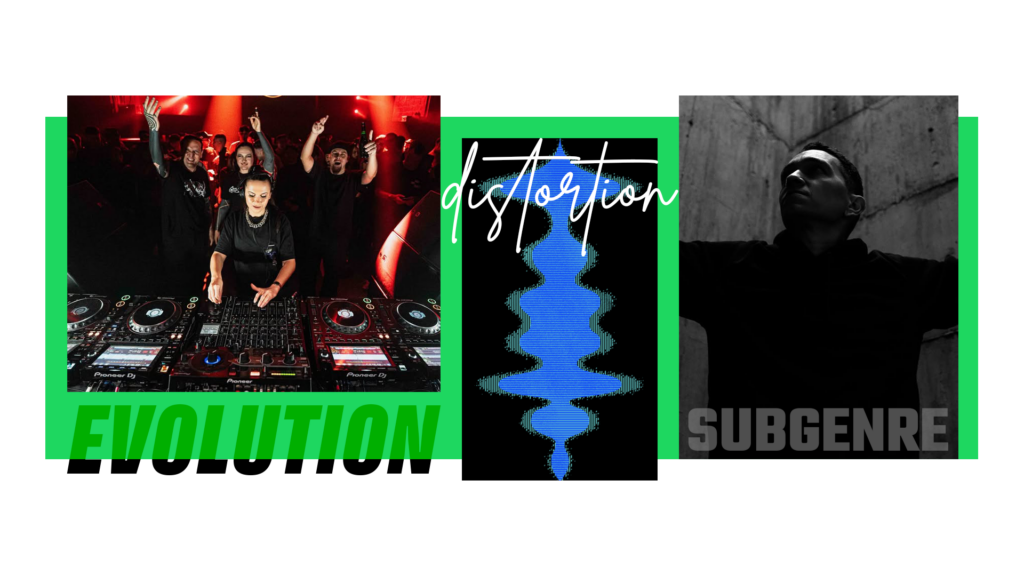
The Telephone Game
Me neither. As I’m writing this, I no longer have any idea what Schranz really is, and I don’t really know what hard techno is either. Time has passed and genres have blended. Because what we call “hard techno” today has very little to do with today’s Schranz, which itself has very little to do with yesterday’s Schranz.
As for Schranz, after collecting ten different versions, I still come back to one distinction.
On one side, there would be a “Latin” Schranz, carried by a very alive scene in Latin America that later exported itself to Spain. When I talk about it with DJs and producers, they often describe a sound that’s groovier, faster, maybe also a bit less “dirty” in the way Chris Liebing meant it. More movement, more bounce, a more “rolling” energy, less of that abraded texture. On the other side, there would be the German Schranz, harder, more defined, more radical, more “grain” than “line,” people tell me, and maybe a bit less fast.
So I observe poles. The “Latin” scene is often associated with artists like Fernanda Martins or DJ Lukas, who also circulate a lot in Spain. On the more “German” international scene in the collective imagination, people rather mention OBI, A.N.I, Nikolina and Pet Duo for the more recent. Even though a lot of “hard techno” artists play Schranz too. These aren’t airtight boxes, obviously, but it sketches different musical aesthetics depending on geography.

And then another subcategory arrives, “emo Schranz.” An emotional Schranz, heavy, almost dramatic, often marked by German vocals, repeated everywhere in edits and sets, especially with Cloudy, and carried at a large scale by the most visible ambassador of the current scene, Klangkuenstler. Here, I feel like I’m touching the more current movement of Schranz. The original dirtiness becomes a kind of catharsis, and for once I see exactly what people mean, maybe because for me it’s the Schranz I know, the one I’ve heard, probably because of my young age.
Schranz is also stepping into bigger and bigger productions now, built for a crowd that doesn’t just listen to the sound but wants to live inside it. You can feel that rising popularity in the way these shows are staged and consumed, and for many people, one of the moments that defined 2025 was Klangkuenstler at Univers. The whole room was drenched in deep blue light, a dark, almost cinematic scenography that made the sound feel even heavier. In a venue as polished and high-quality as that club, it landed with a particular intensity. A full atmosphere.
@ravetotechno Cloudy with a beautiful performance in Madrid! 🔥 Schranz Cloudy, Full Power❤️🔥 @cloudy.mp3_ #fyp #viral #cloudy #hardtechno #rave ♬ Originalton – NLSN.
But then again, in 2026, are we still talking about Chris Liebing’s Schranz? Are we talking about a style, or a word that changed owners through repetition? I feel like Schranz is a big telephone game. We passed on intuitively what it evoked for us, and by the end of the line we created something else.
In my last bottle in the sea moment, I ask a producer friend “but what is the thing that makes us recognize it instantly by ear?” He answers that there is still a common denominator, something that runs through all these “Schranz” : the kicks. And I go back to my initial image, that washing machine noise.
Out of curiosity, I then listen to a Chris Liebing set from 2025. And here comes the final twist, I catch myself thinking it sounds more like hardgroove than Schranz, even though I hear those singular kicks. Maybe for Chris, even today, it is still “schranzt.” But not in the same way it does for others. Not with the same criteria.
So here’s my conclusion, probably far from certainty and a bit fatalistic Schranz is not a stable genre. It might not even be a genre at all. It’s a sensation, a sound that took a name and then mutated, traveled, hybridized. And if we can’t define it, it’s not because it doesn’t exist, but probably because it belongs to everyone.
If it schranzt for your neighbor then it’s Schranz for him, that’s it. My real conclusion is the one I had already found on Reddit before “Does it even matter? Just play what you like.”
📷 : Cover Photo Credits / Envato Elements License
📷 : Additional Photo Credits / Courtesy of Klangkuenstler, Chris Liebing, DJ Lukas, Pet Duo, Stammheim Documentary, CC License, Envato Elements License