
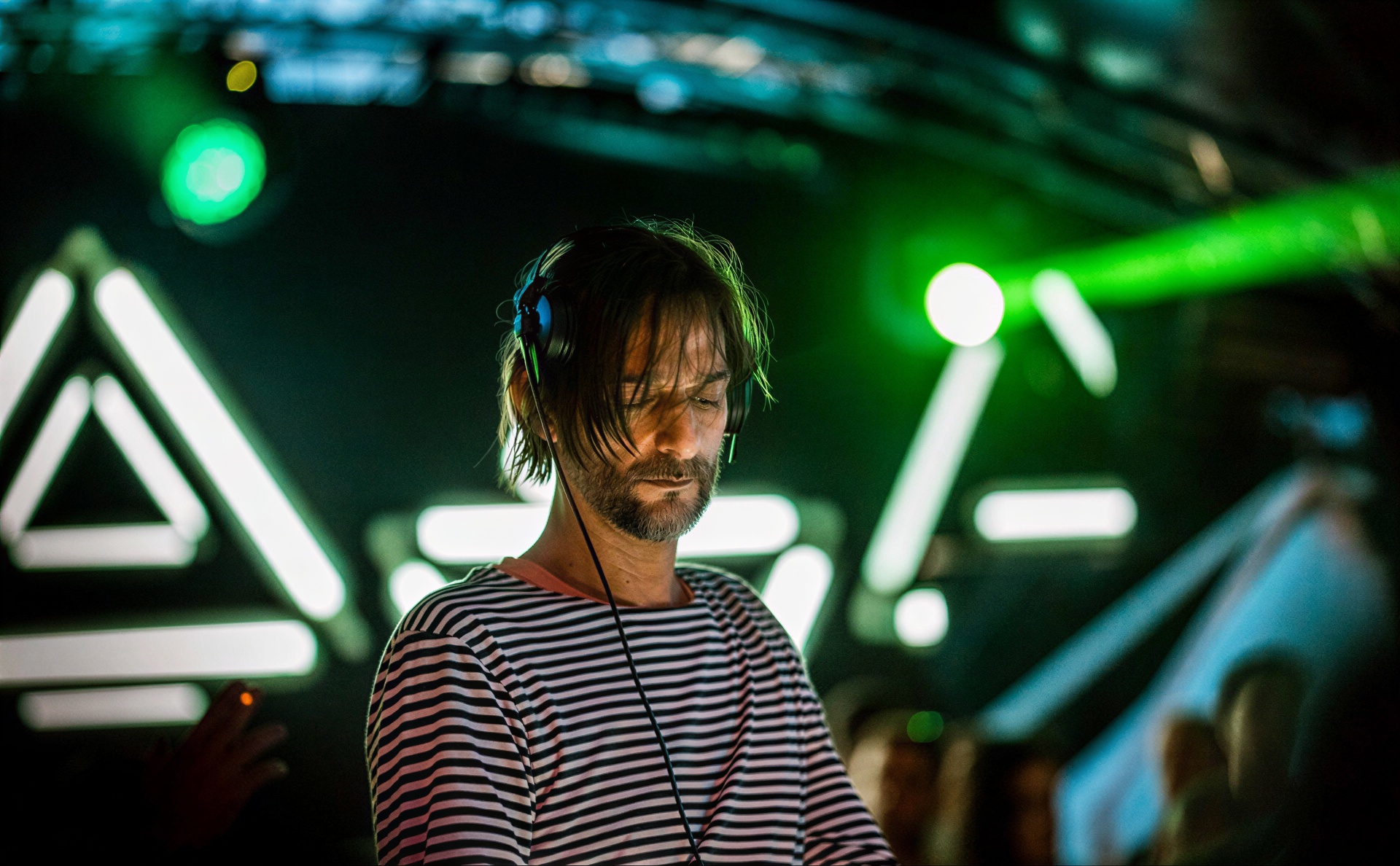
Ricardo Villalobos is one of those elusive artists you never really “catch”, a slippery presence powered by an inexhaustible creative drive. A minimal genius, yes, but more than that: an artist people talk about because they rememberhis music. Often in the shadows, his success is inseparable from the mystery itself, the long silence, the sudden appearance, the rumour that he might play (or not!), the whisper that he will be there tonight. To get close to a figure who rarely offers a straight narrative, it helps to follow someone who has watched the myth in its real form: we sat with Nacho Capella, an Ibiza insider and longtime witness whose path has repeatedly crossed Villalobos, from the Amnesia DJ booth to the devoted crowd that follows him through the night.
➡️ 🇪🇸 Jump here for the Spanish version of this article
Habemus Ricardo
A hypnotic pulse, jagged, repetitive, hazy, yet lit by flashes of acid, and something clicks. Frankfurt’s Dorian Gray wasn’t just another club, it was a legend lodged in an unlikely place. Right inside the city’s airport, a neon-lit bunker where, through the late 70s into the 90s, travellers and locals blurred into the same long night. A threshold space in every sense, built for transit and transformation. Villalobos was still a teenager when his father would bring him there. Ricardo’s father, Pedro Villalobos was a Chilean academic who worked as a professor at the State Technical University (Universidad Técnica del Estado) and was an important early influence on Ricardo’s exposure to music. And that night with his father, that single record: Torsten Fenslau’s “Force Legato System“, as he remembers it, hit him ” like hypnosis.” A first door opening. Repetitions as revelation, minimalism as a way of shaping the space, the groove not as entertainment but as an atmosphere.
After that first epiphany, Villalobos’ story isn’t told as a linear rise, but as a multicultural journey, through languages, places, and, above all, encounters. “The main thing is Chilean because he was born in Chile,” Nacho reminds us, before adding that Ricardo left the country very young, ” at three, four years old, he left for Germany to relocate to the south of Frankfurt “, as his family was forced into exile, due to Pinochet’s dictatorship. Chile remains the intimate matrix, the point of origin he would return to, but Nacho insists: ” his main influence with music was always in Germany. ” That’s where his artistic ear was forged, also where a discipline of sound took root and finally where listening and living music became a way of life. A clubber’s education before it ever became an artistic ambition.
And what a Germany that was, especially when you speak of Berlin at the turn of the 90s: a city barely emerging from the fall of the Wall, still scattered with wastelands and empty buildings, a place where the night became a collective outlet after Frankfurt laid much of the groundwork.

German Genesis
Berlin techno in that era, – and in many ways still today- is raw, industrial, sometimes austere, often radical. The heir to machines, factories, and the utopia of freedom, the city was breathing at the time. People danced for hours, hard, with no need for spectacle. Clubs were a home for free spirits, and, maybe that’s what Ricardo found in Germany back then: freedom.
Nacho drops a name the way you mention a rite of passage: “going back to Germany and there was clubs like Tresor.” The mythical Berlin club that opened in 1991, way before the Berghain era, and later became a label which drew the contours of the capital’s techno identity. It’s also where you begin to understand the artist’s complexity: born in Chile, but with a musical grammar written in Germany, then reinjected elsewhere through constant returns and cross-pollinated influences.
“Sometimes, when visiting family, he would go back and spend time with Luciano, with Umo, and with many other DJs. It was a constant back-and-forth, in and out, in and out. I think that’s when he started to realise he wanted to be a DJ. I can’t say exactly, but those connections are key to understanding where Ricardo comes from.”
Nacho describes him as someone who « followed his feelings, » feeding on different cultures , Chilean, German, South American with a voracious curiosity. And if Villalobos would go on to become one of the major names in a more “micro”, more organic minimalism, more subtle in its variations, you can already read it in that Berlin: its basements, its tensions, its obsession with rhythm and its faith in repetition.
The musical canonisation
This obsession with enchanted repetition would follow him throughout his journey. But if there is one moment, one track that marked the ignition of his career, it’s « Easy Lee, » the opening cut of his 2003 album Alcachofa. Every artist has that one track that pushes them onto the international stage; for Ricardo, this was it. Listening to it, you can’t deny the Berlin influence: an enigmatic piece, once again deeply organic, perhaps even slightly melancholic when you surrender to it.
“ It’s always the melancholic side, the sad side (…) it always makes me different from the feeling I have during the day » says Ricardo Villalobos.
That is precisely the Villalobos genius: making something universal out of something profoundly particular. From here the album gives us a map of his world. ” Fizheuer Zieheuer ” with its marathon tension, shows just how far Villalobos is willing to push repetition as a way to put a room into trance, and ” Dexter ” deepens the spell with a darker, mesmerizing groove.
Amnesia’s Terrace as a temple
Ricardo Villalobos wasn’t shaped only in the shadows, he was also shaped through an unbreakable bond with Ibiza, an almost sentimental relationship with an island where the dancefloor still feels unmatched. Once again, there’s something mystical in the places that have marked Ricardo’s path. Ibiza is where the artist seems most at home. “If you ask him… of course: Ibiza,” Nacho says, as if the answer were obvious.
You quickly realise the attachment isn’t merely geographic; it’s a way of inhabiting the night that you don’t find anywhere else. If the island remains that fixed point he returns to relentlessly, it’s also because it holds his great Ibizan love: the terrace of Amnesia. The “pope” legend is made there, and made most of all there. A site heavy with history, telling the story of an inexhaustible crowd, a floor loaded with invisible archives. As Nacho puts it, “This floor is Amnesia.” And nothing else.
And Nacho would know. Back in the late 90s when he met Ricardo, on a north-Ibiza rave, Capella recalls crossing paths with Ricardo almost by accident, before even realising he was a DJ. A year later, Amnesia called. The party was Delicatessen, Sven Väth was booked, and Sven invited Villalobos to come along. And the island never let him go. “The year after in 2000 is when Cocoon started their residency,”
Amnesia’s Main room changes, it follows seasons and trends. The Terrace meanwhile, keeps its guiding line: “housey techy house… since day one, ” he insists, an aesthetic loyalty that resists the outside noise. Maybe that’s where the religious metaphor stops being just an image. The terrace seems to lock within its walls, a mystery that only time has watched unfold. “ What these walls are talking about… it’s not easy to find nowadays. “
What ultimately stands out in the way Nacho speaks about it is permanence. Even as the industry reshuffles, the terrace remains. Villalobos clings to it like a centre of gravity. When Cocoon, – Sven Väth’s famously iconic residency – , left Amnesia in 2018, he stayed. Nacho says it plainly: “He was the only one that stayed at Amnesia when Cocoon left, because for him the main thing of everything is Amnesia.” Again, something instinctive and organic, the loyalty to a place, to what it represents, to what it triggers in people’s minds : terrace culture.

So if Ricardo is seen as a pope, it isn’t only because he helped shape a subtle sound, it’s also because he reigns over this territory. The terrace is a stage where you come to live inside. Nacho reminds us that “98% of the DJs say (it) is one of the best dancefloors in the world.” And at sunrise, there’s nothing else that really matters. Villalobos has always treated the dancefloor as a place of proof.
As Ricardo says: “ you can close your eyes but you can’t close your ears, the truth is what you hear”
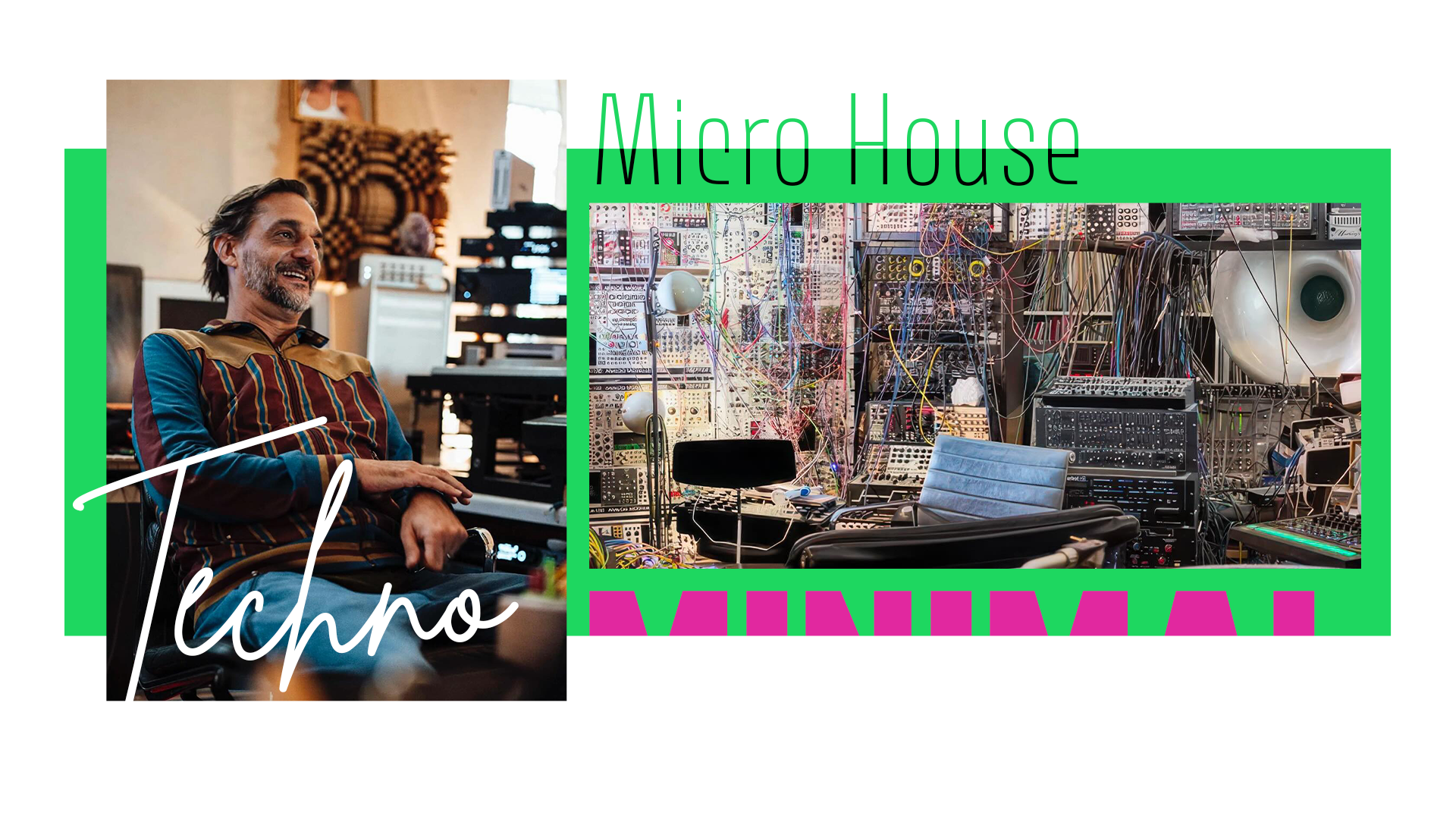
But Ibiza, for Villalobos, isn’t where the music is made. It’s where it’s lived. On the island Ricardo comes to “relax” and play at Amnesia but“music is in Germany, in his studio.” That’s where the work happens, away from the Terrace and away from the noise, inside what Nacho calls his “spaceship,” a Star Wars-like lab of machines, analog synths, modulars and obsession. He has always been a machine-lover in the purest sense, he never gets tired of playing with the machines. Chasing the tiny shift in texture, embracing the materiality of music.
Faith over fame
Villalobos has never really played the visibility game : “He’s really out… not into the social media madness.” reminds Nacho. He trusts the old logic of the night: if it matters, you’ll feel it, not scroll past it. This distance isn’t a pose, but a form of self- preservation. In a scene where Ibiza has become as much a content machine as a clubbing destination, Villalobos keeps himself « out of everything » to protect what still matters to him: connections and sound. While most DJs build empires on timelines, he has built it on desire. In his case, it doesn’t dilute the demand, it sharpens it. “It’s not easy to book Ricardo Villalobos,” Nacho reminds us, almost with a shrug. That scarcity does what marketing can’t: it turns a set into something people feel lucky to witness, and for him, it’s his guarantee to play wherever he wants without looking for productivity. Therefore, he can keep a sense of control in the face of the pressure artists carry – necessary, but constant – to stay at the top, keep reinventing themselves, and continue bringing people along with them. That’s why Villalobos isn’t frozen in the past. Even from the edge of the spotlight, he understands the present’s new formats.
The back to back rituals
With Ricardo, playing back to back isn’t just a contemporary symptom. And reducing it to a simple promotional tool would miss what Villalobos chooses to do with it. Capella makes it clear: normally, it’s Ricardo who decides, who chooses who he mixes with, where, and above all why. The back-to-back remains a ritual of sharing and for him, an exercise in improvisation more than a calibrated performance. The moment presents itself, and he goes for it. He even finds a kind of raw, immediate pleasure in it: “He always says that back to back he has more fun.” You then realise that the B2B, far from contradicting his mystery, extends it in another way. It’s also a way of reinventing himself within a format that has become modern, while reconnecting with something very old and very club-like : improvisation.
You could catch a glimpse of that alchemy when he shared the decks with Nina Kraviz. Two worlds that could seem opposite, and yet, over the span of a set between two friends on the Terrace, they found a common ground to make a real musical conversation happen. As Nacho puts it, “it was fun, it was good.”In the end, the human element stays at the centre, and that may be exactly why Ricardo is so deeply loved by his community: the Ricardistas.
You Can’t Buy Devotion
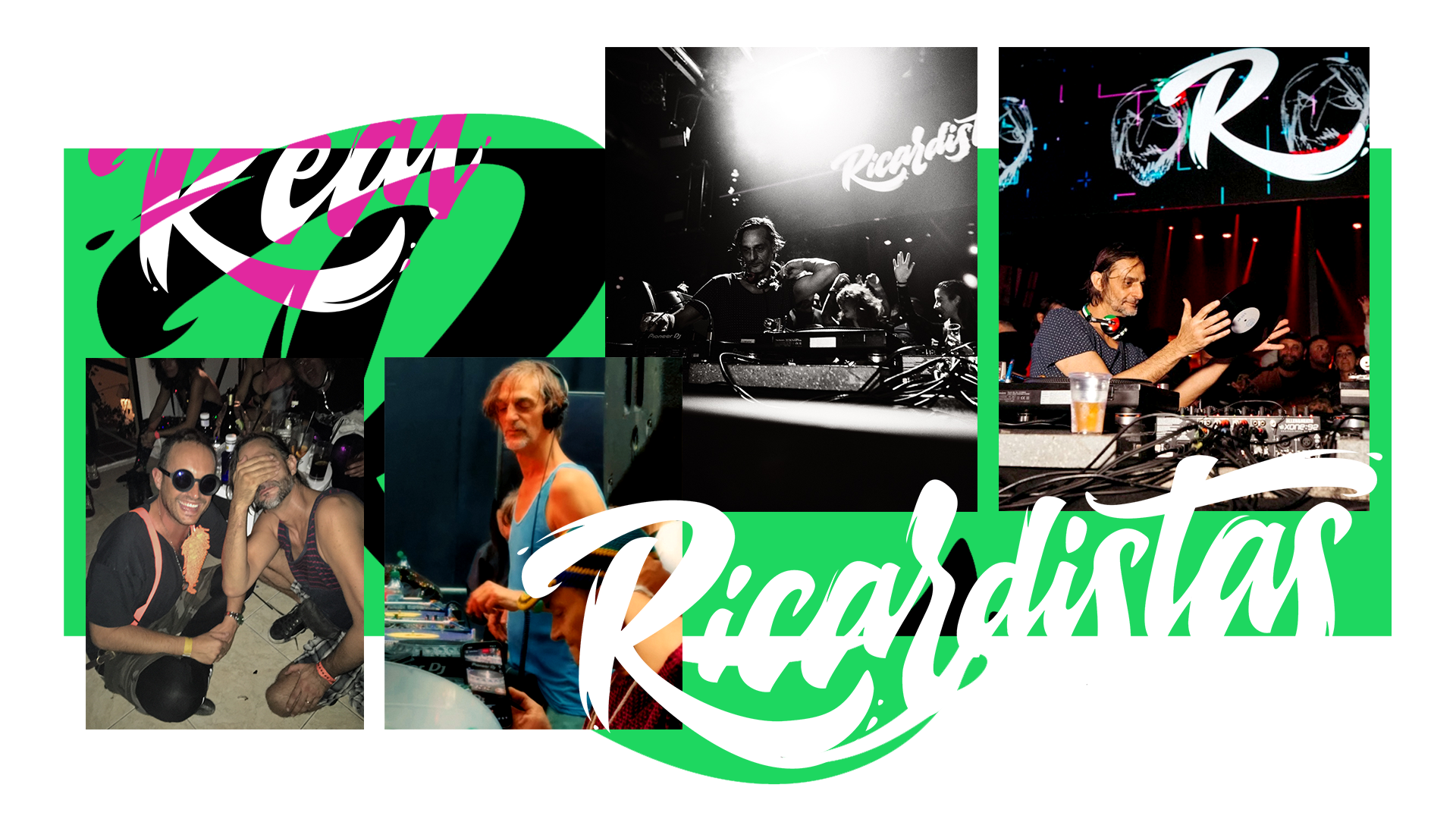
It’s for what Ricardo represents, and for what he gives of himself to the music, that he is so cherished by his people. A singular community, far removed from any classic kind of fandom, the Ricardistas are almost a religion:
“It’s like the Catholic with the Pope,” says Nacho Capella, “The pope for us is Ricardo.”
They’re not just fans, they’re people gathered around the same core: “culture, music, friendships… connections” And even if Ricardo is the symbolic centre, Nacho insists the identity doesn’t belong to him alone: “we’re all Ricardista.” He adds, “The music is really a powerful thing for all the community,” which is also why the Ricardistas community growth can seem “slower than the other ones.” Their pace comes from the sound itself: “more experimental or different.”
That loyalty also explains the devotion. Nacho doesn’t romanticise the economic side: he admits that today, “with this sound and with this music, it’s more difficult than in the old times, to make business, to make money, to have success.” But that difficulty, precisely, makes the bond stronger. “Whatever happens,” he says: “If we have more or less success, we will be Ricardistas. If we are down or we are here, we will be Ricardistas.” And what they have, he insists, can’t be manufactured: “It’s one thing that you cannot buy it with money”, nor with a marketing campaign.
“ La discoteca es tu familia.”
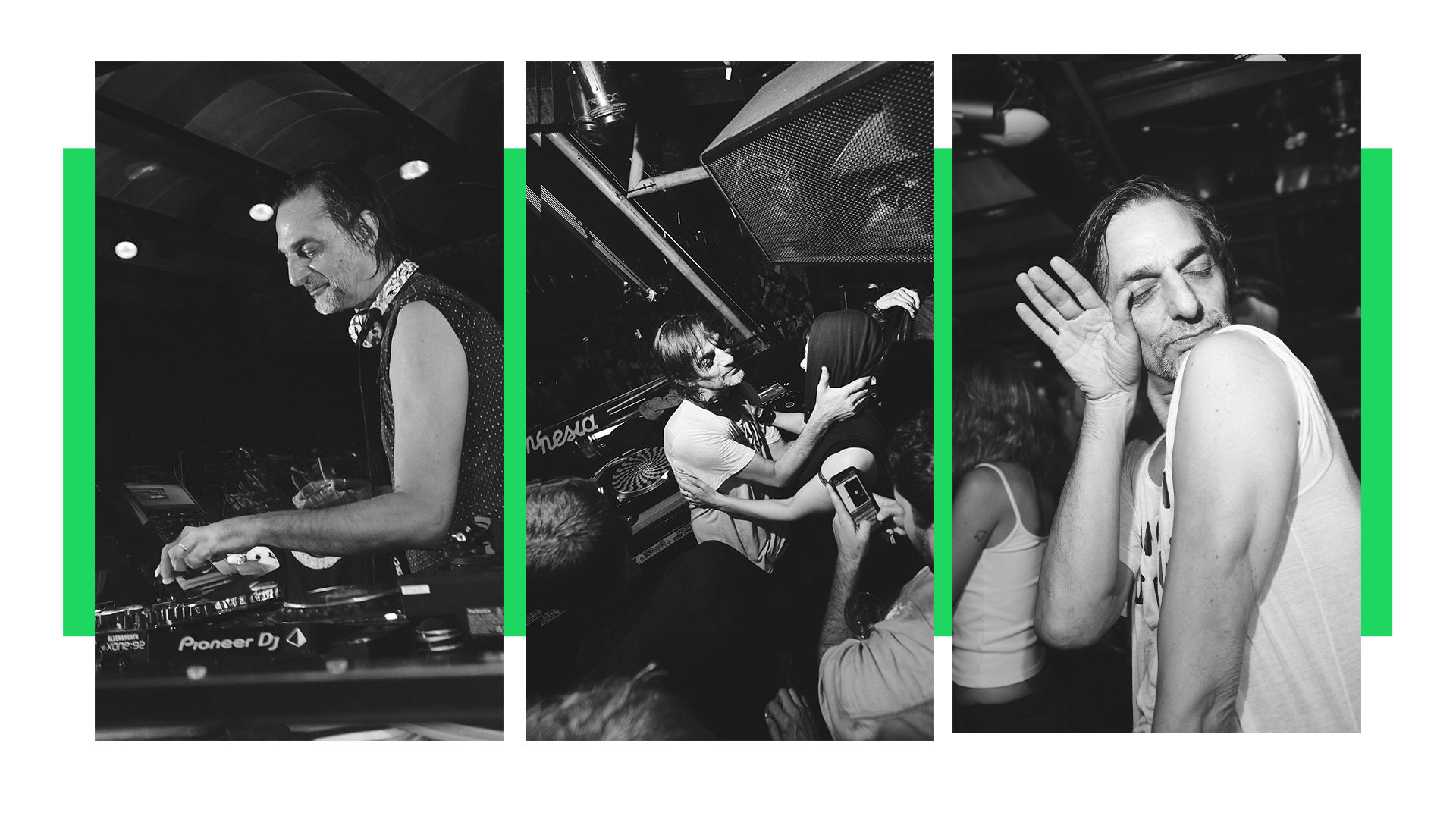
Among the Ricardistas, belonging isn’t measured in visibility, it’s built through the tracks people exchange, the parties they live together, the references they pass on and the nights they retell. When Nacho reminds us that ” in old times we use to say… The club is your family ” he’s pointing to the club as a refuge. A place you return to when everything else wobbles. Maybe that’s where Villalobos “ secret “ really sits: behind the myth he embodies, there’s a community that doesn’t consume a DJ, but sustains a culture into a moment to live and to keep.
In the end, the pope doesn’t need to be seen, he has to be heard.
Join the Ricardistas community on IG.
📷 : Cover Photo Credit / Ricardo Villalobos at Pyramid / Courtesy of Amnesia Ibiza
📷 : Berlin/Frankfurt Photo Credits: Senate of Berlin CC License / Kambio CC License / Pedal to the Stock Envato License
📷 : Additional Photo Credits : Courtesy of Ricardo Villalobos, Nacho Capella, Phrank, Amnesia Ibiza
💚: Special thanks to @nachocapella.ibiza and the @realricardistas community