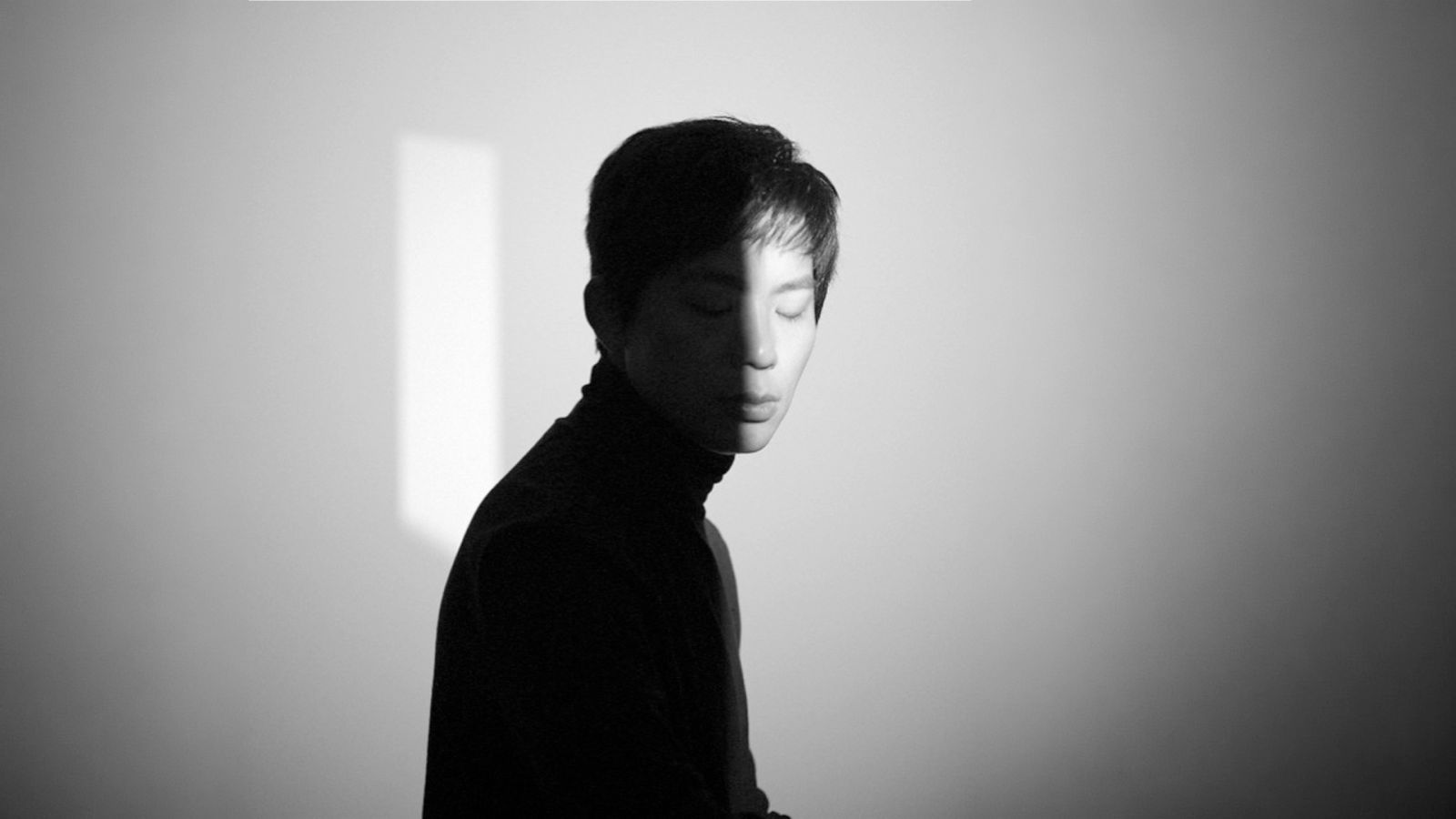
Before there was streaming, before there were even reliable record shops, Ma Haiping was building a techno education out of smuggled discs and downloaded fragments, piecing together a culture the rest of the world could simply walk into a shop and buy. Two decades on, the Shanghai-based producer counts Axis, Soma, and Molecular among his label credits and a Detroit lineage running straight through his sound. Resident Advisor has called him one of China’s leading techno artists, blending Detroit roots with hypnotic, sci-fi soundscapes. Ma Haiping spoke to Mark Petes Varga in The Book of Techno about the accident of geography that shaped his ear, the book that changed his life, and why techno, for him, was never really about the club.

An Education Assembled From Scraps
Ma Haiping started making music in 2000, but the real formation happened earlier. Still in high school, he was already tuning into a startlingly wide range of sounds on the radio, listening to Richie Hawtin, Aphex Twin, Kraftwerk, Throbbing Gristle, John Coltrane, before university pulled him into Shanghai’s underground scene of industrial and experimental bands. “At that time, we were exploring rougher, more fringe sounds,” he says.
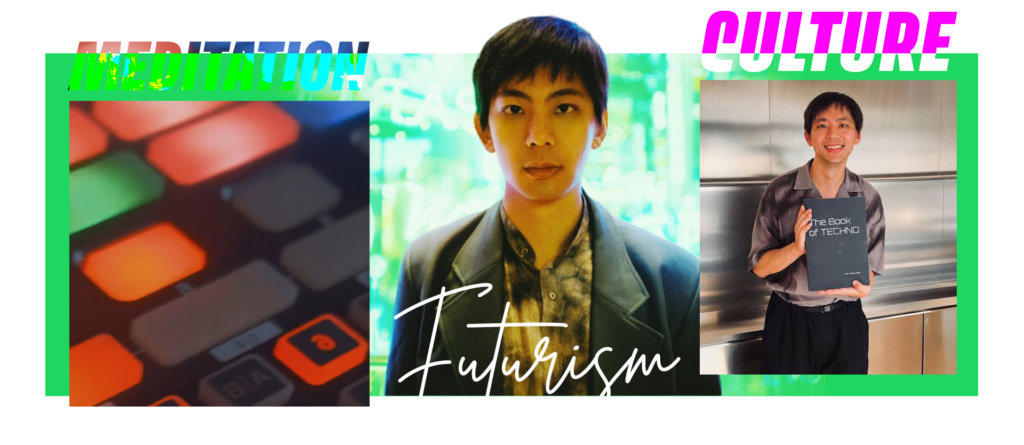
Techno itself arrived almost by accident, through a book he can no longer name. “I read a book about electronic music at a friend’s house,” he recalls. “I can’t remember the title, but I do recall it talked about the Belleville Three: my first introduction to Juan Atkins, Derrick May, and Kevin Saunderson. That moment was a revelation to me. I realized this wasn’t just music, but a cultural force.” Years later, reading The Book of Techno hit him with the same force again. “I knew this book would change the lives of many people.”
What followed wasn’t a straightforward path into DJing, it was closer to detective work. Western records weren’t officially imported in China, and the media barely covered the genre, so Ma Haiping built his collection from whatever channels existed. “I bought smuggled CDs, Dakou discs, and would download music via Soulseek, burning it onto CD-Rs to play,” he says. “Back then, hardly anyone was listening to vinyl, let alone had turntables. So my DJ journey didn’t begin with vinyl, it began with CDs and Ableton Live 2.0.”
Dakou – literal for “cut mouth” – discs are a specifically Chinese phenomenon: Western audiovisual overstock, notched or drilled to be sold off as plastic waste, that instead found its way into circulation through informal channels in the early 1990s. For a generation of listeners cut off from official import networks, they were, for a while, the only door in.
VOID and the Education Behind the Booth
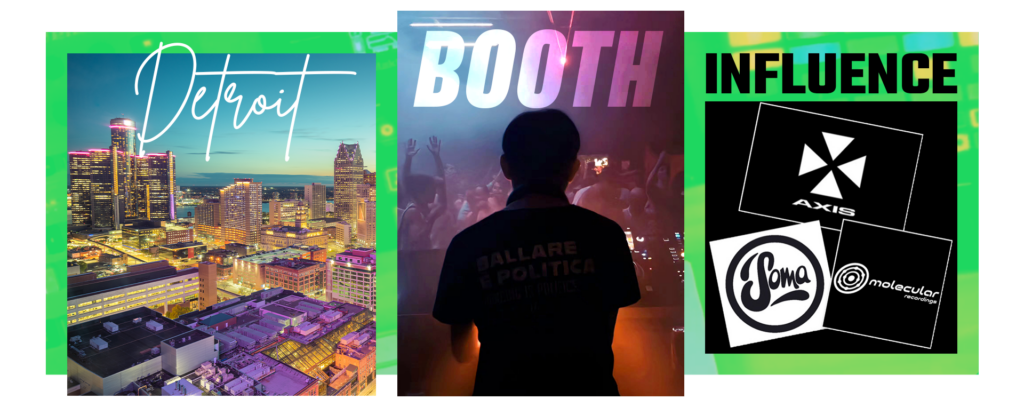
By the mid-to-late 2000s, foreign residents in Shanghai had started throwing electronic parties across a range of styles, and it was inside that scene that Ma Haiping met Shanghai Ultra, a Scottish expat running a techno night called VOID. He joined immediately as a student. “At every party, I would sit behind the international guest DJs, watching them play music for the entire night and record the track names,” he says. The names passing through that booth read like a Detroit-and-beyond who’s-who: Robert Hood, Surgeon, DJ Bone, Oscar Mulero, Orlando Voorn, Scan 7. “I remember Richie Hawtin mentioning in an interview that he too had gone through a similar experience. For me as a young DJ, this was a huge stroke of luck.” VOID, he says, remains one of the most important milestones of his career.
That apprenticeship turned into something closer to a curriculum around 2004, when Ma Haiping began working through the catalogues of UR, Transmat, R&S, and Tresor in strict numerical order: a process that took the better part of two years. “Back then, I didn’t fully understand the meaning behind each record, but I knew I was searching for something. Searching for a sound, a thread of culture,” he elaborates. The stories coming out of Detroit and Berlin became the foundation of his musical world. Names like Jeff Mills, Richie Hawtin, Speedy J, Claude Young, and Drexciya left a mark he still describes in physical terms: “Their music struck me in a way nothing else ever had.”
Asian artists mattered just as much to that formation, if for a different reason. “I was also greatly inspired by Asian musicians like Ken Ishii and Tatsuya Kanamori,” he says. “As an Asian, their presence was like a beacon, making me realize that we too can make our voices heard and find our place in this global culture.” Running alongside all of it was a parallel obsession with science fiction. “No one ever told me there was a connection, but I could feel that the mechanical, futuristic, reality-bending worlds of science fiction were intimately tied to the culture of the music I loved.”
From Detroit’s Orbit to Axis
That long apprenticeship eventually closed a loop few DJs get to close: the artists Ma Haiping once studied from behind the booth became collaborators and label bosses. His track “The Chinese Connection” was picked up by Detroit legend Scan 7, and “Chang’e-4” landed on Axis, the label founded by Jeff Mills. He treats both with the same measured gratitude. “Being able to release music on a label like Axis is certainly a great honor for me, but I prefer to approach it with a sense of calm,” he says. “I don’t want to rest on certain achievements and forget that I need to keep moving forward. This is actually something I’ve learned from Jeff Mills’ career: humility, focusing on one’s own music, and continuously exploring the future.”
The relationship with Scan 7’s Lou runs deeper than a catalogue credit. “Lou has had a profound impact on my spiritual journey,” he says. “He used music to unite real techno lovers, and even though we are half a world apart, I can still feel his dedication to music, which truly moves me.” That reciprocity continues into 2025: alongside a busy release schedule (the Mind Reader EP on Scan 7’s new imprint Scan Records, Oblivion on Molecular, a single on Soma’s Neu 4 compilation) Ma Haiping is preparing a remix for Orlando Voorn, a mentor who’s returned the favour with several remixes over the years. “Now, it’s finally my turn to create a remix for him.”
Sound as Meditation
Ma Haiping doesn’t come from club culture in the conventional sense, his background is in contemporary visual arts, a fact that still shapes how he talks about techno. “I often see techno as a deeply complex cultural phenomenon,” he says. “It’s not just music, it’s about sound, aesthetics, futurism, cultural collisions, and even political change.” And yet he holds that idea loosely. “There are times when I’m sitting in the studio and I realize that, for me, techno is just music, it’s simply a sound I love. I’ve found a balance between these two perspectives, and in doing so, I’ve discovered the direction I truly want to pursue.” He calls it, half-jokingly, a touch of Eastern Zen philosophy.
Pressed to name the tracks that shaped him most, he lists five without much hesitation: X-101’s “Sonic Destroyer,” Joey Beltram’s “It Works,” Planetary Assault Systems’ “Om The Def,” Slam’s “Dark Channel,” and Drexciya’s “Digital Tsunami”. A spread that runs straight through the Detroit-and-adjacent canon he built his ear on.
Asked about ambition, he resists the scale of the question. “Honestly, I don’t have any overly complicated goals. I just focus on making better music and pushing myself to go further. What I really want is to find wisdom and peace through music, not chase a ‘biggest dream.'” He’s careful not to overstate his own equanimity, though. “I’m not a ‘perfect person.’ There are times when the unfairness in the music industry makes me angry. Fame and money can be tempting, but they don’t really affect me like they used to.” If there’s a single hope left, it’s a modest one: “That more people hear my music or see my performance and always say, ‘This guy’s music is really good.'”
What Techno Means
Asked, finally, what the genre means to him after twenty-five years inside it, Ma Haiping doesn’t reach for a scene reference or a label credit. He goes somewhere quieter. “Techno opened up my mind when I listened to it. Through producing, I began to understand myself. And by performing, I found a way to communicate with others,” he says. “Its minimalism, openness, and deep yearning for the future and for freedom have shaped how I think and how I live. For me, techno isn’t just music: it’s a way of being. It has become inseparable from my life.”
📷 : Cover Photo Credits / @Mahaiping
📷 : Additional Photo Credits / Deezer /@Mahaiping/ Envato Elements/ The Book of Techno
📷 : Interview Credits / The Book of Techno/ Mark Petes Varga