
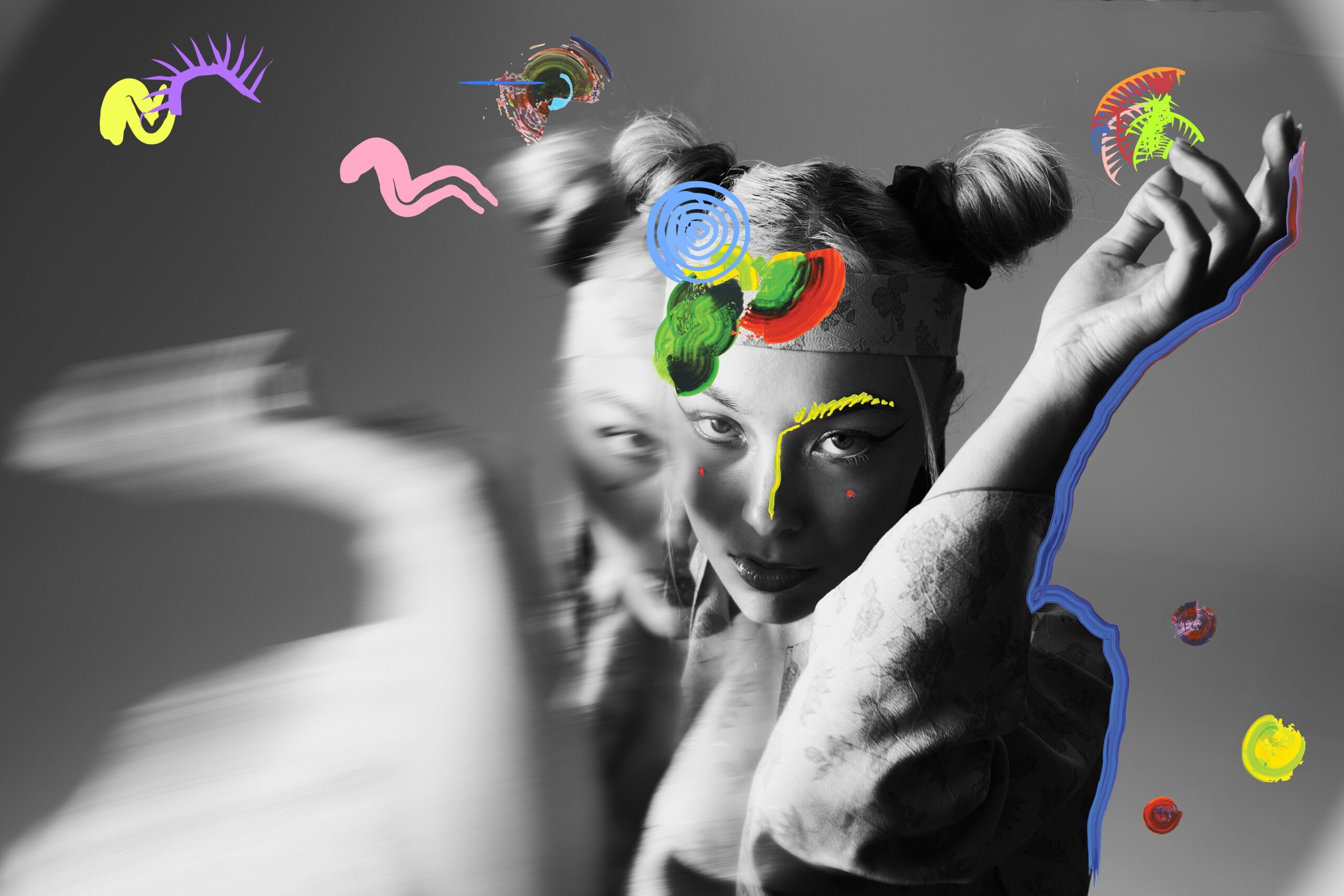
There is a misconception that electronic music is built on hardness. Hard kicks. Hard drops. Hard personas. The mythology of the underground still clings to endurance: who can last longest, play fastest, remain most impenetrable. But what if the future of the club is not harder, but softer? What if the new radicalism is not volume, but vulnerability? For a new wave of artists redefining the sonic landscape, vulnerability has become a mode of structural engagement rather than aesthetic option. At the forefront of this shift is Joplyn, a Berlin-based producer, vocalist, songwriter and live electronic performer whose work marries emotional acuity with club specificity.
Building a Language of Feeling
Joplyn’s professional trajectory is marked by both critical recognition and deepening artistic conviction. Her music blends melodic techno, deep house and eclectic electronica into a post-genre language that centers her voice, literally and figuratively, as the connective tissue of her sets. She writes and produces her own material exclusively, performs live with vocals and synths, and has released on respected labels such as Crosstown Rebels, Watergate Records and Get Physical. Industry figures have taken note: BBC Radio 1’s Pete Tong named her “Future Star of 2022,” and she has collaborated with electronic heavyweights including Booka Shade, Damian Lazarus and MK across remixes and shared releases. Her performances span major clubs and festivals, from Watergate in Berlin to Tomorrowland and, most recently, the YUMA Tent at Coachella. But her work is not simply about sonic hybridization; it is a case study in how interiority can be translated into infrastructure. “I believe authenticity is less about originality and more about presence.”
She explains: “Repetition is one of the main building blocks of music, both structurally and historically. Good things are repeated. Genres are useful maps, but I am more interested in landscapes. I follow feeling over structure, and that has always guided my sound first.”
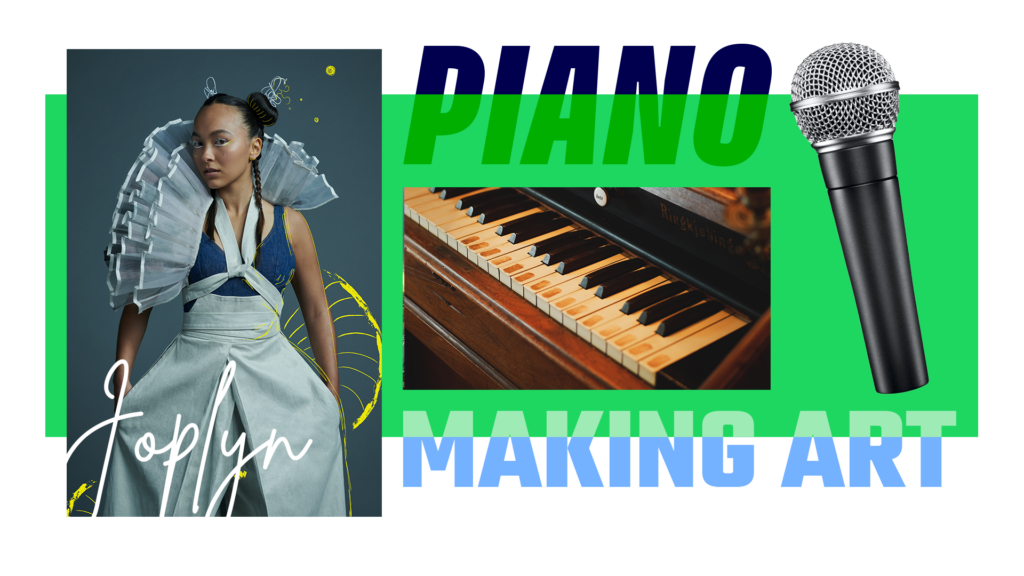
Joplyn’s origins trace back to a culturally polyphonic upbringing. Born in Germany to a German mother and a Vietnamese father, and influenced by extended ties to Canada, she inhabited multiple cultural environments from childhood.
“As a child it felt fragmented. I think every mixed person can maybe relate to that experience”, she explains. “You don’t fully belong to either side – in a lot of ways it feels a lot more subtractive than additive growing up. Still, at the same time multiplicity trained my ears. I am grateful for it now and have allowed myself to take up all the space I need culturally. I think that reflects in my music and more broadly my view on “making art”.
Music was woven into domestic life with a steady presence, and by age five she was already writing poetry in German and learning piano. By eight, she was singing her own self-composed melodies, layering textual introspection over harmonic structure and inadvertently laying the groundwork for her later synthesis of lyric and club language. Influences ranged from the pop dramaturgy of Lady Gaga and Lorde to the structural rigor of classical piano training, all of which informed an early instinct for melody and emotional narrative.
Where Poetry Met the Beat
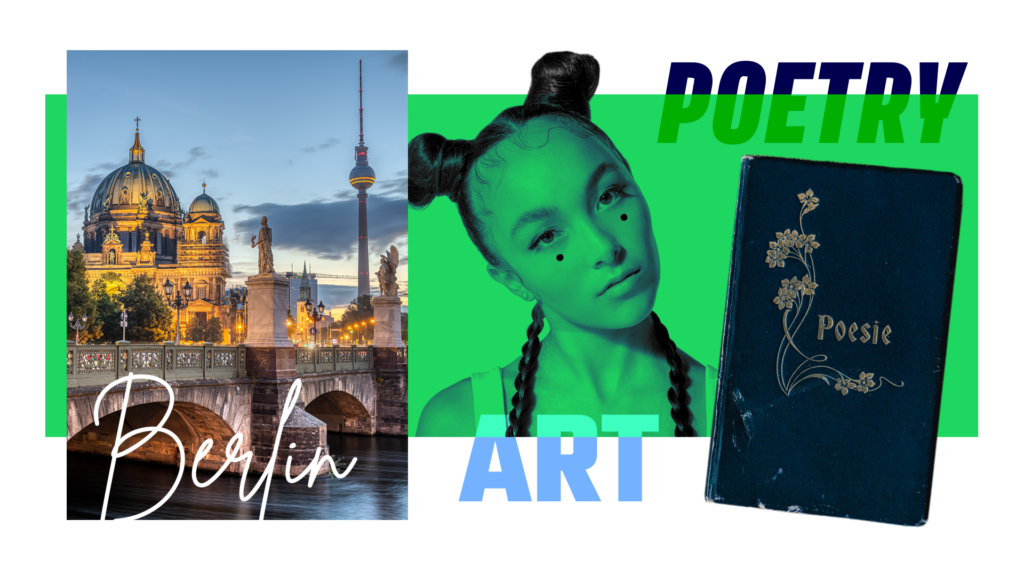
Berlin itself was omnipresent; its electronic pulse was both urban soundtrack and cultural gravitational field, informing her earliest nightclub experiences as a young teen. In that milieu, local techno culture was omnipresent in the city’s soundscape, emerging organically from street corners and late-night rites of passage. This formative environment, where poetry, piano, and nightlife converged, set the stage for her evolution into an electronic artist whose work is both intimate and communal:
“Poetry was my first medium of making sense of it all. Music to me feels like a sonic extension of the same medium. Blurring the lines between when a poem turns into a song has been really nice, but also a bit dismissive of the poems that are meant to be just that: poems. I see it as a fluid space I have been fortunate enough to explore my whole life.”
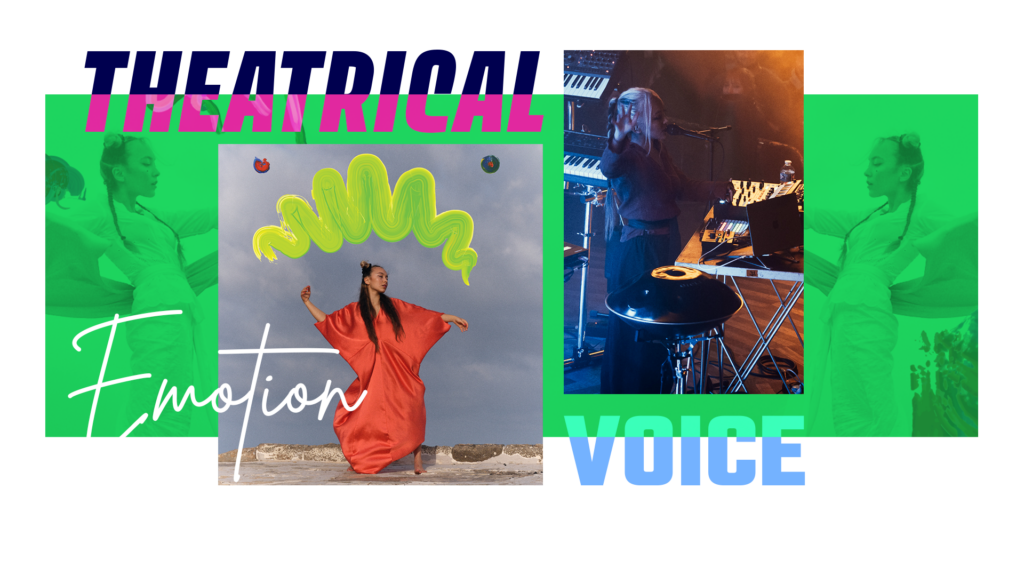
These earliest artistic impulses were exercises in internal modulation. They trained her ear not for the next drop, but for nuance: subtle shifts in tone, the curvature of a phrase, the emotional charge held in silence between words. When she transitioned into production, she carried that discipline forward. Her early releases leaned into melodic structures that could inhabit a dancefloor without dominating it, emphasizing atmosphere over theatrical climax. Integrating live vocals into electronic sets was never a gimmick; it was a continuation of her earliest creative logic that the human voice, shaped by breath and imperfection, can function as an instrument of collective attunement. Nowadays her performances have grown to an extent that her shows feel like a collective meditation.
“I believe music is one of the most powerful forms of medicine we have, and shared experience amplifies that. There is growing research showing how our physiological states can synchronize through music, and this is something I am exploring more intentionally in my performances.”
This emphasis on presence over persona becomes especially striking when set against the prevailing metrics of contemporary music culture. Artists today are incentivized toward constant self-promotion, instantaneous visibility and algorithmic optimization. Joplyn’s work pushes in a different direction: toward patience, coherence and shared experience. Her performances are less about authority over a room and more about partnership with it. She speaks openly of moments when the audience’s breathing seems to synchronize with hers, when time dilates and the boundary between booth and floor dissolves. She explains:
“Everyone is one viral moment away from visibility, but that visibility can be just as fleeting. I still believe in long-term growth, in showing up and building real connections within local scenes. Algorithms can support that, but they should not replace it.”
Where Culture Meets Conscience
Underlying this artistic philosophy is a political sensibility that resists the facile binaries of the mainstream. Electronic music’s roots in queer, Black and marginalized communities were never solely aesthetic; they were relational, protective and insurgent. As the genre scales into mainstream commercial circuits, its radical edge risks being flattened into iconography. Joplyn does not romanticize the past, but she insists on responsibility to lineage and the active rediscovery of community rather than its mere representation. It cannot simply be inherited. Her vocal integration is politically charged precisely because it reintroduces vulnerability into spaces often coded as impenetrable.
She explains: “Art is inherently political, but not only political, and there should be freedom in how people engage with it. Club culture has reached the overground more than ever, but that does not take away from the fact that in many places it still remains an act of rebellion and counterculture.”
Her gendered experience in the industry further illuminates this stance. The persistent underrepresentation of women in production and headline roles, a structural imbalance across electronic scenes, has been a point of engagement.
“The most radical thing is to be multidimensional, yet being a woman in this field can still feel limiting at times,”Joplyn explains. She continues: “At the same time, the sisterhood I have found has been a constant source of strength. The women I have met in this industry are some of the most resilient, creative, and emotionally intelligent people I know. There is a quiet solidarity that feels very powerful.”
To make an impact, she has partnered with platforms like Ableton and Spotify to demystify production for women, advocating for accessibility and representation without fetishizing her own visibility. The most significant shift, she suggests, emerges not from token visibility but from sustained structural inclusion.
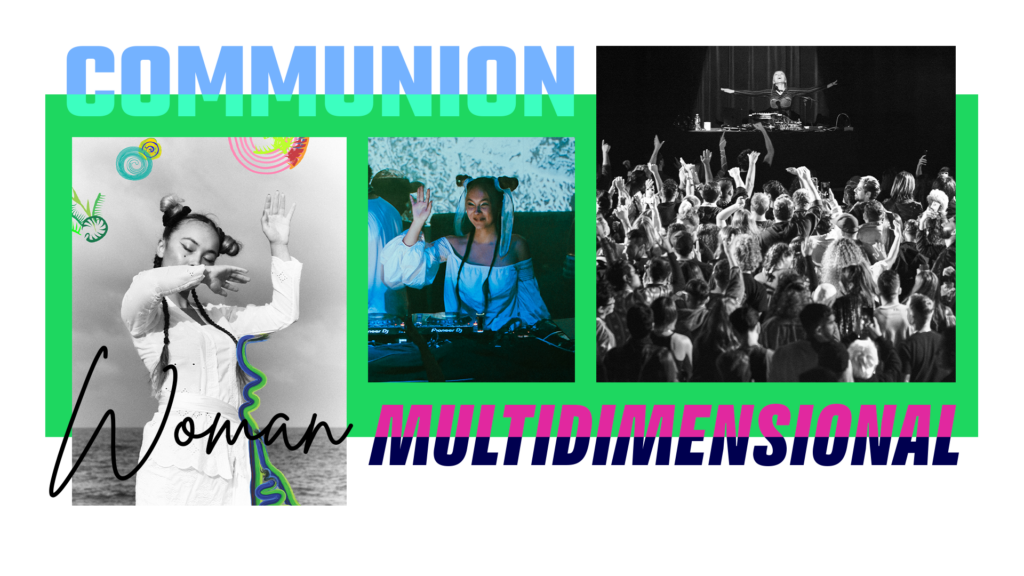
In an age where artificial intelligence can generate complex soundscapes and algorithms amplify sameness, Joplyn’s work gestures toward what cannot be automated: context, narrative, presence. Her compositions and performances insist on meaning as embodied experience rather than curated spectacle.
She elaborates: “I hope I have created something that extends beyond me. That my work helped people feel held in their emotions, encouraged them to be gentler with themselves, and supported them in using their voices in rooms that were not designed with them in mind.”
If a new wave is truly underway, it may not announce itself through harsher BPMs or louder stages. It may arrive through artists who recalibrate the emotional contract between performer and crowd. Through those who understand that the most enduring power of electronic music has never been hardness, but communion.
Discover more about JOPLYN
📷 : Cover Photo Credits / By Sandra Schwaiger, courtesy of Joplyn
📷 : Additional Photo Credits / Courtesy of Joplyn, Olaf Heine, Ali Kanaan, Sandra Schwaiger, Sarah Northrop
💚: Special thanks to @joplynberlin