
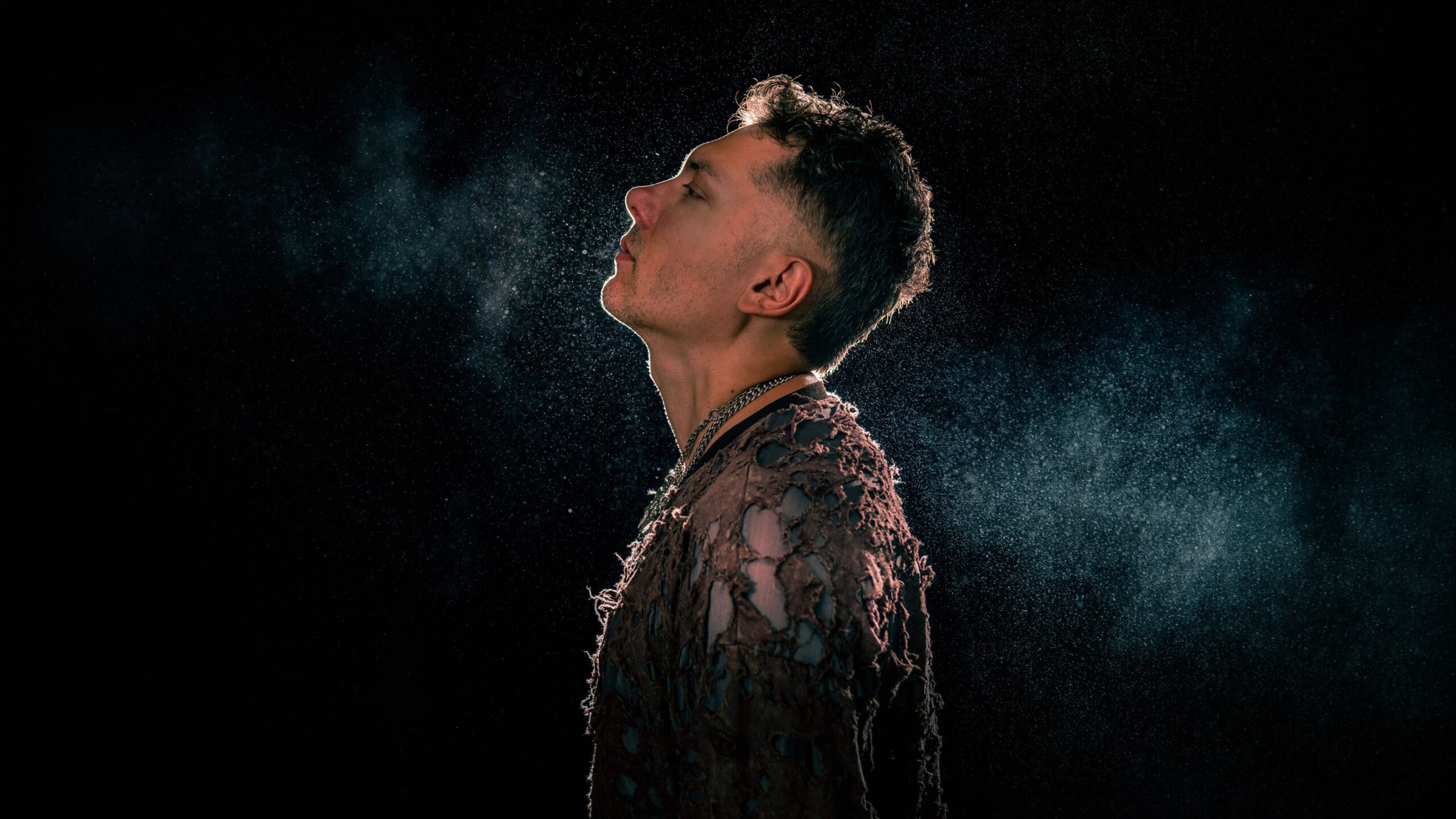
To understand the story of DJ Mad Dog, one must first look at the story of Italy in the 1990s. Understand the rage of a divided, polarized people left abandoned. What runs through a person is collective history, not only the small story, but the greater one: the story of anger, of a silenced youth, of a suffocated need for expression. But to understand the story of DJ Mad Dog also means understanding the story of Hardcore itself, a music far beyond impact, leaving behind a deafening, dizzying tinnitus: a boom that has left, still leaves, and will always leave its mark on its community.
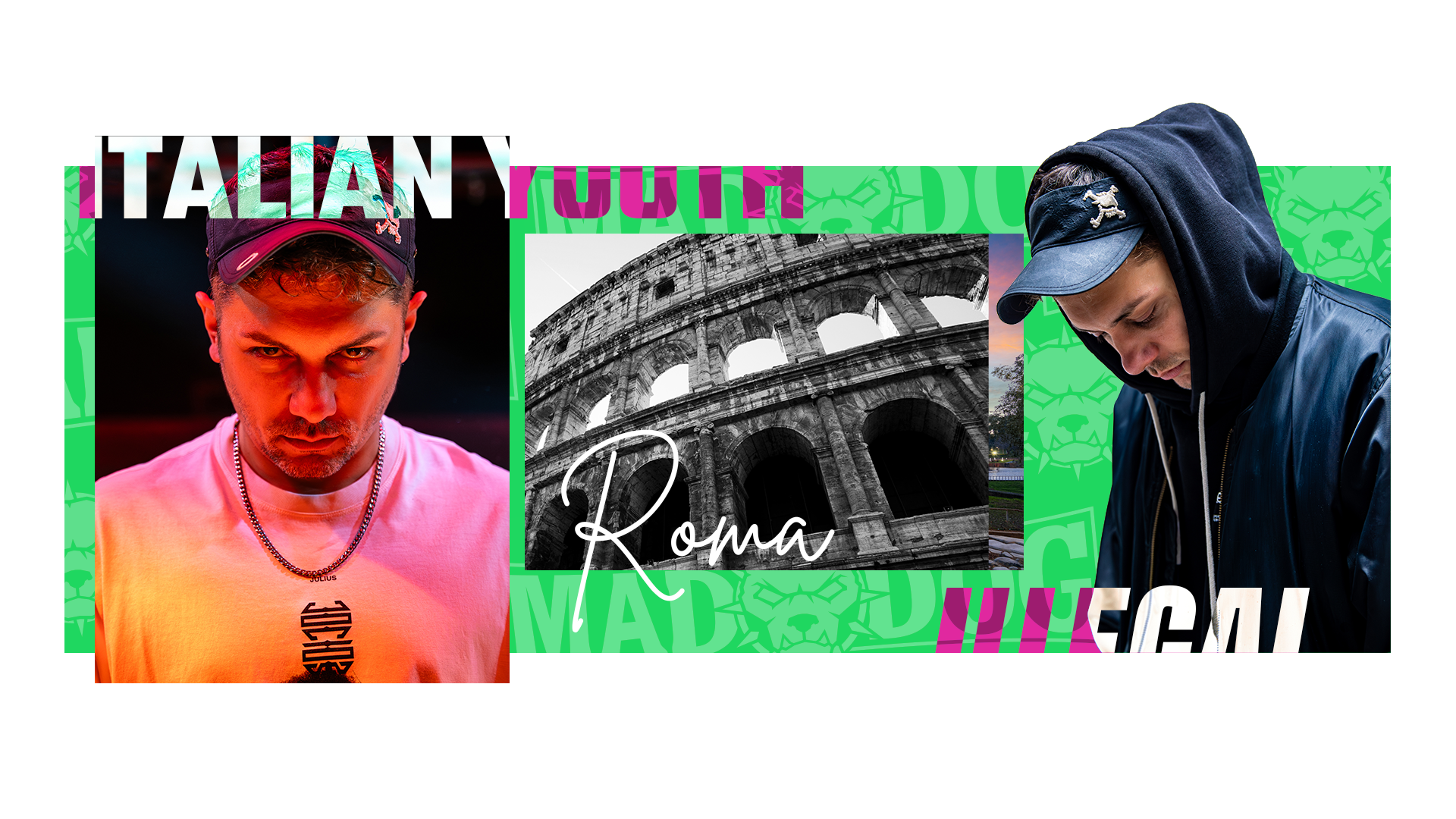
RAW ROMA
Rome in the 1990s seemed touched by sublimation, maybe that small fragment of something still intact, a magic torn between the character of a city carrying so much history and another kind of ugliness: the ugliness of the life it carried within itself. A betrayed people, and a wounded she wolf. For DJ Mad Dog, it was this sublimation that raised him through every role of his life:
“I was lucky enough to be born and raised in Rome, the city with the most pieces of art in the entire world. Wherever you go, you are surrounded by art and beauty, but also by urban problems like degradation and violence. This environment definitely shaped me as a kid, as a man, as an artist, and also as a businessman.”
Filippo, aka DJ Mad Dog, started producing music at the age of 13:
“My parents gifted me a Roland DJ 70, so since I was a kid I played with samples and melodies. While all my friends were playing football outside, I was already in the studio learning how to make kicks, melodies, or beatmatch my hardcore vinyls.”
The she wolf, just like music itself, becomes a character of its own in the story of DJ Mad Dog. Rome is not simply where he grew up, it is the cradle of his original anger.
Italy in the 1990s seemed to be losing its bearings at the exact moment when an entire generation was desperately searching for a sense of belonging. The country was fractured and no longer truly believed in its institutions. Political rage spilled into everyday life and slowly gave way to violence. At the beginning of the decade, the Tangentopoli scandal and the Mani Pulite operation shattered the image of the Italian political class.“Clean Hands” referred to a series of judicial investigations carried out in the early 1990s targeting major political and economic figures in Italy. Historical parties collapsed one after another, exposing a system deeply corrupted from within. For part of the Italian youth, the feeling was brutal: they had been lied to, institutions were rotten, and the future itself seemed compromised.
In Rome, this national crisis did not remain theoretical. It was lived physically. The city was crossed by constant political tensions, radical identities, antagonistic groups occupying entire neighborhoods. Roman nightlife itself became polarized. Some parties attracted far right groups, others became antifascist spaces. Young people wanted to belong to something, nights out became a way to defend a territory and a vision of the world. Ideology was everywhere.
And at night, the club, the rave, during that decade, became nothing more than a concentrated fragment of this original anger:
“It wasn’t a stereotype. In Rome, in those days, going to certain events was very dangerous. At that time the city was divided in two parts: the fascists and the communists. Very often in certain clubs we had huge fights, with people getting stabbed. There was a lot of frustration inside some people in those years, and some of them used hardcore and clubs as a way to release that pain in a negative way. There was also a lot of ignorance.”
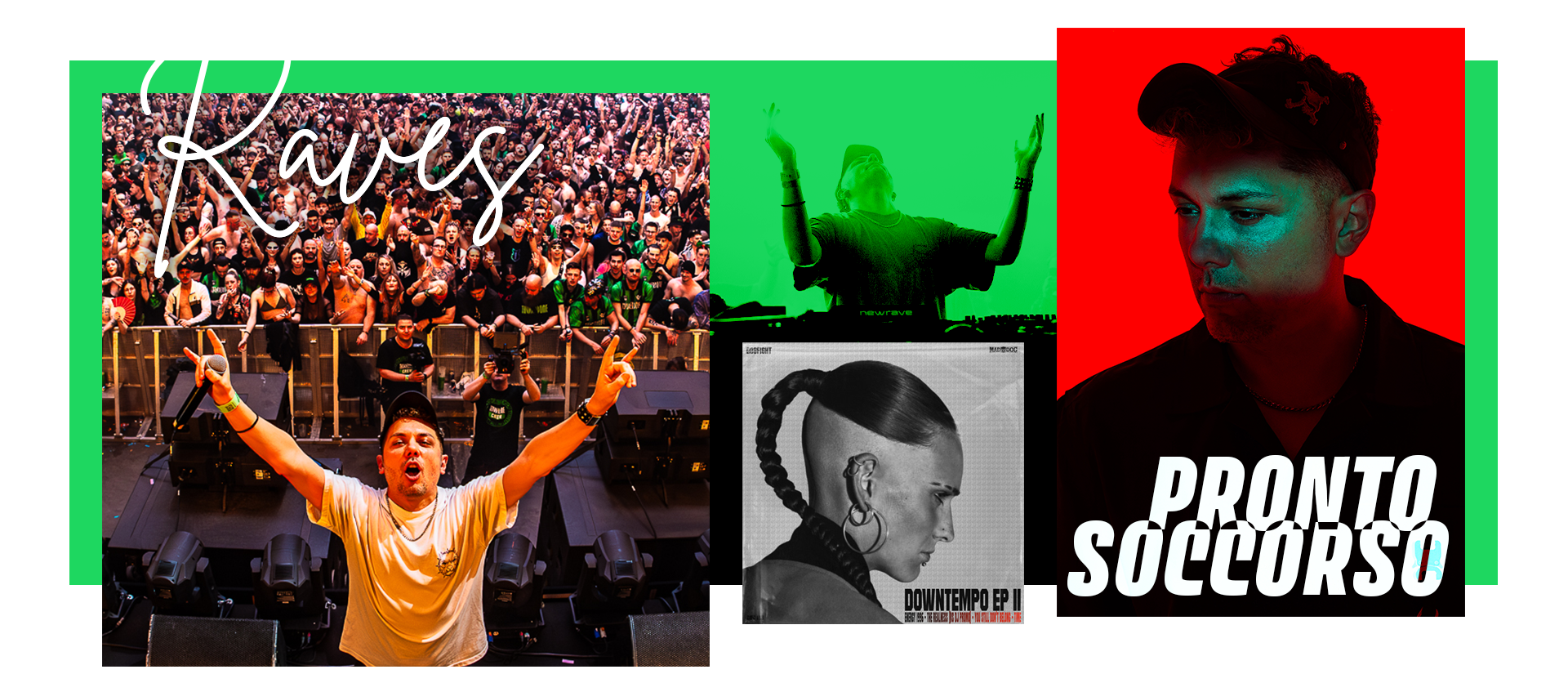
ENERGY 1996
Hardcore became a refuge for outsiders, for the marginalized. The rave gave meaning, a form of collective emotional discharge. A way to expel frustration, social rage, and the feeling of abandonment.
When Mad Dog would later say:
“(…) it was about the revenge of the misfits.” … he was probably summarizing an entire Italian generation in a single sentence.
Filippo remembers his first rave primarily as something dangerous. Political tensions and violent clashes were not the only risks: illegal raves took place in locations as atypical as they were forbidden, especially for safety reasons:
“A girl died while pissing on an electric wire in the dark. Another one died dancing in a mall under construction. Another girl got lost in an abandoned metro station on 01.11.1996. I remember that night very well because it was my 16th birthday and also my first illegal rave.”
Perhaps it was also this constant proximity to danger, to the forbidden, and this need to push the limits of the subversive ever further that forged the soul of hardcore at the beginning. A culture without compromise, deeply rooted in its own extremity.
Roman hardcore in the 1990s was not meant to seduce anyone. It was built precisely in opposition to the mainstream spaces already dominating Italian nightlife. The major clubs in Rome were playing more accessible music driven by trance, progressive, and the earliest forms of techno. A cleaner aesthetic, more hedonistic too. Hardcore arrived carrying everything that sccene rejected: a form of brutality in both shape and substance, radicalism, and a dance culture entirely its own. Very quickly, an idea started emerging for Filippo: take hardcore out of its clandestine existence and impose it at the very heart of Roman nightlife. Not to adapt it or compromise it inside existing clubs, but to force clubs to accept the culture exactly as it was.
That is where Pronto Soccorso Rave was born. A slightly ironic name considering how perfectly it summarized the violence and urgency surrounding the scene at the time. The crew functioned as an extension of this disillusioned Italian youth now searching for its own cultural territory:
“Me and my crew came from the illegal rave scene, and our mission was to bring hardcore into those clubs that were dominating the scene. So we started organizing our own events and from the first event with 250 people we grew up to 4000 people in big venues.”
When Mad Dog speaks about a “mission,” the word is not exaggerated. At that time, making hardcore exist inside Roman clubs meant engaging in a real battle against cultural hegemony. They had to convince, to provoke, to impose an aesthetic still considered far too extreme for traditional circuits and heavily associated with violence.
“Vieni qui, Non aver paura, Adesso sei mia”
“Come here, don’t be afraid, now you are mine.”
After convincing the clubs, they still had to convince the people. There were no Instagram ads, no stories to repost. Promotion meant physically distributing flyers. At the time, Filippo was promoting his own events:
“We used to print 20,000 flyers for our events. We were only 3 people, and we personally brought all those flyers to every bar, school, and club in the city. I still miss those full days on the scooter. It was an opportunity to meet new people and stay outside all day.”
And it worked. The first events attracted a few hundred people before turning into genuine mass gatherings. But the larger the movement became, the more it also absorbed the fractures of 1990s Italy. Political violence, social frustration, and collective rage never truly disappeared from the dancefloor. They simply changed form. The legality of an event did not guarantee its safety, and Mad Dog admits he eventually grew tired of that atmosphere while working as a promoter:
“I personally stopped being a promoter and decided to focus only on my artistic career when, during one of my events, around 200 people started fighting and throwing metal chairs on the dancefloor. That was enough for me.”

THE ENRAGED DOG
This break from organizing events marked the beginning of something else: a rage that became more personal, more intimate, less the banner of a collective anger. It felt colder and more contained, but no less intense.
His arrival at Traxtorm Records in the early 2000s would nevertheless leave a lasting mark on hardcore history. The Italian label became one of the global epicenters of the genre, but also an extremely demanding environment for the artist:
“It was a constant challenge between the artists of that label. Every time one of us released a song, we immediately had to release something better to prove who was the best. I think in that way we raised the level of the entire hardcore scene. I miss those days. From 2000 till 2004 we had fewer gigs but more time to dedicate to the studio, and days felt longer to me.”
The label also helped shape an identity very different from the Dutch gabber scene. Rotterdam imposed a massive and industrial aesthetic, while Italy developed something more dramatic and melancholic despite its brutality. A duality reminiscent of Rome in its own implosion, an oxymoronic beauty tinted with darkness. And for Mad Dog, this duality became essential. His tracks often feel like they are telling something. An adrenaline rush, paranoia, repressed anger, sometimes even a form of solitude.
“Sometimes tracks need to be very narrative. Other times they just need to express rage and a feeling of danger. Narrative songs take more time — sometimes years.”
Even today, when he speaks about his artistic identity, he remains surprisingly elusive and mysterious. As if after all these years, he still refuses to be trapped inside a fixed definition of what his music should or could be:
“The impression people have of my identity doesn’t reflect what I think about my music. After all these years, I’m still looking for my identity. It changes based on everyday life and the experiences I’ve lived.”
He even explains that his music no longer belongs to him once released:
“Once a track is released, it’s not “mine” anymore. So how the track impacts people or the entire scene is something out of my control. I’m glad people enjoyed and are still enjoying my music, but to be honest, that’s not my goal.”
An intention clearly directed inward rather than outward. One thing is certain: DJ Mad Dog could never be described as a people pleaser.
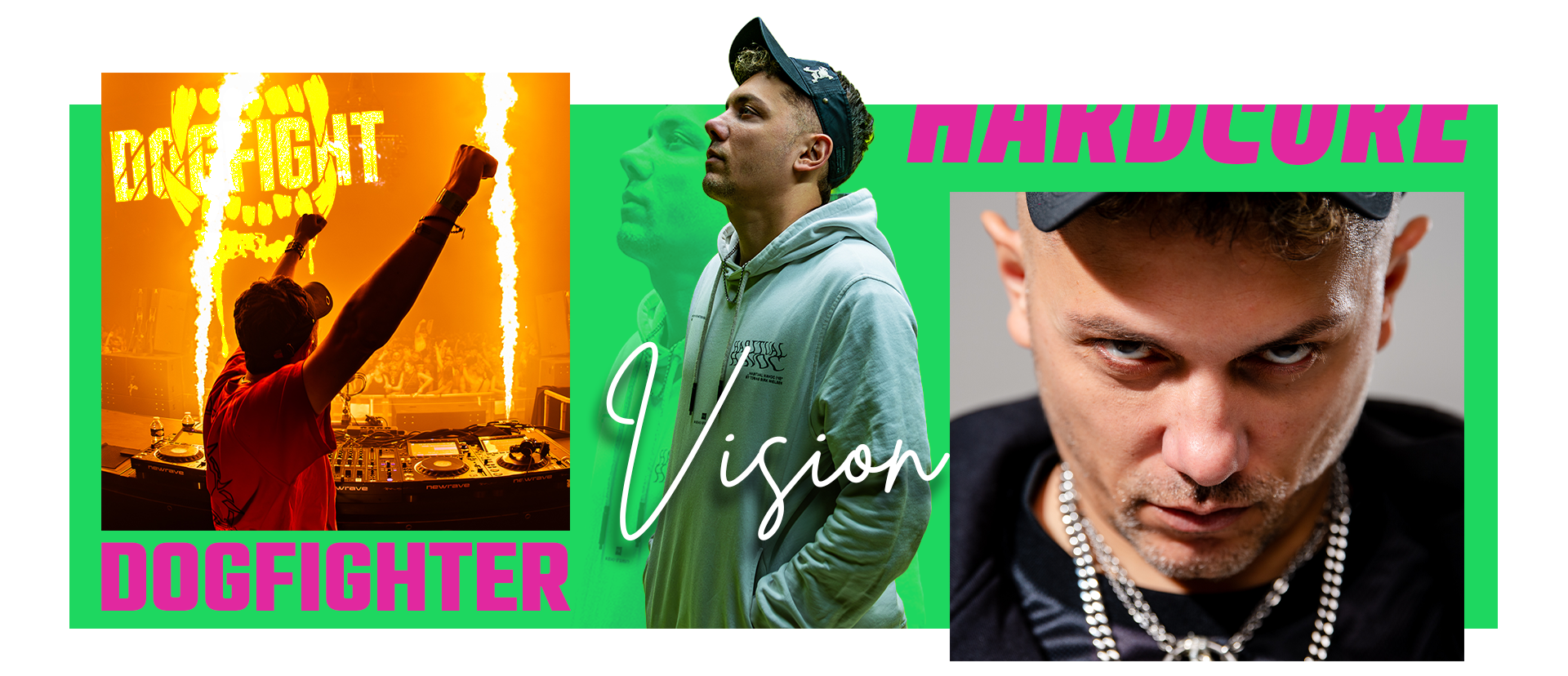
DOGFIGHTER VISION
With time, DJ Mad Dog eventually began feeling the limits of a system he had evolved within for more than a decade. Traxtorm had given him a central place in hardcore history, but it had also been a harsh and highly competitive school.
In 2016, he finally launched Dogfight Records. An important turning point in his career, less for commercial reasons than for what it symbolized: independence. Total control over his artistic vision. Mad Dog explains that this transition felt “mandatory for my artistic path.” This autonomy was not a luxury but an inevitable step in his evolution. Not only becoming artistically independent, but learning to carry everything himself: running a label, mastering his own tracks, building a coherent brand identity. There was also a broader ambition behind it: preserving hardcore itself.
“At that time the mission was to keep mainstream hardcore relevant, fresh, and artistic, while at the same time building a community, organizing events, and launching good artists. I think we did that for many years. Now it’s on pause, but we are coming back.”
The scene evolved rapidly. Uptempo exploded over time:
“I also enjoyed the 2012–2020 period when uptempo and raw took over and the challenge was to keep the scene alive.”
An increasingly difficult challenge as the scene kept evolving. Formats became shorter, social media accelerated music consumption, and artists’ visual identity sometimes became just as important as the music itself. Hardcore slowly entered a more mainstream logic, sometimes even a more caricatural one:
“I feel hardcore loses its soul when producers try too hard to prove they are hardcore at all costs. Songs need to be genuine, without thinking too much about “being hardcore.””
And this notion of authenticity constantly returns in the way he talks about music. Yet Mad Dog seems far more suspicious of posturing than of musical evolution itself, which he accepts as something natural. Unlike many artists of his generation, he does not openly condemn new trends, increasing BPMs, or the rise of uptempo. Quite the opposite. For him, the problem is not speed:
“The problem is that thin line between being cool and being cringe, and very often that line has been crossed.”
STILL GOING HARD
Over time, DJ Mad Dog has become one of the last witnesses of a generation that saw hardcore move from illegal Roman raves to the world’s biggest stages. Masters of Hardcore, Dominator, Thunderdome: almost sacred institutions for a culture that, paradoxically, was born in the margins. When he talks about those events today, he mostly speaks about a dream that once felt almost unreal for the teenager he used to be.
Today Dj Mad dog embodies and carries the idea that hardcore would never die, but also represents a form of modernity within the international hard techno and hardcore landscape. At 45, he embodies an artist who managed to adapt to the constant hybridization of electronic music without ever losing the essence of where he comes from. While genres increasingly blur and scenes overlap, he remains both deeply rooted in hardcore culture and capable of evolving with newer sonic aesthetics and generations. Through him, the culture still carries the same energy : still going hard.
Behind this longevity lies a philosophy as well: hardcore was never truly a career for him. It became his life, and probably always had been:
“It has simply been my life since I was 13. It’s just my daily life.”
It therefore seems impossible to separate the man from the music. Even the exhaustion of decades of touring appears to have been absorbed into that permanent effervescence.
No excessive romanticism. No grand speeches about artistic passion. Only the idea of an existence entirely built around hardcore as a way of seeing the world:
“It meant many different things depending on my age. At 16, it was about the revenge of the misfits. At 20, it was about getting recognized as a producer, and so on. Generally speaking, I think it’s an authentic way to share life with a group of people who love the same music and see things in a similar way.”
After reaching those goals, and perhaps arriving at a different level of wisdom, recognition, legacy, and even anger no longer seem to matter as much:
“How would you like people to remember DJ Mad Dog in the history of hardcore?”
“I don’t care. If people want to remember me, they can just listen to my music.”
Likewise, when asked what message he would send to his younger self:
“Nothing. I had so much fun during my journey… why ruin the surprise?”
To understand who DJ Mad Dog truly is, his story must therefore be approached from every angle. It is both the insolence and audacity of the young Filippo mixed with the wisdom and aura of the accomplished artist, all deeply rooted in the broader history of a fractured Italy and its youth. An artist shaped by the chaos of the Italian 1990s, by the violence of Roman nights, by illegal raves, by collective rage. But also someone who seems to have accepted, with time, that this music can never be fully explained, and who no longer fears for its future as long as youth itself continues to exist:
“For years we were afraid that hardcore could die, that the scene could end. But in recent years I understood that the core of this music comes from the need of young people to express energy, rage, and the need to be in a closed place shoulder to shoulder, dancing or screaming with people you don’t even know. There’s nothing to be afraid of for the future of hardcore.”
📷 : Cover Photo Credits : Courtesy of DJ Mad Dog
📷 : Additional Photo Credits : Courtesy of DJ Mad Dog