
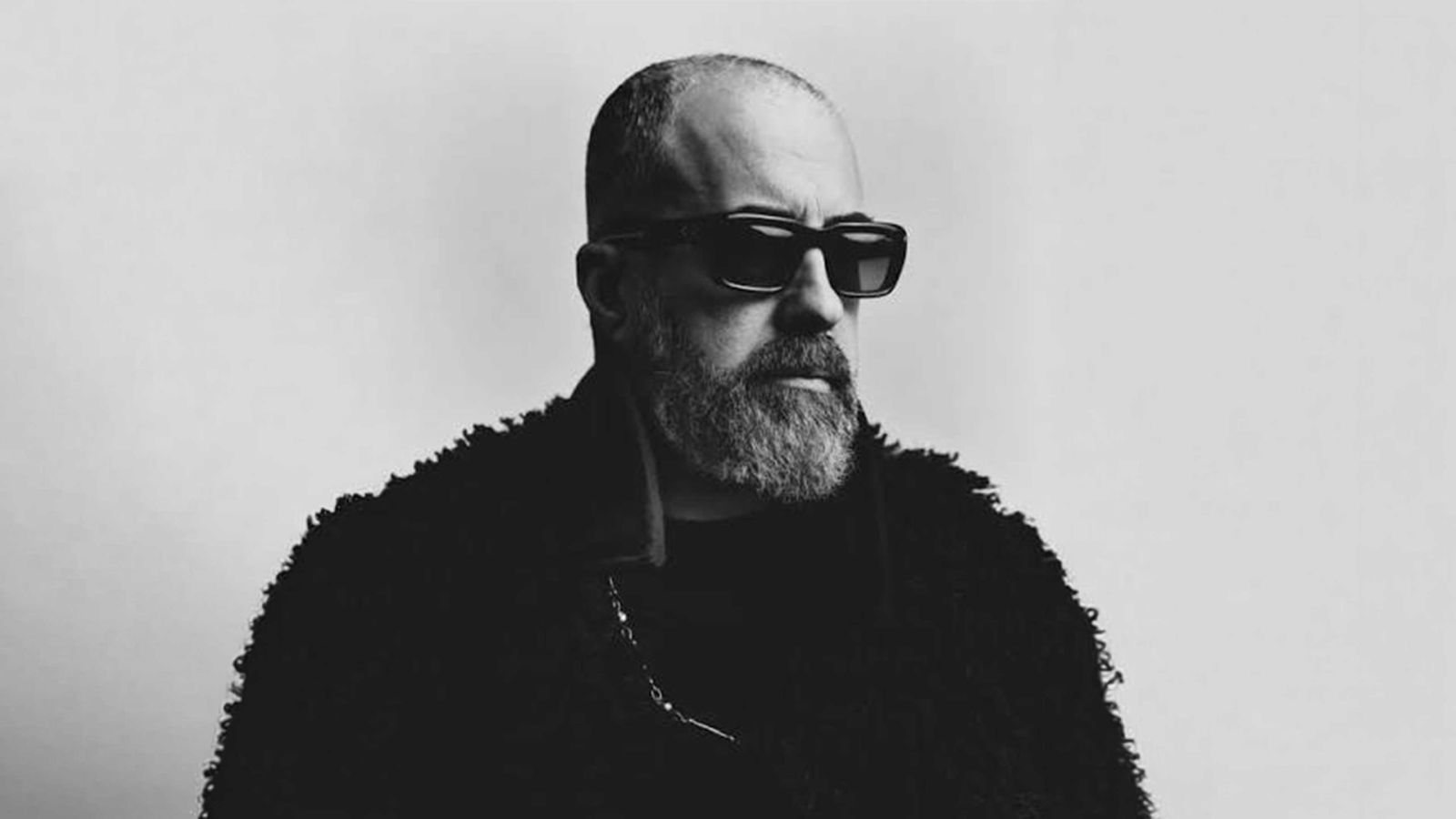
The electronic music scene, and the underground in particular, has been profoundly affected by a phenomenon familiar to every counterculture once it became “cool”: money and success. It is difficult to argue that this success is not a victory, yet it is equally difficult to deny that it has come at a cost. It is an age-old debate, but few artists embody this tension as convincingly as Dave Clarke.
A leading figure in electronic music for more than four decades, Dave Clarke remains one of the most respected and outspoken voices in techno. Nicknamed The Baron of Techno, the British DJ, producer and radio host rose to prominence in the early 1990s with a powerful sound shaped as much by punk as by Detroit techno. Beyond his performances, he has built a reputation on his uncompromising attitude and unwavering independence, defending techno not merely as a musical genre but as a culture and a way of life.
Dave Clarke refuses to recognise much of today’s scene as techno. So is this simply nostalgia speaking, or is it a genuine cultural battle?
During an interview published in The Book of Techno by Mark Petes Varga, Dave Clarke reflected on how music shaped both his life and his identity.
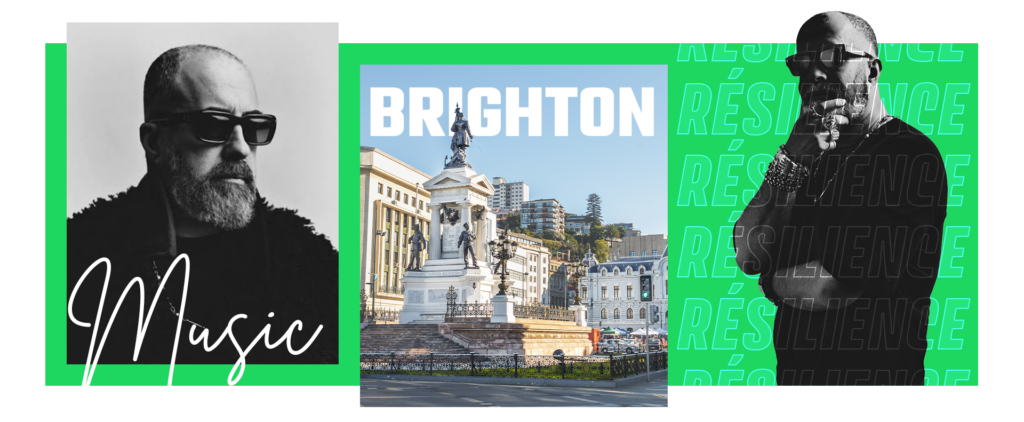
Before Being the Baron
Before becoming The Baron of Techno, Dave Clarke was simply a young British music enthusiast who struggled to find his place in the world, an outsider. As a teenager, he could hardly have imagined the career awaiting him or the influence he would eventually have on electronic music.
His first experiences behind the decks came almost by accident, playing at friends’ birthday parties and Christmas celebrations before landing his first residency at a local roller disco and later performing in small clubs around Brighton.
Like many artists of his generation who never consciously pursued fame, Clarke explains:
“I chose it because it chose me.”
For Dave Clarke, becoming a DJ was never the result of a carefully designed career plan. It felt inevitable. That perspective perhaps explains why he finds today’s music industry so difficult to understand.
“Like many from my generation, music absolutely saved me.”
After running away from home, experiencing homelessness and spending his days wandering through the streets of Soho until he knew them by heart, music quickly became far more than a hobby. It became a means of survival a purpose amid one of the darkest periods of his life. Every pound he earned was invested in the only thing that truly mattered to him: buying records and continuing to play wherever he could. For many years, Clarke remained withdrawn from the outside world. Music became his refuge. More than helping him survive physically, it kept him alive spiritually, offering a sense of freedom that carried him through the most difficult years of his childhood and adolescence.
The Legacy of Countercultures
When The Baron of Techno speaks about his musical influences, what is perhaps most striking is the near absence of techno itself. Instead, he points to a remarkably diverse range of artists and movements:
“Hmm, not sure, the early albums bought by luck perhaps turned out to be absolute classics, The Damned ‘Machine Gun Etiquette’, Devo ‘Freedom of Choice’, and John Foxx ‘Metamatic’ have stayed true to me since getting them. DJ wise that was Kool DJ Herc, I saw him on TV by chance and thought I can do that, totally inspirational, then Red Alert, Mastermind, a lot from Hip Hop culture, then I saw DJ Shem in Brighton and that took my inspiration up a notch.”
His answer reveals that Dave Clarke is, above all, the product of curiosity, resilience and, perhaps more importantly, the product of a particular cultural moment. It also helps explain the convictions he continues to defend today.
Every one of these influences belonged to movements that challenged the established order. Punk, hip-hop, electro and experimental synth-pop all share the same DNA: they emerged on the fringes, driven by innovation, creative freedom and a rejection of convention. They were countercultures before they became recognised cultural movements.
It is this heritage that Dave Clarke appears determined to protect today, criticising an industry that bears little resemblance to the environment in which his own career first emerged.
When his career took off in the early 1990s, that artistic identity was immediately reflected in his productions. After releasing his first record on XL Recordings under the alias Hardcore, he quickly joined the legendary Belgian label R&S Records before launching his own imprint, Magnetic North, in 1992. Two years later came the release that would define his career: the Red Trilogy, released through Bush Records in 1994.
Widely regarded as one of the defining works of 1990s techno, Red never attempted to follow commercial formulas. Instead, it delivered a raw, dark and deeply personal sound, drawing as much from punk’s energy as from electro’s precision and hip-hop’s rhythmic sensibility.
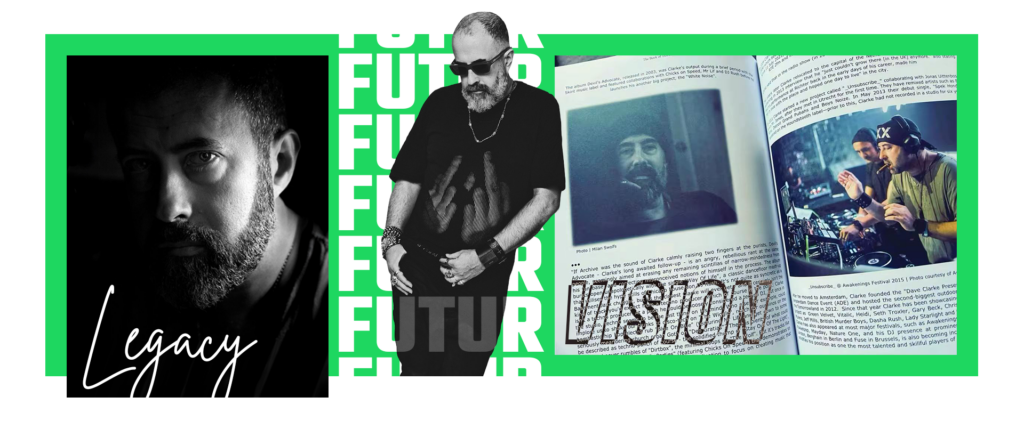
This artistic consistency goes a long way towards explaining why, again, Dave Clarke continues to defend such a demanding vision of techno today. His so-called “purism” is not rooted in a rejection of change. Rather, it stems from the belief that every generation should contribute something new without erasing the history that came before it. Techno, in his eyes, is the heir to several countercultures that profoundly challenged the established order.
Unlike many others, Clarke has never been afraid to defend these convictions, even if doing so meant limiting his own professional opportunities. For him, the issue has never been money.
“Maybe I am naive, but music and artistry should be the prerequisite for representing yourself, the people that pretended I always could smell a mile away. I have had my career held back by a few small minded fragile souls also. Maybe we live in a post truth world, but I don’t… those people were only ever about money, zero integrity…”
Preserving that heritage, together with his own integrity and artistic vision, is not an exercise in nostalgia or elitism. For Clarke, it is about protecting experimentation, independence and creative freedom.
He goes even further, placing part of the responsibility on today’s generation of DJs and industry figures.
“Absolutely shite and shameful. I have zero issue with adaptation, but to call it Techno is cultural appropriation, from a generation that is supposed to be politically attuned to appropriation issues. They have zero imagination by not calling it a new genre, just stealing the goodwill of all those that went before. Also it is full of bro’s on the floor, all the ‘not give a shit’ about counter culture people that I have tried to avoid all my life.” The Book of Techno
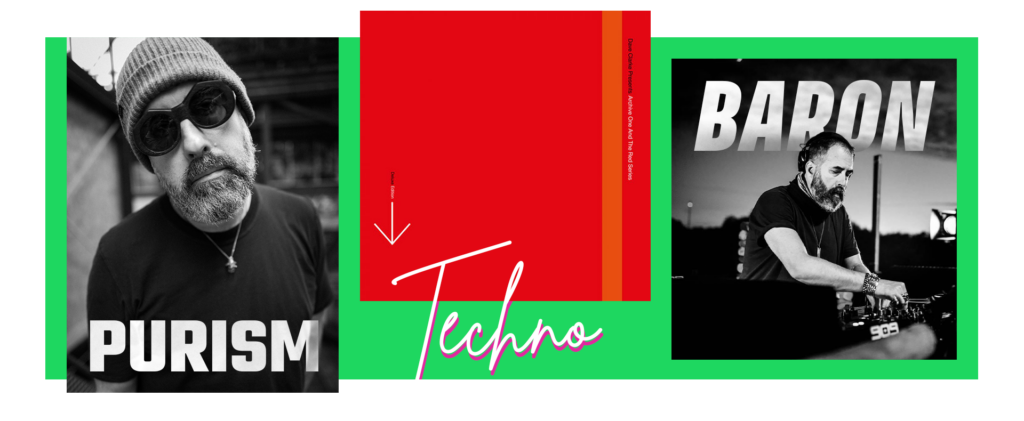
So then? Is purism the last line of defense?
This is where the question becomes truly complex. Because Dave Clarke’s position, however uncompromising it may be, touches on a debate that never really goes away: who gets to define a musical genre, and at what point does evolution stop being evolution and become appropriation?
On one hand, Clarke’s argument is entirely valid. Techno did not emerge out of nowhere. It is the direct heir to struggles, marginalized communities, and culture, Black, queer, working-class, that shaped not only its sound but also its political DNA. Claiming continuity with that history and refusing to let it be diluted by actors driven solely by profit is not simply nostalgia. It is a form of vigilance, a way of preserving a critical voice against the industry’s current direction, and of resisting the normalization of a form of commercialization that is often overwhelming, hollow, and stripped of substance.
On the other hand, it is fair to ask whether such purism can eventually become self-defeating. Every living culture evolves precisely because it is alive. Sometimes it loses its way, sometimes it reinvents itself. Hip-hop today bears little resemblance to its earliest form, and the same can be said of punk, yet few would seriously question the legitimacy of their evolution. So why should techno remain frozen in its founding moment, or in an idealized golden age, to be considered authentic?
Perhaps what some people call “techno” today should simply be called something else. If it is no longer techno, then another name will eventually emerge. Dave Clarke’s perspective is both legitimate and deeply rooted in lived experience. It is also necessary, particularly when it comes to criticizing an industry whose financial ambitions constantly push it toward bigger, more spectacular, and more profitable models.
But that does not mean everything should be dismissed. There is reason to trust this new generation, which still has so much to contribute. Just as techno became, in Dave Clarke’s own words,
“40 odd years of freedom in my life.” The Book of Techno
📷 : Cover Photo Credits / @daveclarkofficial
📷 : Additional Photo Credits / Deezer /@daveclarkofficial/ Tsugi Magazine/ The Book of Techno
📷 : Interview Credits / The Book of Techno/ Mark Petes Varga