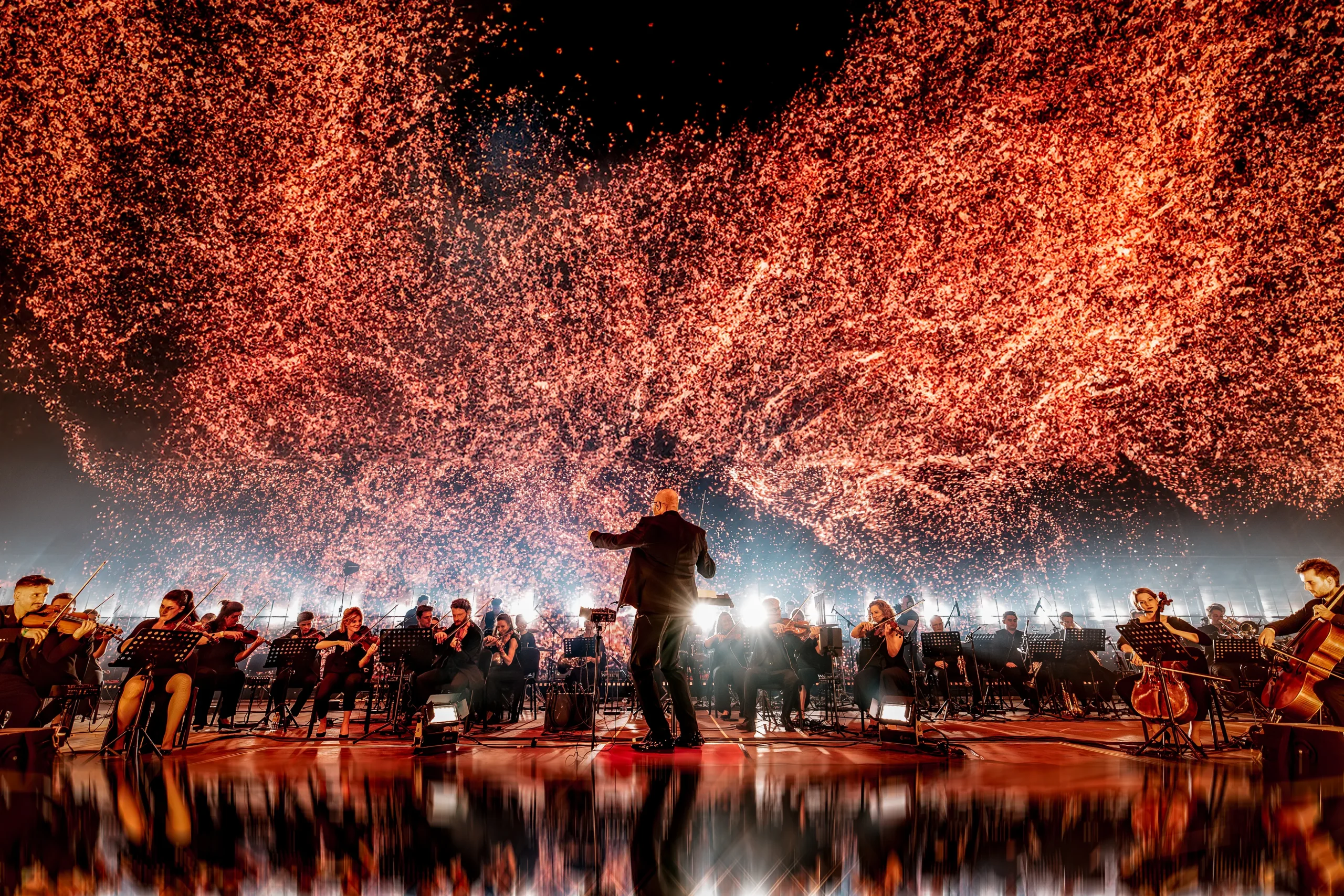
Since its beginnings in Boom, Belgium, Tomorrowland has grown into one of the most influential cultural platforms in electronic music. More than a festival, it represents an entire universe—one where storytelling, stage design, and music merge into a collective experience shared by a global audience. Tomorrowland’s ambition has always gone beyond the dancefloor, seeking new ways to elevate electronic music into something timeless, emotional, and universal.
The idea behind Symphony of Unity is an orchestral project, created to reinterpret iconic electronic music themes through the language of classical composition. Rather than replacing the energy of electronic music, the orchestra amplifies its emotional core—melodies, harmonies, and motifs that often go unnoticed in club environments. Something that you may already be familiar with if you know Pete Tong’s Ibiza Classics concerts as both project are built on the same connections: between genres, generations, and cultures.
The orchestra does not attempt to “classicalize” electronic music in a way that feels forced or academic. Instead, Symphony of Unity acts as a bridge. It shows that electronic music, at its core, has always been about emotion and unity—values shared with classical traditions. In 2025, this bridge feels stronger than ever, resonating with listeners far beyond the festival crowd.
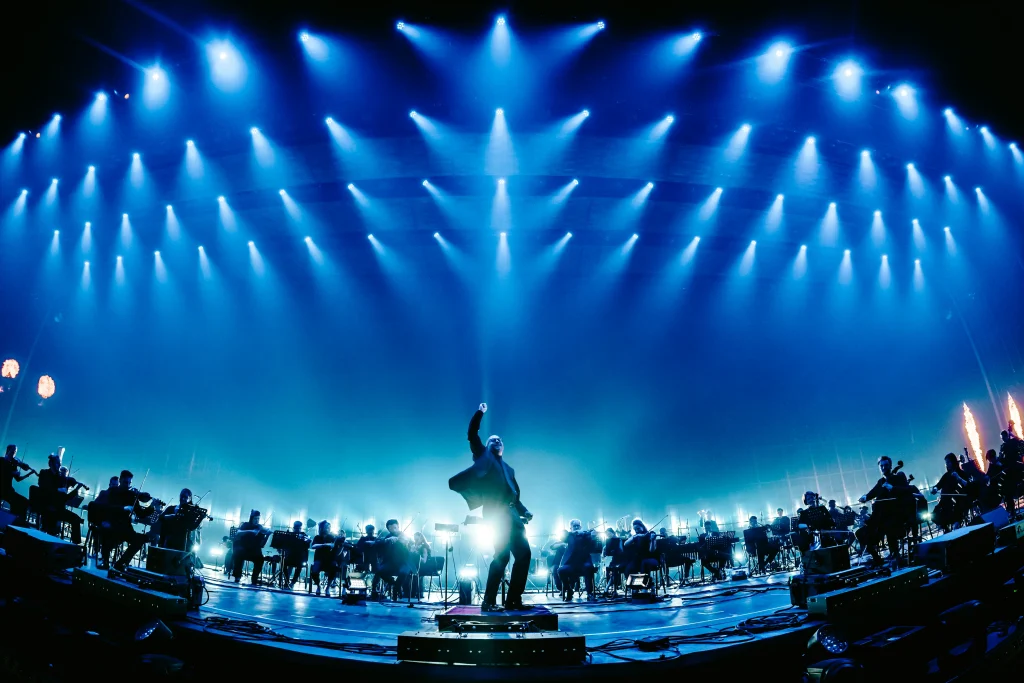
What makes Symphony of Unity 2025 particularly powerful is its emotional clarity. Stripped of drops and BPMs, the music reveals its true architecture. Melodies become reflective, chord progressions feel cinematic, and rhythmic tension is replaced by narrative flow. For long-time Tomorrowland followers, the performance acts as a mirror—bringing back years of memories, moments, and shared experiences, now reframed through a slower, more contemplative lens.
In its 2025 edition, Symphony of Unity feels less like a spectacle and more like a statement. The performance highlights how far electronic music has come—not only as a global movement, but as a compositional art form worthy of orchestral interpretation. The arrangements are deliberate and respectful, allowing familiar Tomorrowland anthems to breathe in a new context, guided by strings, brass, piano, and choir.
Speaking of anthems, Symphony of Unity recently released one of electronic music’s most iconic tracks through their orchestral lens as they reimagined “Insomnia” by Faithless, originally released in 1995. In its Symphony of Unity version, the track is stripped of its club-driven intensity and rebuilt through strings, brass, and piano, allowing its melody and emotional weight to take center stage. The orchestral arrangement transforms Insomnia from a call to movement into a moment of reflection, functioning as both a tribute to Faithless’ legacy and a demonstration of how electronic music can carry timeless meaning beyond the dancefloor.
This reminds us that music’s greatest power lies in its ability to unite without words. In translating electronic memories into orchestral form, Tomorrowland offers something rare: perspective. It allows us to hear familiar sounds with new ears and to feel connected through shared history and emotion. For the care, vision, and respect shown toward the music and its audience, this performance feels like a gift—one that deserves not applause alone, but sincere gratitude.
📷 : Cover Photo Credits / Symphony of Unity – Tomorrowland PR